
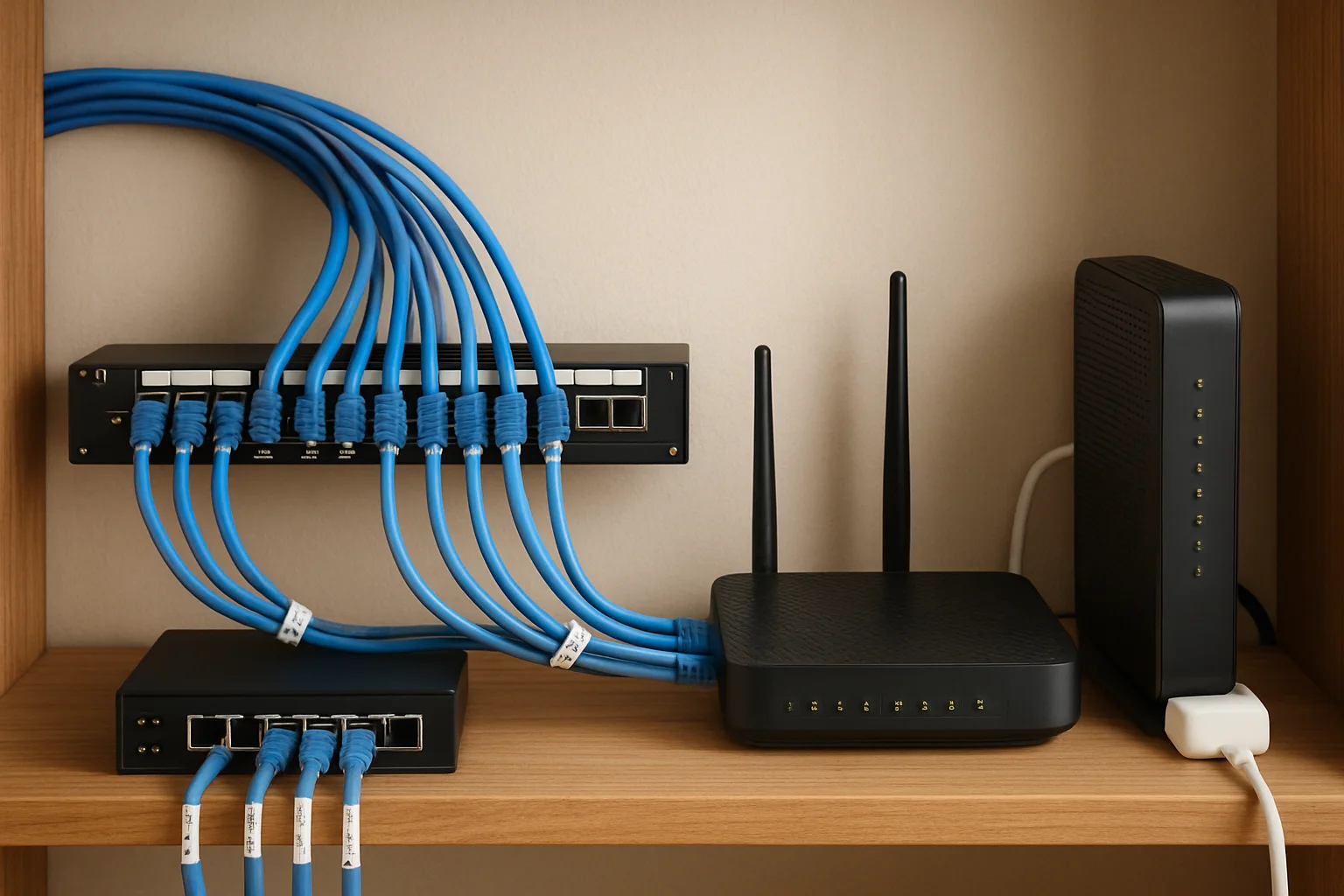
Why Data Cabling Deserves Seasonal Attention
Most homeowners think of internet problems as a service issue or a router issue, but the wiring that carries data through the home often plays a bigger role than expected. Structured cabling, Ethernet runs, patch cords, wall plates, and connections at the network panel all have to work together for stable speeds and reliable connectivity. In Northwest Florida, heat, humidity, lightning, salt air near the coast, and storm season can add stress to that system. A cable path that works fine in mild weather may become less dependable once moisture, temperature swings, or movement in the home starts affecting terminations and hardware.
Seasonal planning matters because data cabling problems are often gradual. A homeowner may notice a TV that buffers more often, a video call that drops in one room, a security camera that loses power or connection, or a smart device that seems fine one week and unreliable the next. Those symptoms can come from the cabling even when the internet plan itself has not changed. Preventive care helps homeowners catch issues before they become frustrating, especially in homes where network demands keep increasing as more devices connect to work, entertainment, security, and home automation systems.
How Northwest Florida Conditions Affect Network Cabling
Northwest Florida homes face a combination of environmental conditions that can influence low-voltage wiring and network components. High humidity can accelerate corrosion at exposed terminations, especially where cable jackets, connectors, or patch panels are not well protected. Warm attic spaces can also shorten the life of some materials if they are poorly routed or pressed against hot surfaces. In coastal areas, salt in the air can contribute to corrosion on metal parts over time. Even homes inland can experience problems when seasonal storms drive moisture into wall cavities, garages, or utility spaces.
Wind, vibration, and storm-related movement can also matter. A cable that was installed with too much tension may loosen over time, and a jack that is already marginal may stop making reliable contact after a period of vibration or humidity cycling. Seasonal power events are another concern. Surges and lightning nearby may not visibly damage every part of the system, but they can affect switches, modems, access points, and connected electronics. That is why homeowners benefit from periodic inspection rather than waiting until a device fails. A professional assessment can help identify where cabling is vulnerable and whether routing, termination quality, grounding, or equipment placement should be improved.
Signs Your Home Network Cabling May Need Attention
Network cabling trouble is not always dramatic. In many homes the first clues are subtle performance changes, such as slower file transfers between devices on the same network, frequent brief disconnects, or one room consistently performing worse than others. A television may stream smoothly in the living room but stutter in a bedroom served by a different cable run. A printer, streaming box, desktop computer, or camera may appear to “randomly” disconnect, when in reality the cable run or termination serving that location is marginal. If problems recur in one area but not the whole house, the issue may be physical wiring rather than the service provider.
Homeowners should also pay attention to visible signs near equipment and outlets. A damaged wall plate, bent connector, loose cable jacket, tangled bundle with sharp bends, or patch cord that feels strained may deserve a closer look. Heat buildup around a network cabinet, dust accumulation on equipment, or signs that a cable has been pinched behind furniture can also indicate stress. An electrical or low-voltage professional can test signal quality, inspect terminations, and determine whether the problem is due to cable age, installation quality, environmental exposure, or equipment mismatch. That kind of assessment is more reliable than guessing, especially in homes with multiple access points, cameras, smart devices, or additions that were wired at different times.
What Preventive Care Means for Data Cabling
Preventive care for data network cabling is mostly about preserving signal quality and physical integrity before a problem interrupts daily use. It includes checking whether cables are properly supported, whether terminations remain tight, whether the pathway is protected from heat or moisture, and whether the equipment setup is organized enough to avoid strain. For homeowners, preventive care is less about constant intervention and more about knowing which conditions tend to shorten the life of a network system. That knowledge helps guide seasonal checkups and sensible upgrades when needed.
A useful preventive approach also includes documenting the network layout. Many homeowners do not know which outlet serves which room, what is connected to each port, or where a cable run travels once it leaves the wall. A professional assessment can map the system and identify weak points. That may mean finding an old patch cord that is degrading, an outlet with poor termination, or a cable routed through a hot attic space when a cooler path would be more reliable. Preventive care is valuable because low-voltage systems often fail gradually. Small improvements, made before peak storm season or before a major household technology upgrade, can reduce downtime and frustration later.
The Importance of Cable Quality and Compatibility
Not all cables serve the same purpose, and cable quality matters more than many homeowners realize. Ethernet cabling is commonly used for home networks because it can provide stable wired connections for workstations, gaming systems, streaming devices, security cameras, access points, and smart home hubs. But even when a cable is rated for a particular use, its real-world performance depends on how it was installed and terminated. Excessive bend radius, poor connector quality, damaged jacket material, or substandard patch cords can reduce reliability. A system may technically function while still performing below what the home needs.
Compatibility also matters at the system level. A household may have older cabling that was adequate for earlier networking needs, but newer devices or more demanding applications can expose limitations. Sometimes the issue is not that the cable is “bad,” but that it no longer fits the way the home is used. A professional can evaluate whether existing runs are appropriate, whether a cable should be replaced, or whether a new layout would better support the home’s current and future needs. This is especially helpful during seasonal planning, when homeowners are already thinking about storm preparation, indoor comfort, and how to keep communications and entertainment working smoothly during busy times of year.
Seasonal Checklist for Spring and Early Summer
Spring is a good time to review home data cabling before the heat and storm season arrive. As outdoor temperatures rise, indoor equipment rooms, closets, garages, and attic-adjacent spaces can become warmer, and that change can affect electronics and cable conditions. Homeowners can look for obvious signs of wear: cables that are stretched tight, patch cords that have been moved around repeatedly, outlets that appear loose, and equipment that is stacked too closely together. Dust control matters too, because dust can trap heat around network equipment and make it harder to notice a developing problem. A calm pre-season review can save time later when household schedules get busier.
Spring is also a smart time to ask whether the network still matches the home’s use. Families often add devices over time, and a network that worked well last year may now support more remote work, more streaming, or more connected security equipment. A professional assessment can help determine whether certain rooms would benefit from wired connections instead of relying only on wireless coverage. It can also identify whether any existing cables should be rerouted, labeled, or replaced before summer heat and thunderstorms increase the chances of disruptions. Planning early makes it easier to schedule work before peak demand on the home network and before weather becomes a bigger concern.
Preparing for Summer Heat and Storm Season
Summer in Northwest Florida brings heat, humidity, and a greater chance of thunderstorms. Those conditions make it especially important to protect network cabling and connected devices. Heat can affect equipment life, while humidity can increase the risk of corrosion and moisture intrusion if cables or terminations are exposed in vulnerable spaces. Storm season also raises concern for power interruptions and nearby lightning. While no homeowner can eliminate all risk, they can reduce avoidable stress by making sure the network is organized, equipment is not overheated, and vulnerable points are identified before storms arrive.
A professional can assess how a home’s network cabling is routed and whether it is placed in a location that is likely to stay drier and cooler during severe weather. That assessment may include checking connections near service entrances, reviewing how cabling enters closets or utility spaces, and verifying that network hardware is positioned to minimize heat buildup. Homeowners should also understand that during storm season, a problem that seems to be “Wi-Fi” may actually start with a wiring or equipment issue triggered by weather or power events. Preventive service helps separate those causes so the right fix can be made. Planning ahead is especially valuable for households that depend on stable connectivity for remote work, school, home security, or medical devices.
Fall Maintenance Before Weather Changes and Holiday Demand
Fall is a practical time to review data cabling before holiday schedules increase household network use. Many homes see heavier streaming, more guests, more connected devices, and more simultaneous activity during this season. If the network already has a weak spot, the added demand can make it more noticeable. Homeowners may notice that certain rooms perform worse when several people are online at once, or that a camera or smart device becomes unreliable when traffic increases. A fall inspection helps catch those issues before the home reaches its busiest connectivity period.
This is also a useful time to examine how seasonal moisture, temperature changes, or past summer storms may have affected the system. A cable that was once secure might now be loose, a wall plate may have shifted, or a patch cord could have been disturbed while other household work was underway. A professional assessment can help determine whether the cabling still meets the home’s needs and whether any preventive corrections are wise before the cooler season brings holiday visitors and heavier network use. For homeowners who are planning indoor projects, holiday decorating, or equipment upgrades, fall is a smart season to coordinate those changes with a network check.
Winter Planning and Indoor Connectivity
Even though Northwest Florida winters are generally milder than in many regions, seasonal changes still affect home network systems. Cooler weather often means more time indoors, which can lead to more streaming, gaming, remote work, and connected-device use. If a family notices that certain rooms depend heavily on a stable connection, winter is a good time to think about whether those rooms are best served by wired data cabling. In many homes, moving a few essential devices from wireless-only connections to Ethernet can improve consistency and reduce congestion on the Wi-Fi network.
Winter can also be a season when homeowners notice older cabling issues because the household is using technology more intensively. A weak termination, marginal wall jack, or stressed patch cord may show up as intermittent latency, dropped video calls, or unsteady smart device behavior. Professional evaluation can help decide whether the system needs simple maintenance or more significant updates. This is especially useful for homeowners considering home office improvements or entertainment upgrades during the cooler months. Planning during winter allows time to review options without rushing, and it gives homeowners a better chance to address layout, labeling, and equipment organization before spring weather returns.
How a Professional Assesses Home Data Cabling
A professional assessment is important because network cabling problems can look similar from the outside even when their causes are very different. An experienced technician can inspect the physical route of the cable, check terminations, test for continuity and performance, review the condition of connectors and wall plates, and determine whether equipment placement is contributing to the issue. This process is safer and more reliable than opening walls or experimenting with unknown wiring on your own. It also helps avoid unnecessary replacement when a smaller repair or correction may solve the problem.
The assessment may also include a review of the household’s needs. A home with one internet user has different requirements than a home with multiple remote workers, game consoles, security cameras, smart appliances, and streaming devices. A professional can look at the current layout and advise whether the system is being used efficiently. That may involve recommending labeling, better cable management, relocation of networking equipment, or upgraded cabling in selected areas. For homeowners in Bay, Walton, and Okaloosa counties, 850 Electrical, part of veteran-owned A Superior Mechanical, can help evaluate the condition of the home’s data cabling and plan practical improvements. The goal is not to oversell; it is to identify what is actually needed for dependable daily use.
Common Homeowner Mistakes That Shorten Cabling Life
One of the most common mistakes is assuming that if the internet connection still works, the cabling must be fine. In reality, a system can function while still being fragile. Another common issue is overloading or overcrowding the networking area. When cables are piled together, pinched behind furniture, or bent sharply around corners, the physical stress can affect long-term performance. Even if the problem does not appear immediately, the added wear can eventually show up as intermittent service or reduced reliability. Homeowners sometimes try to make things neater by tightly bundling cables, but overly tight bundling can also create strain.
Another mistake is ignoring the environment around the cabling. A network cabinet placed in a hot, dusty, or damp location may have a shorter service life than one placed in a more stable environment. Likewise, moving equipment for cleaning, decorating, or storage without checking cable slack can loosen or damage connections. It is wise to let a professional evaluate whether the layout makes sense and whether the cables are protected from common household stressors. The purpose of preventive care is to reduce the chance that avoidable installation details become bigger repair needs later. That is especially valuable when the home is already dealing with seasonal humidity, storm risk, and changing family routines.
When to Upgrade Instead of Repair
Not every cabling issue should be repaired in place. Sometimes an older or poorly planned system has reached the point where small fixes will not provide lasting value. If a home has repeated dropouts in one area, outdated routing, damaged terminations, or a layout that no longer matches how the home is used, an upgrade may be more practical than another temporary fix. A professional can help distinguish between a localized issue and a broader system limitation. That is important because homeowners do not benefit from paying to solve the same problem more than once.
An upgrade may also make sense when the household is adding new technology or expanding into spaces that were not heavily used before. A home office, media room, detached building, or security system can create new demands that older cabling was never designed to handle. Professional planning can help determine where new cable runs would provide the most value, how to keep them protected, and how to integrate them with the home’s existing network equipment. For homeowners in Northwest Florida, upgrade decisions are often best made before seasonal stress increases. That gives time to plan the route, organize equipment, and avoid rushing a project when weather or household demand is already high.
Planning a Reliable Network with Local Help
The best time to think about network cabling is before it becomes a problem. Seasonal planning gives homeowners a chance to review how their data cabling is performing, how the home’s needs are changing, and whether environmental conditions could be putting the system at risk. In Northwest Florida, that planning is especially useful because heat, humidity, storms, and changing household schedules can all affect reliability. Preventive care does not require homeowners to become technicians. It simply means paying attention to signs of wear, arranging periodic professional review, and addressing issues before they interrupt work, school, entertainment, or security systems.
If you want help evaluating or improving your home’s data network cabling, 850 Electrical serves homeowners in Bay, Walton, and Okaloosa counties as part of veteran-owned A Superior Mechanical. A professional assessment can help determine whether your current system is organized, protected, and ready for the season ahead. For questions or scheduling, call 850-258-3225. A thoughtful inspection today can help your home network stay more dependable through the weather and demands of the months ahead.
Explore related electrical care
- Data Network Cabling
- 24 Hour Emergency Electrical Service
- Battery Backup Systems
- Ceiling Fan Services
- Circuit Breaker Panels & Rewiring
- Commercial Electrical New Construction
Continue reading
- Data Network Cabling Warning Signs Every Northwest Florida Homeowner Should Know
- Northwest Florida Homeowner Guide to Electrical Replacement, Preventive Care, and Seasonal Planning
- Seasonal Electrical Care for Northwest Florida Homes: A Practical Preventive Maintenance Guide
Talk with the 850 Electrical team for help with your home or business.