
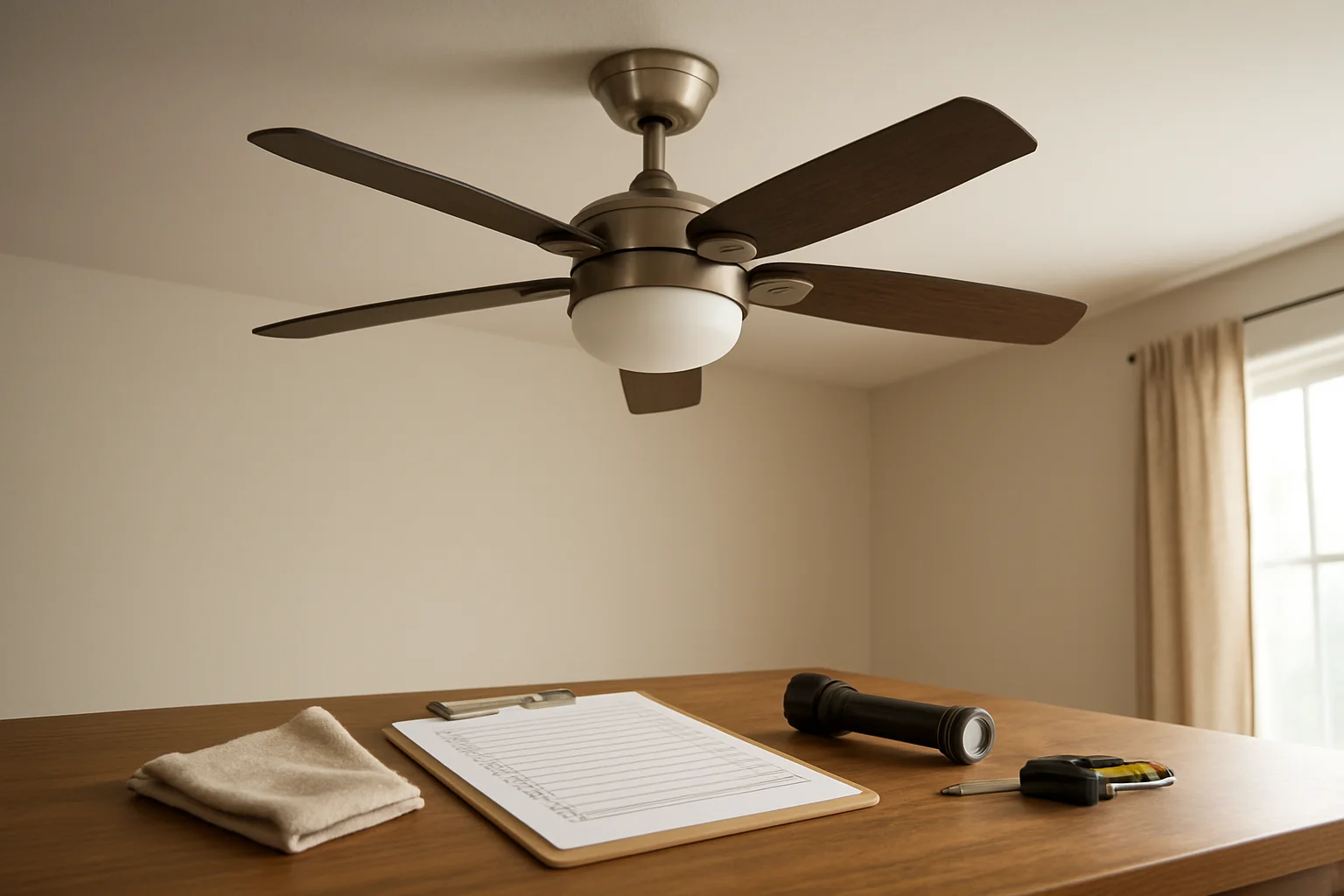
Why Ceiling Fan Care Matters in Northwest Florida
Ceiling fans do more than move air. In Northwest Florida, they help homes feel more comfortable during long warm seasons, reduce reliance on air conditioning, and support better air circulation year-round. Because fans often run for many hours at a time, they gradually experience wear that may not be obvious until the unit starts wobbling, making noise, or losing performance. Preventive care helps homeowners avoid those surprises and keeps the fan working as intended when it is needed most.
The coastal climate across Bay, Walton, and Okaloosa counties can add extra stress to household electrical equipment. Humidity, salt air in some areas, and frequent seasonal changes can affect metal parts, electrical connections, and finishes. Even a fan that looks fine from the ground may benefit from a professional inspection if it is older, has become noisier, or no longer feels as balanced as it once did. A planned approach is often easier and safer than waiting for a failure during a hot stretch of weather.
For homeowners, ceiling fan service is not just about comfort. It is also about reducing strain on the motor, protecting switches and wall controls, and identifying issues before they become more costly repairs. 850 Electrical, part of veteran-owned A Superior Mechanical, serves Bay, Walton, and Okaloosa counties and can help homeowners evaluate fan performance and determine whether cleaning, balancing, repair, or replacement is the most practical option.
How Seasonal Planning Helps Homeowners Stay Ahead
Ceiling fan needs are not the same in every season. In Northwest Florida, spring often brings the right time to prepare fans before the heavier cooling season begins. Late summer and early fall are also useful moments to review how well each fan performed during the hottest months. Planning ahead means a homeowner can address maintenance when schedules are easier and before a small issue becomes an inconvenience.
Seasonal planning is especially useful in homes where fans are used differently throughout the year. Some fans are expected to run continuously in living areas, while others may be used only in bedrooms or porches. A fan that is rarely used can still develop dust buildup, loose hardware, or control issues. A fan that runs daily can develop motor strain or imbalance. Thinking about fans by season helps create a simple routine for checking, cleaning, and scheduling service.
A professional assessment can be part of that routine. A qualified technician can evaluate mounting stability, electrical connections, switch operation, blade condition, and airflow performance. That review gives the homeowner a clearer picture of whether the fan needs minor maintenance or more involved service. With a seasonal plan, fans are less likely to fail during the time of year when dependable air movement matters most.
Common Signs a Ceiling Fan Needs Attention
Many fan problems begin gradually. A slight wobble, faint hum, clicking sound, or slow response to control settings may seem minor at first. However, these signs can indicate loose hardware, dust-related imbalance, worn bearings, or electrical issues. Homeowners should pay attention when a fan behaves differently than it did before, especially if the change is new or worsening. Small warning signs often provide an early chance to prevent larger problems.
Other signs can include blades that appear uneven, a switch that feels inconsistent, a remote control that works only sometimes, or a fan that no longer seems to circulate air effectively. A burning smell, visible sparking, or repeated breaker trips are more serious concerns and should be treated as reasons to stop using the fan and contact a professional promptly. These symptoms can point to wiring or component problems that require trained evaluation, not guesswork.
Because a ceiling fan is both a mechanical and electrical device, issues may not be visible from the floor. A homeowner may see only the symptom, while the actual cause is inside the motor housing, at the mounting bracket, or in the electrical box. Professional assessment helps identify the source of the trouble and whether the solution is cleaning, tightening, repair, or replacement. That kind of diagnosis is difficult to do reliably without the right tools and experience.
What a Professional Ceiling Fan Assessment Includes
A professional assessment is more than a quick glance. The technician looks at how the fan is mounted, whether the electrical box is rated for fan support, and whether the unit is operating safely and efficiently. They may test the fan at different speeds, listen for unusual motor sounds, check for visible looseness, and examine the condition of switches, remotes, and wiring connections. This process helps determine whether the fan is simply dusty or if there is a deeper issue affecting performance.
In many cases, assessment also includes checking blade pitch, balance, and alignment. A fan can appear normal while still vibrating excessively or moving air inefficiently because one blade is slightly out of line, a bracket is loose, or the motor is wearing unevenly. A professional can distinguish between normal operational noise and a symptom that suggests a problem. That distinction matters, because not every noisy fan needs replacement, but every unsafe fan does need attention.
For homeowners in Bay, Walton, and Okaloosa counties, an assessment is especially useful before peak cooling periods or after a storm season. Even if a fan still runs, hidden damage or loose mounting can develop over time. 850 Electrical can help homeowners make informed choices based on the fan’s actual condition rather than assumptions. That approach supports better safety and helps avoid unnecessary replacement when a repair or tune-up is still appropriate.
Cleaning and Dust Control for Better Performance
Dust buildup is one of the most common and overlooked causes of poor fan performance. As dust collects on blades, it changes weight distribution and can contribute to wobbling, noise, and reduced efficiency. It also circulates through the room when the fan is running, which is not ideal for indoor comfort. Regular cleaning helps the fan move air more evenly and reduces the stress caused by buildup on moving parts.
In humid climates, dust can cling more stubbornly to blade surfaces and motor housing areas. Fans in kitchens, enclosed porches, and rooms with frequent use may collect residue faster than fans in less active spaces. Even decorative fans with detailed finishes can gather buildup in grooves and edges that are easy to miss from a distance. A careful cleaning routine can help preserve both appearance and performance, while also giving a homeowner a chance to notice changes such as loose screws, stained blades, or new sounds.
A professional service visit may include cleaning-related evaluation, but homeowners should avoid any task that requires climbing into an unsafe position or working around exposed wiring. The safer and more effective approach is to have a qualified technician inspect the fan’s condition, especially if the unit is high-mounted, difficult to reach, or already showing symptoms of imbalance. Cleaning is helpful, but it should be part of a broader maintenance strategy rather than the only step a homeowner takes.
Balancing, Wobble, and Vibration Issues
A wobbling fan is more than an annoyance. Excess vibration can loosen hardware over time, create unwanted noise, and make the unit feel unstable. In some cases, the cause is simple dust buildup. In others, the issue may be a blade that is slightly warped, a mounting problem, or a motor that is no longer running smoothly. Because the possible causes vary, it is helpful to have the fan evaluated rather than assuming a quick fix will solve it.
Balancing involves checking whether the blades are all contributing evenly to the fan’s movement. Even a small difference in weight, angle, or alignment can create a noticeable wobble at higher speeds. A professional technician can inspect the mounting system, verify that the assembly is secure, and determine whether balancing adjustments are enough or if a component needs repair. This kind of analysis is especially important in bedrooms and living areas where vibration is most noticeable.
Homeowners should not ignore a fan that shakes the fixture, rattles the ceiling, or causes light kits to vibrate. Those signs can indicate an installation problem or mounting issue that deserves prompt attention. Professional assessment can determine whether the fan needs tightening, rebalancing, or replacement. Addressing wobble early can extend the life of the fan and reduce the chance of damage to surrounding components.
Noise, Motor Wear, and Efficiency Concerns
Ceiling fans are not silent, but they should operate with a fairly steady and predictable sound. A new buzz, grind, click, chirp, or hum can point to motor wear, loose hardware, or an electrical issue. If the sound changes with speed, that detail can help a technician narrow down the cause. Noise is one of the most useful early warning signs because it often appears before a more obvious failure occurs.
Efficiency also matters. A fan that turns on but no longer moves air effectively may be using more energy than expected while providing less comfort. Sometimes the cause is blade buildup, a mismatch between the fan and the room, or wear inside the motor. In other cases, the issue may be related to the control system or the fan’s age. A homeowner may not be able to identify the difference, which is why professional assessment is useful. A trained technician can tell whether the fan is still a good candidate for service or whether replacement makes more sense.
In Northwest Florida, where fans may be used for long stretches during warm weather, small efficiency losses can add up to noticeable discomfort. A poorly performing fan can make a room feel stale or unevenly cooled. Professional service helps restore consistent operation when possible and guides homeowners toward practical decisions when a fan has reached the end of its useful life. The goal is not just fixing noise, but improving how the fan supports the home’s comfort system overall.
Seasonal Ceiling Fan Use in Spring and Summer
Spring is a smart time to prepare ceiling fans for the heavier demands of summer. Homeowners can benefit from checking whether each fan reverses direction properly, runs quietly, and starts without hesitation. This is also a good time to identify units that will need service before they become essential to daily comfort. Preparing early reduces the chance of needing urgent repairs during peak heat.
During summer, ceiling fans are often used to help the house feel cooler even when the thermostat setting stays the same. That makes consistent fan performance important. If a fan is wobbling, noisy, or underperforming, it may be less helpful than the homeowner expects. In a season when many households rely on fans for comfort, a professional assessment can help maintain steady airflow in bedrooms, family rooms, and spaces where people gather most often.
For homes in coastal and inland parts of Bay, Walton, and Okaloosa counties, summer also brings more frequent use of air conditioning and greater expectations for airflow support. A properly working fan can complement the cooling system and improve comfort in occupied rooms. Seasonal planning helps homeowners make sure the fan is ready before demand is highest, rather than waiting until a heat wave exposes a hidden problem. That proactive approach saves time and reduces stress when the weather is at its warmest.
Fall and Winter Planning for Ceiling Fans
Fall is a practical time to review fan condition after a long summer. The homeowner can look for signs of wear that developed during heavy use, such as noise, looseness, or decreased airflow. This is also a useful period for deciding whether any fans should be repaired before cooler months or before holiday guests arrive. Even though fans may be used less often in winter, they still play a role in air circulation and comfort.
In winter, many homeowners use fans at lower speeds to help distribute conditioned air more evenly. A fan that runs properly can support comfort in rooms that otherwise feel uneven in temperature. If the fan has a reverse function, seasonal direction changes can be helpful, but the mechanical and electrical condition of the unit still matters more than any specific setting. If the fan is unreliable, seasonal adjustments will not solve the underlying problem.
This makes late fall and winter a good time for professional evaluation. A technician can inspect a fan when the household is not depending on it every day, making repairs or replacement easier to schedule. For homeowners who like to plan ahead, this off-peak window can be the least disruptive time to address maintenance. By the time warm weather returns, the fan is already ready for regular use.
When Replacement May Be Smarter Than Repair
Not every ceiling fan should be repaired indefinitely. Some units are too noisy, too worn, or too outdated to justify repeated service. If the fan has ongoing balance issues, persistent motor problems, damaged components, or poor performance despite previous attention, replacement may be the more practical long-term choice. A professional assessment can help determine whether continued repair is worthwhile or whether a new fan would better serve the room.
Age is one factor, but it is not the only one. A newer fan may still need replacement if it was not sized well for the room or if the installation is not suitable for modern use. A technician can evaluate whether the existing fan meets the homeowner’s needs in terms of airflow, control options, mounting condition, and overall reliability. That way, the recommendation is based on the fan’s actual condition and the room’s requirements, not on guesswork.
Homeowners should also consider whether a fan has become a recurring maintenance issue. If multiple repairs have been needed over time, the cumulative cost and inconvenience may outweigh the value of keeping the unit. A trained professional can explain the condition clearly and help the homeowner choose a path that makes sense for comfort, safety, and long-term use. The best decision is often the one that avoids repeated problems rather than simply postponing them.
How Homeowners Can Support Fan Longevity Safely
There are several safe ways homeowners can support ceiling fan longevity without attempting risky repairs. Keeping blades clean, noticing new noises early, and using the fan in the settings intended by the manufacturer all help. It is also useful to watch for changes in how the fan starts, responds to speed changes, or feels when running. These observations can be valuable when a technician evaluates the unit. Careful observation is one of the easiest forms of maintenance a homeowner can practice.
At the same time, homeowners should avoid trying to correct electrical or mounting problems themselves. Ceiling fans are attached overhead and connected to home wiring, which means an incorrect fix can create safety hazards. If a fan is sparking, repeatedly losing power, or showing signs of loose mounting, it is time to call a professional rather than experimenting with tools or replacement parts. A safe approach protects both the fan and the home.
For older houses and remodeled spaces alike, periodic professional review is often the best way to keep fans operating correctly. This is especially true in homes where ceilings are high, rooms are large, or fans are used frequently. 850 Electrical can assist homeowners in Bay, Walton, and Okaloosa counties with evaluating fan condition and planning maintenance around the seasons. A little attention at the right time can make a fan last longer and perform better when comfort matters most.
Preparing for a Service Visit from 850 Electrical
A homeowner can make a service visit more efficient by taking note of what the fan is doing and when the problem occurs. For example, it helps to know whether the noise happens on every speed, whether the wobble starts immediately, or whether the problem appeared after a storm, a power interruption, or a recent change in use. These details give the technician useful context and can shorten the time it takes to identify the issue.
It is also helpful to make the fan accessible and to note any related concerns, such as problems with a wall switch, remote, or light kit attached to the fan. If the fan is mounted in a room with multiple ceiling fixtures, it can be useful to identify which fan is causing the issue. Clear communication helps the technician focus on the right equipment and provides a better overall assessment. A professional visit is most effective when the homeowner describes the symptoms as they appear in daily use.
850 Electrical, part of veteran-owned A Superior Mechanical, serves homeowners across Bay, Walton, and Okaloosa counties with practical evaluation and service planning. Whether the concern is noise, wobble, poor airflow, or a fan that no longer operates reliably, the goal is to provide a clear assessment and a workable solution. Seasonal planning makes those visits easier to schedule and helps homeowners stay ahead of problems instead of reacting after comfort has already been affected.
The value of preparation is that it turns ceiling fan care into a manageable routine rather than an emergency. Homeowners who track symptoms, schedule checkups, and seek professional help early are more likely to keep their fans operating safely and comfortably throughout the year. In a climate where airflow matters almost every season, that kind of planning is well worth the effort.
A Simple Year-Round Ceiling Fan Maintenance Mindset
The best ceiling fan maintenance plan is simple, repeatable, and built around observation. Homeowners do not need to become technicians to care for their fans responsibly. They only need to notice changes, keep the unit reasonably clean, and schedule professional assessment when something seems off. That mindset keeps maintenance from feeling overwhelming and makes it easier to act before a small concern becomes a larger issue.
Seasonal planning is especially effective in Northwest Florida because the weather places different demands on home comfort throughout the year. Spring can be used to prepare, summer to monitor performance, fall to review wear, and winter to address repairs at a calmer pace. When those checkpoints become a habit, ceiling fans are more likely to remain dependable and useful. The result is better airflow, fewer surprises, and a safer operating environment inside the home.
If your ceiling fan is wobbling, noisy, slow to respond, or simply not performing the way it should, a professional evaluation is the safest next step. 850 Electrical serves Bay, Walton, and Okaloosa counties and can help homeowners understand what the fan needs and when it needs it. For scheduling or questions, call 850-258-3225. A little planning now can help keep your home more comfortable through every season.
Explore related electrical care
- Ceiling Fan Services
- 24 Hour Emergency Electrical Service
- Battery Backup Systems
- Circuit Breaker Panels & Rewiring
- Commercial Electrical New Construction
- Data Network Cabling
Continue reading
- Seasonal Electrical Care for Northwest Florida Homes: A Practical Preventive Maintenance Guide
- Northwest Florida Homeowner Guide to Electrical Replacement, Preventive Care, and Seasonal Planning
- Electrical Panels and Upgrades: Preventive Care and Seasonal Planning for Northwest Florida Homeowners
Talk with the 850 Electrical team for help with your home or business.