
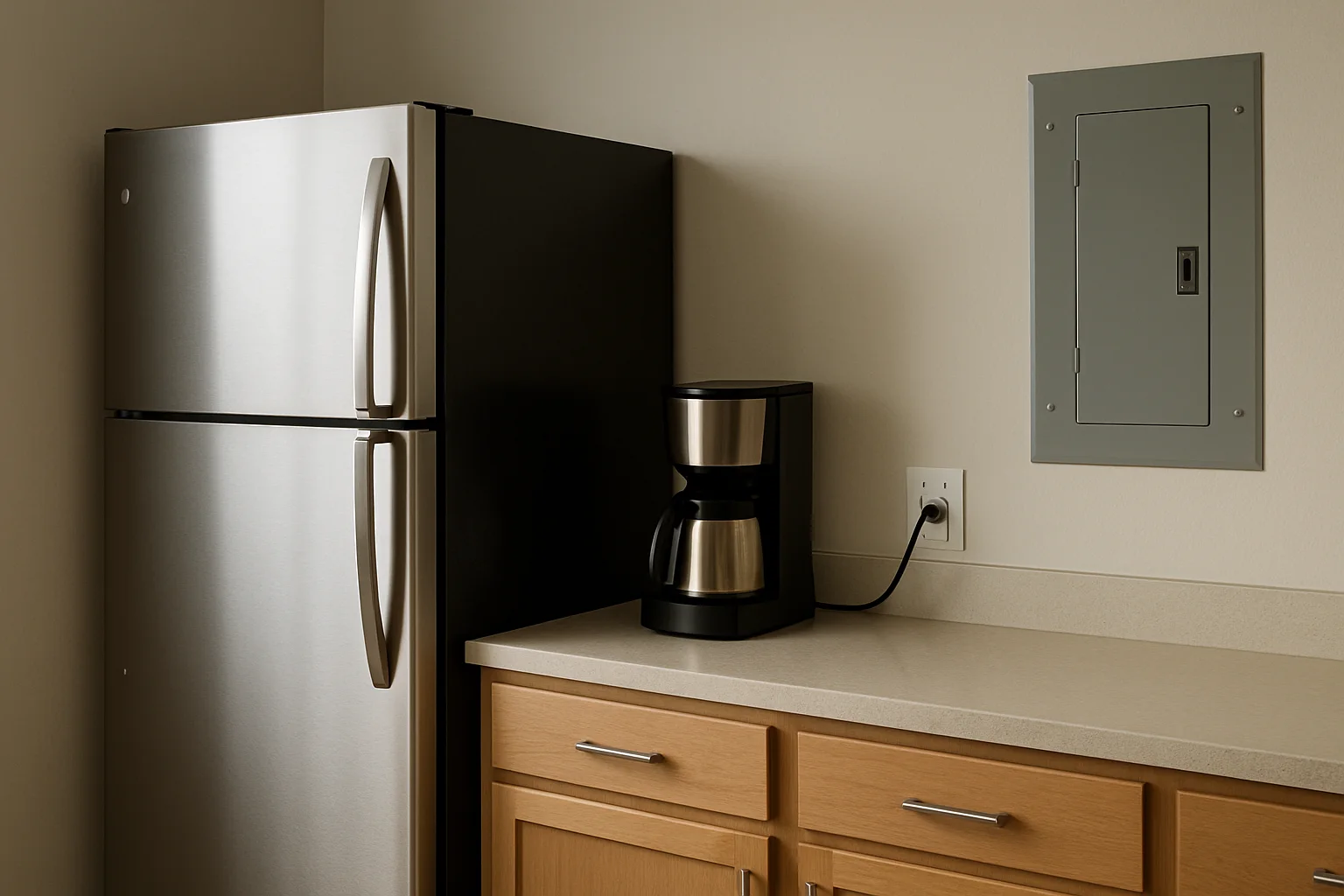
Why dedicated circuits matter in everyday home electrical use
A dedicated circuit is a branch circuit serving one appliance or one clearly defined load. Instead of sharing power with multiple outlets, lights, or other equipment, the appliance gets a more direct electrical path back to the panel. That matters because many household appliances draw substantial current, especially when they first start up or cycle on and off. When several loads share the same circuit, the wiring, breaker, and connected devices can experience stress that may show up as nuisance tripping, dimming lights, or warm receptacles.
For Northwest Florida homeowners, dedicated circuits are especially important because homes often rely heavily on air conditioning, kitchen equipment, laundry appliances, garage tools, and outdoor equipment during long warm seasons. A dedicated circuit is not just about convenience. It is about reducing overload risk, supporting stable appliance performance, and helping a licensed electrician verify that the wiring, breaker size, and device ratings are properly matched to the load. Professional assessment is the safest way to determine whether an appliance truly needs its own circuit or whether the issue lies elsewhere in the home electrical system.
Common appliances that often need their own circuit
Many homeowners are surprised to learn that not every appliance can safely share a general-purpose branch circuit. Large kitchen appliances, laundry equipment, and fixed appliances commonly require dedicated circuits because of their current demand and operating characteristics. Typical examples may include refrigerators, microwave ovens, electric ranges, wall ovens, dishwashers, garbage disposals, washing machines, dryers, water heaters, and HVAC-related equipment. Some of these appliances may be allowed on a shared circuit only under specific conditions, but many are better served by a dedicated line.
The exact answer depends on the appliance nameplate, installation instructions, and the home’s electrical design. Two appliances that seem similar can have very different requirements. For example, one microwave may be acceptable on a shared counter circuit while another needs a dedicated branch. This is why professional evaluation is so important. An electrician can review the appliance specifications, the circuit capacity, and the condition of the wiring before recommending changes. That prevents guesswork and helps homeowners avoid relying on outdated assumptions about what “should be fine” in a modern electrical system.
Warning sign: breakers that trip more than occasionally
One of the most obvious signs of an overloaded or mismatched circuit is frequent breaker tripping. A breaker is designed to open when current exceeds a safe level, so an occasional trip may indicate a temporary surge or a one-time overload. But if the same breaker keeps tripping when an appliance starts, heats, or runs alongside another device, that is a sign the circuit may not be well suited to the load. Repeated tripping should not be ignored or treated as a normal nuisance.
A professional electrician looks at more than the breaker itself. The diagnosis includes the appliance’s startup demand, the number of devices on the circuit, the wiring size, connection points, and whether the breaker is correctly rated for the conductors. Sometimes the solution is adding a dedicated circuit. In other cases, the cause may be a loose connection, a failing appliance component, or a problem elsewhere in the panel. The key point is that tripping is a symptom, not a final diagnosis. A proper inspection identifies the reason before any changes are made.
Warning sign: lights dim or flicker when appliances start
Lights that dim briefly when a major appliance starts up can indicate a normal momentary load change, but repeated or pronounced dimming deserves attention. When a large appliance comes on, it can create a short inrush of current. If the circuit layout is marginal, the wiring is undersized for the demand, or the appliance is sharing power with sensitive equipment, the effect may be more noticeable. Homeowners sometimes see this when a refrigerator compressor starts, a microwave runs, or a laundry appliance changes cycle.
An electrician will not assume dimming automatically means danger, but it does signal that the home deserves an assessment. Professional diagnosis can determine whether the issue is isolated to one circuit, tied to the condition of the service equipment, or related to branch-circuit loading. In some cases, a dedicated circuit reduces the problem. In others, the answer may involve tightening connections, correcting a voltage drop issue, or evaluating whether the home’s electrical panel has enough capacity for present-day use. The goal is stable operation and reduced stress on the system.
Warning sign: outlets, plugs, or covers feel warm
A warm outlet, switch plate, or plug is not something to brush off. Heat can indicate poor contact, excessive load, loose connections, or damage at the receptacle or plug blades. With appliances that draw a significant amount of power, any added resistance at the connection point can create heat and increase the risk of further deterioration. If a receptacle feels warmer than the surrounding wall or if a plug discolors over time, the circuit should be inspected promptly.
Professional evaluation helps distinguish between a small device issue and a broader circuit problem. The electrician may examine the outlet condition, the wire terminations, breaker sizing, and whether the appliance is drawing more current than the circuit was intended to support. Homeowners should avoid repeatedly unplugging and replugging a hot connection in hopes that it will “cool off” and be fine. The safer path is to have the source located and corrected. In many cases, a dedicated circuit or upgraded connection hardware may be part of the solution, but only after the underlying cause is clearly identified.
Warning sign: extension cords and power strips keep entering the picture
Appliances that constantly depend on extension cords, adapter plugs, or power strips can point to an installation problem rather than a temporary inconvenience. Some appliances should never be powered through these accessories, especially if they are fixed in place or draw substantial current. Even when a cord appears to work, it may not be appropriate for the electrical load or environment. Over time, this can create excessive heat, voltage drop, or poor connection quality.
Northwest Florida homeowners often add plug-in solutions because they want a quick fix for kitchen, laundry, garage, or outdoor setups. But the need for a long-term workaround often means the existing circuit layout is not serving the home well. A professional assessment can determine whether the appliance needs a new dedicated circuit, a relocated receptacle, a different outlet type, or a broader circuit redesign. This is a better approach than continually relying on accessories that were never meant to replace proper wiring. If an appliance location depends on a makeshift setup, that is a practical warning sign that the electrical system should be reviewed.
Warning sign: appliances run poorly or seem underpowered
Sometimes the warning sign is not a breaker trip or a visible heat issue, but disappointing appliance performance. A refrigerator may cycle oddly, a microwave may seem weak, a washer may stop mid-cycle, or a garbage disposal may sound strained. These symptoms are not always caused by the circuit, but they can be consistent with voltage drop, loose connections, or a branch circuit that is carrying more than it should. When appliances do not perform as expected, the electrical system should be part of the diagnosis.
Professional electricians evaluate the circuit load, connection quality, and voltage conditions while also considering the appliance itself. That broader approach matters because electrical symptoms can overlap with mechanical appliance problems. A homeowner may assume the appliance is failing when the real issue is shared circuit loading or a poor connection in the branch wiring. The reverse can also happen. A proper assessment helps avoid unnecessary replacement and helps determine whether a dedicated circuit would improve operation. The safest diagnosis is one based on measurement and inspection, not guesswork.
Warning sign: multiple high-demand devices share one general-purpose circuit
Even when no obvious symptom has appeared yet, a crowded circuit can be a warning sign in itself. Kitchens, laundry areas, and utility spaces often accumulate a mix of appliances and electronics over time. A refrigerator may share a circuit with countertop devices. A laundry receptacle may also support a utility appliance. A garage outlet may be asked to handle a freezer, a charger, and a power tool. The more demand placed on one circuit, the more likely issues become during normal use.
This is where professional load evaluation is especially valuable. An electrician can review how the circuit is actually being used, not just how it was originally intended. Homes change over time, and a circuit that was adequate years ago may now be overloaded by today’s appliances and lifestyle. The electrician considers the breaker rating, the conductor size, the appliance requirements, and the household pattern of use. If the circuit is doing too much, a dedicated line or a reconfiguration of the load can provide a safer and more reliable solution.
How a professional diagnosis of appliance circuits works
A proper electrical assessment starts with information gathering. The electrician will usually ask which appliance is involved, what symptoms you have noticed, when the symptoms occur, and whether the issue happens only under certain conditions. This helps narrow the field between overload, connection problems, appliance fault, or panel capacity concerns. The next step is physical inspection of the circuit, receptacle, wiring path, breaker, and panel connections. The appliance nameplate and installation instructions are also important because they help define what the circuit should be able to support.
From there, the electrician may test voltage, check for signs of heat damage, verify breaker compatibility, and review how much of the circuit’s capacity is already being used. Depending on the findings, the solution could be as simple as reassigning a load or as involved as adding a dedicated circuit. The value of professional diagnosis is that it produces an informed recommendation instead of a guess. It also helps ensure any correction fits the home’s electrical system as a whole, rather than fixing one symptom while leaving the underlying issue unresolved.
Why local conditions in Bay, Walton, and Okaloosa counties matter
Homes in Bay, Walton, and Okaloosa counties can face electrical demands shaped by climate, seasonal occupancy patterns, and the way indoor and outdoor living spaces are used. Air conditioning is a major load in warm months, and many homes also rely on refrigerators, freezers, laundry equipment, sump or utility equipment, and outdoor receptacles for maintenance and recreation. When these demands stack up, circuits that once seemed adequate may begin showing stress. A dedicated circuit can help isolate important appliances from competing loads.
Local conditions also make professional assessment more practical than DIY trial and error. Coastal weather, humidity, and long periods of appliance use can contribute to wear on receptacles, connections, and equipment enclosures. An experienced electrician can look for signs of deterioration and recommend updates appropriate to the home’s age and use. For homeowners served by 850 Electrical, part of veteran-owned A Superior Mechanical, it is helpful to have a local team familiar with the practical electrical needs of Northwest Florida homes. The right diagnosis is not just about meeting code in the abstract; it is about supporting safe, reliable day-to-day use in a real home environment.
When a dedicated circuit is the likely solution and when it is not
A dedicated circuit is often the right answer when an appliance has a significant load, a start-up surge, or a manufacturer requirement for an isolated branch circuit. It is also a strong option when a particular appliance repeatedly causes nuisance tripping or when the current circuit has too many competing demands. In these cases, giving the appliance its own properly sized circuit can improve reliability and reduce stress on the rest of the system. However, a dedicated circuit is not a universal fix for every electrical complaint.
Sometimes the underlying issue is a failing appliance, corroded connections, a damaged receptacle, or panel equipment that needs attention first. If the service or panel itself is outdated or undersized for the home’s needs, adding a single circuit may not fully solve the problem. That is why the professional diagnosis should come before the repair plan. A good electrician will explain whether the appliance needs a dedicated circuit, a different outlet configuration, a repair to the existing line, or a larger electrical update. Clear diagnosis prevents unnecessary work and helps homeowners make informed decisions.
What homeowners can safely observe before calling an electrician
Homeowners do not need to open panels or touch wiring to gather useful information. It is safe to note when the appliance is used, what else is running at the same time, and whether the breaker trips immediately or after a delay. You can also observe whether lights dim, whether the outlet cover feels warm, whether a plug appears discolored, or whether the appliance performance changes during operation. These observations help an electrician diagnose the issue more efficiently. If a burning smell, visible scorching, or repeated sparking is present, stop using the appliance and seek professional help promptly.
What homeowners should not do is keep resetting breakers over and over, move wiring around, or continue using a receptacle that seems damaged or hot. Those actions can hide the symptom without addressing the cause. A professional can determine whether the circuit needs a dedicated line, whether the appliance is faulty, or whether another part of the electrical system is responsible. The goal is to translate what you see at home into a clear, safe repair plan. Careful observation is helpful; hazardous experimentation is not.
How 850 Electrical helps Northwest Florida homeowners move from symptoms to solutions
When appliance circuits raise concerns, the most useful next step is a professional assessment tailored to the home. 850 Electrical, part of veteran-owned A Superior Mechanical, serves Bay, Walton, and Okaloosa counties, FL, and can evaluate whether an appliance should be on a dedicated circuit or whether another electrical issue is causing the symptoms. The focus is on practical diagnosis: identifying what the circuit is doing, why the appliance is reacting the way it is, and what correction best fits the home. That may involve evaluating the breaker, receptacle, wiring, load distribution, or panel capacity.
For homeowners, the benefit of that process is clarity. Instead of guessing whether a tripping breaker, warm outlet, or underperforming appliance is “normal,” you get an informed answer based on inspection and measurement. That makes it easier to decide on repairs, upgrades, or future planning. If you are noticing warning signs around an appliance circuit, you can call 850 Electrical at 850-258-3225 for a professional evaluation. A careful diagnosis is the best way to protect comfort, reliability, and long-term electrical safety in your Northwest Florida home.
Explore related electrical care
- Dedicated Circuits for Appliances
- 24 Hour Emergency Electrical Service
- Battery Backup Systems
- Ceiling Fan Services
- Circuit Breaker Panels & Rewiring
- Commercial Electrical New Construction
Continue reading
- Outdoor Landscape Lighting Warning Signs Northwest Florida Homeowners Should Never Ignore
- Electrical Repair Warning Signs Northwest Florida Homeowners Should Never Ignore
- Electrical Installation Warning Signs Northwest Florida Homeowners Should Never Ignore
Talk with the 850 Electrical team for help with your home or business.