
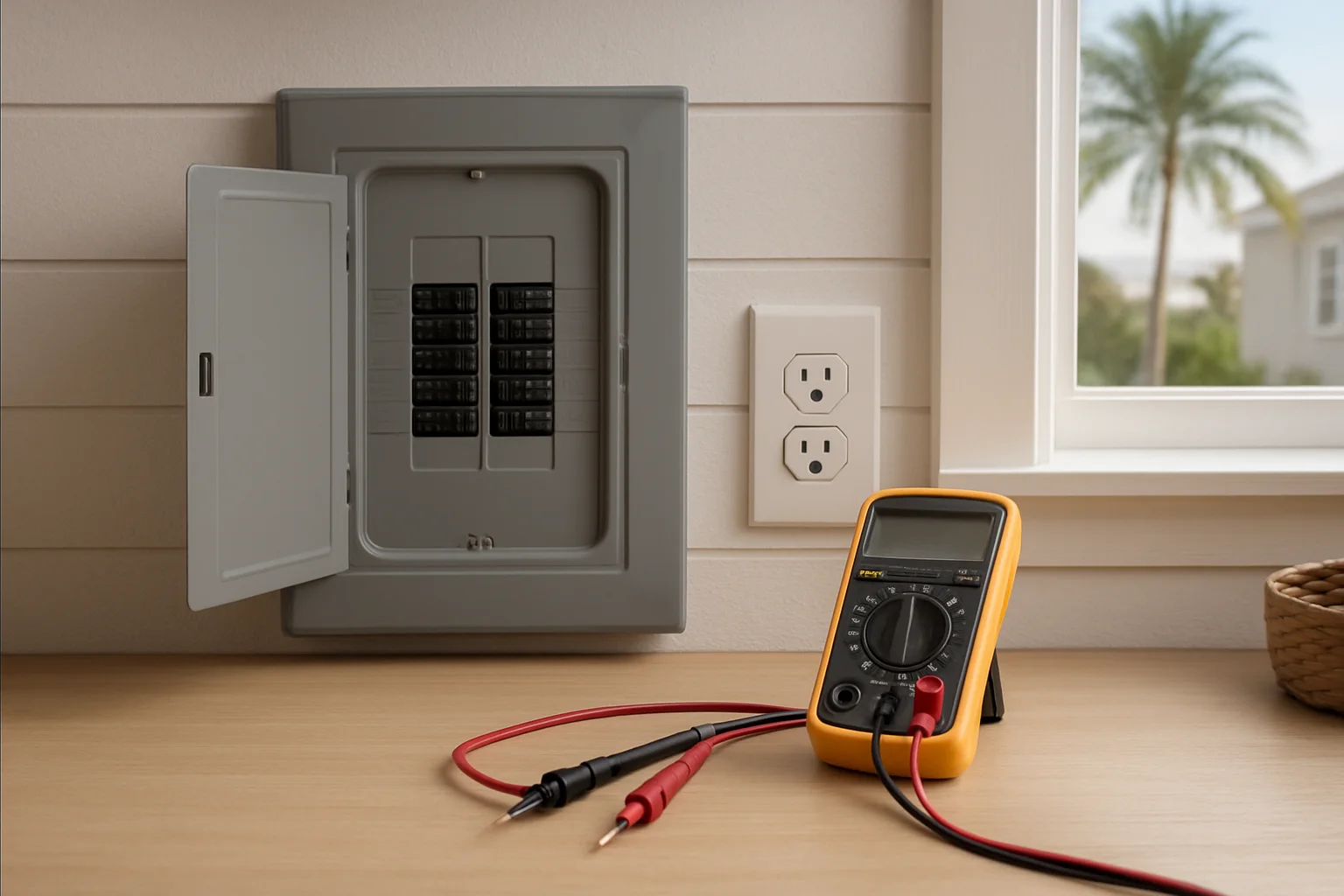
Why electrical replacement matters in Northwest Florida homes
Electrical systems age quietly. A breaker may keep resetting, a receptacle may feel loose, or lights may flicker only when certain appliances run. None of those signs automatically means there is an emergency, but they do mean the system is asking for attention. For homeowners in Bay, Walton, and Okaloosa counties, electrical replacement often becomes part of normal home maintenance as weather, humidity, salt air, and everyday wear take their toll on panels, devices, wiring connections, and other components. The goal is not to replace everything at once. The goal is to identify what is worn, what is outdated, and what should be corrected before a small issue becomes a larger repair.
In a coastal and storm-prone region, electrical equipment can be stressed by moisture, power interruptions, heavy cooling loads, and frequent use of surge-sensitive electronics. That makes professional evaluation especially valuable. A trained electrician can help distinguish between a symptom and the true source of the problem. For example, a single dim light could point to a faulty fixture, a loose connection, an overloaded circuit, or a utility-side issue. Replacing the wrong part wastes money and leaves the actual hazard in place. A proper assessment focuses on safety, reliability, and code-aware solutions tailored to the home’s age and condition.
How to think about warning signs without jumping to conclusions
Homeowners often notice electrical problems long before they know what the problem means. That is normal. The challenge is that the same symptom can have several possible causes. A warm outlet might be caused by a poor connection, a failing device, or a circuit carrying more load than it should. Frequent tripping could indicate a breaker near the end of its useful life, but it could also signal an appliance issue, a wiring fault, or a circuit that no longer matches the home’s electrical demand. Because of that overlap, warning signs should be treated as prompts for inspection rather than as instructions to replace a part on assumption alone.
A useful approach is to observe patterns. Does the issue happen in one room or throughout the house? Does it appear during hot afternoons when the air conditioner is working hardest? Does it happen after rain, after a storm, or only when multiple appliances are running? Those details help a professional narrow down the source. Homeowners do not need to diagnose the circuit themselves. They do need to notice timing, location, and frequency. That information can save time during an assessment and help the electrician decide whether a repair, a targeted replacement, or a broader electrical upgrade is the safer recommendation.
Flickering, dimming, and inconsistent lighting
Lighting changes are among the most common electrical warning signs homeowners notice. Flickering lights can be harmless in some situations, such as a bulb that is not fully seated, but repeated or widespread flickering deserves professional attention. If lights dim when a major appliance starts, the issue may be related to voltage drop, circuit loading, a loose connection, or service equipment that is not performing as expected. In older homes, especially those that have seen many years of additions or appliance upgrades, the electrical system may simply be working harder than it was originally designed to handle.
A professional diagnosis looks beyond the fixture. An electrician may check the affected circuit, connections at switches and outlets, panel condition, breaker performance, and the relationship between the lighting and other loads in the home. If the light issue is isolated, replacement may be limited to a device, fixture, or section of wiring. If the problem is part of a broader pattern, a panel or circuit upgrade may be more appropriate. The key is to determine whether the lighting symptom is cosmetic or a sign of deeper system strain. Because the wrong assumption can delay a needed fix, it is better to document the problem and have it evaluated than to keep changing bulbs and hoping the issue disappears.
Warm outlets, scorch marks, and loose receptacles
Outlets should not feel hot to the touch, and visible discoloration around a receptacle should always be taken seriously. Warmth, sparking, buzzing, or a burning smell can indicate a poor connection, internal damage, or excessive demand on the circuit. A loose outlet is also a concern, even if it still powers a device. When plugs do not fit securely, arcing and heat buildup can occur over time. In homes with older receptacles, frequent use can wear out the internal gripping parts, making the outlet less reliable and more likely to fail under normal use.
These are situations where professional assessment matters immediately. An electrician can determine whether the problem is limited to the receptacle itself or whether the issue extends to wiring, junctions, or upstream components. In some cases, replacement is straightforward. In others, the outlet is only the visible symptom of a problem that runs deeper into the circuit. That distinction is important because simply swapping the device without diagnosing why it failed can leave the underlying hazard unresolved. Homeowners should not repeatedly use an outlet that is overheating or showing burn marks. Instead, the safest course is to stop using it and have a qualified electrician inspect the circuit promptly so the correct replacement can be chosen.
Frequent breaker trips and what they can really mean
Circuit breakers are designed to protect the home, so a trip is not automatically a defect. In fact, a breaker that trips can be doing its job by interrupting an unsafe condition. However, if the same breaker trips often, the system is asking for a closer look. The cause might be a circuit that is overloaded by modern appliances, a breaker that is aging or weakened, a faulty appliance, or a wiring issue that needs correction. In Northwest Florida homes, high cooling demand can make overload issues more noticeable during warm seasons, especially when multiple large loads are running at once.
Professional diagnosis separates a protective action from a pattern of failure. An electrician can test the breaker, review the circuit load, inspect wiring integrity, and determine whether the panel still suits the home’s needs. Sometimes the answer is a targeted correction, such as moving a load or replacing a faulty breaker. In other cases, an outdated panel or undersized circuit may be the root cause, and electrical replacement becomes part of a broader safety plan. Homeowners should avoid treating repeated trips as a nuisance to be ignored. The breaker is often giving useful information about the condition of the home’s electrical system, and that information is best interpreted by someone who can assess the full picture rather than guessing from the symptom alone.
Outdated panels, overfusing, and legacy equipment
A home’s electrical panel is the center of distribution for the entire system. If it is outdated, crowded, or no longer aligned with the home’s electrical demand, replacement may become a practical safety decision. Some older homes still contain panels or related equipment that were designed for a different era of appliance use. Even when they continue to function, they may not provide the capacity, organization, or reliability modern households need. Signs such as rust, corrosion, scorch marks, excessive heat, buzzing, or a shortage of available circuit space can all point toward a panel that needs professional attention.
Legacy equipment can also create replacement questions in homes that have been remodeled or expanded over time. Additions, new HVAC systems, electric vehicle chargers, or updated kitchen appliances can change the electrical load significantly. An electrician will look at the panel’s condition, available capacity, breaker compatibility, grounding, and whether the home’s wiring has been modified safely over time. If replacement is recommended, it should be based on inspection findings, not appearance alone. A clean-looking panel is not always a safe one, and an older panel is not automatically unusable. The right decision depends on condition, design, code considerations, and the demands of the home. That is why professional diagnosis is so important before any major electrical replacement is planned.
Switches, dimmers, and devices that no longer behave normally
A switch that crackles, feels stiff, works intermittently, or causes lights to behave unpredictably can be more than an inconvenience. Switches, dimmers, and similar devices wear out with use. Over time, heat, dust, and mechanical fatigue can affect internal parts, especially in busy rooms. If a device seems loose, makes an unusual sound, or no longer performs consistently, replacement may be warranted. The same is true for older dimmers that were not designed for current lighting technology or for switches that have become visibly worn or discolored.
Diagnosis should include the device and the circuit behind it. An electrician can determine whether the problem is limited to the switch or whether the issue is coming from the load, the wiring, or the box itself. Sometimes a homeowner assumes the switch is failing when the real cause is a loose conductor or a fixture issue down the line. A professional assessment helps avoid unnecessary replacements and ensures that any new device is properly matched to the circuit and intended use. Because wall devices are touched often and may show wear before other parts of the system do, they can serve as early indicators that the home needs electrical attention. Addressing them promptly can prevent more disruptive problems later.
Buzzing, crackling, and unusual electrical sounds
Electrical systems should generally operate quietly. A persistent buzzing, crackling, or humming sound from a panel, outlet, switch, fixture, or appliance should never be dismissed as normal. Some noises are caused by the device itself and are relatively minor, but others point to loose parts, arcing, failing components, or mechanical vibration that can worsen over time. If a sound changes when a load turns on or off, that pattern may help an electrician identify where the issue is occurring. In a humid coastal environment, corrosion and moisture intrusion can also contribute to unusual electrical behavior.
Professional diagnosis is essential because sound alone cannot tell you the full story. An electrician may inspect terminations, test the device under load, and check for heat, wear, or damage that may not be visible from the outside. If the noise is coming from a panel or major component, the problem may require immediate replacement of the failed part or a larger corrective plan. Homeowners should not open equipment enclosures or try to silence the noise with tape, spray products, or temporary fixes. Those actions do not solve the root cause and can create added risk. The right response is to note where the sound occurs, when it happens, and how long it lasts so the electrician can evaluate it accurately.
Moisture, corrosion, and storm-related electrical wear
Northwest Florida homeowners are familiar with moisture as a part of life, but moisture is one of the toughest enemies of electrical reliability. Even when water does not reach major equipment directly, humidity and condensation can affect outlets, outdoor devices, service components, and connections exposed to the elements. Corrosion may appear as rust, greenish residue, discoloration, or a gritty texture on metal parts. After storms, minor intrusion or repeated dampness can lead to intermittent issues that are hard to trace without a careful inspection.
A professional evaluation after storm exposure can help identify whether components need repair or replacement. The electrician will look for signs of moisture damage, compromised enclosures, weakened connections, and outdoor equipment that may no longer be adequately protected. Outdoor receptacles, landscape wiring, pool-related electrical components, and service equipment near exposed areas deserve special attention because they are more likely to be affected by local weather conditions. Homeowners should not assume that if power returned after a storm, the system is fully fine. Hidden damage can show up later as nuisance trips, intermittent outages, or equipment failure. Diagnosing the system early helps reduce the chance of more expensive problems developing from a small, weather-related issue that was never properly addressed.
Older wiring, extensions, and signs the home has outgrown its system
Many homes were built with an electrical layout that reflected earlier patterns of use. Over time, homeowners add televisions, office equipment, kitchen appliances, entertainment systems, chargers, and comfort devices that place different demands on the system. If the home has long relied on extension cords, power strips, or a handful of overloaded outlets, that can be a sign the system is no longer keeping up with daily needs. While cords and strips may provide temporary convenience, they are not a substitute for proper circuit capacity or well-placed receptacles. Repeated dependence on them is often a clue that the home may need electrical replacement or expansion in targeted areas.
Older wiring can also become a concern when it shows age-related wear, frequent patching, or signs of prior modifications. An electrician will evaluate the overall condition of the wiring, the adequacy of grounding and bonding, the fit between old and new equipment, and whether the existing circuits can safely support modern loads. Sometimes the answer is localized replacement. Other times a more comprehensive update is the safer long-term choice. The important thing is to evaluate the home as a living system rather than one isolated device. Professional diagnosis helps homeowners understand whether the issue is a single weak link or a broader mismatch between the home’s infrastructure and the way the home is actually used.
How a professional electrical assessment works
A thorough assessment starts with listening to the homeowner’s observations. Where is the problem happening? When did it start? Does it occur in certain weather, at certain times of day, or when specific appliances are running? Those details help the electrician narrow the scope. From there, a professional inspection may include a visual review of accessible equipment, checks for wear or damage, testing of affected circuits, and evaluation of the panel and major connections. The goal is to identify the source, the extent of the issue, and whether the safest solution is repair, replacement, or system upgrade.
Professional diagnosis is more than spotting what looks old. It involves understanding whether components are performing within expected limits, whether the home’s electrical demand has changed, and whether the equipment still provides safe and reliable service. An electrician can also help homeowners prioritize. Not every warning sign means the whole system must be replaced right away. Sometimes the need is limited to a small section. Other times, replacing one failed component without addressing related issues would only postpone a bigger problem. A good assessment gives homeowners a clear, practical plan so they can make informed decisions instead of reacting to symptoms one by one.
Why replacement decisions should be based on condition, not guesswork
Electrical replacement should be driven by evidence. That means looking at the condition of the component, the frequency and severity of the symptom, the age and design of the system, and the overall safety picture. Homeowners sometimes wonder whether a single nuisance issue justifies replacement. The answer depends on what an inspection reveals. A minor, isolated problem may not require much more than a quick correction. But if the same symptom is tied to heat, corrosion, loose connections, or repeated failures, replacement may be the wiser long-term choice.
This condition-based approach protects both safety and budget. It avoids replacing parts that are still serviceable while making sure truly worn or hazardous components are not left in place. In a region like Northwest Florida, where homes can face humidity, storms, and high seasonal demand, that balanced approach is especially important. It is also why professional diagnosis matters so much. A qualified electrician can explain which components are affected, which ones are simply showing age, and which ones need immediate attention. That clarity helps homeowners plan responsibly rather than making decisions from fear, guesswork, or incomplete information. The best replacement plan is the one that fits the home’s actual condition.
When to call 850 Electrical and what to expect from service
If you notice recurring breaker trips, flickering lights, warm outlets, buzzing sounds, corrosion, or other unusual electrical behavior, it is a good time to schedule an evaluation. Homeowners in Bay, Walton, and Okaloosa counties can turn to 850 Electrical, part of veteran-owned A Superior Mechanical, for professional assessment focused on safety and practical solutions. The phone number is 850-258-3225. An experienced electrician can help determine whether the issue calls for repair, targeted replacement, or a broader update, and can explain the findings in a straightforward way so you understand the next step.
The benefit of calling a professional is not just convenience. It is confidence. Instead of wondering whether a symptom is harmless or serious, you get a trained diagnosis based on the condition of the system. That is especially valuable when signs are intermittent or difficult to reproduce. A proper evaluation gives you a clearer picture of the home’s electrical health and helps you avoid unnecessary disruption. For homeowners who want to keep their systems dependable through busy seasons, storm season, and everyday use, timely inspection is one of the smartest maintenance steps available. When electrical replacement is needed, the right diagnosis makes sure the work is targeted, justified, and aligned with the home’s real needs.
Explore related electrical care
- Electrical Replacement
- 24 Hour Emergency Electrical Service
- Battery Backup Systems
- Ceiling Fan Services
- Circuit Breaker Panels & Rewiring
- Commercial Electrical New Construction
Continue reading
- Data Network Cabling Warning Signs Every Northwest Florida Homeowner Should Know
- Whole Home Rewiring Warning Signs Northwest Florida Homeowners Should Know
- Pool, Spa & Hot Tub Wiring Warning Signs Northwest Florida Homeowners Should Know
Talk with the 850 Electrical team for help with your home or business.