
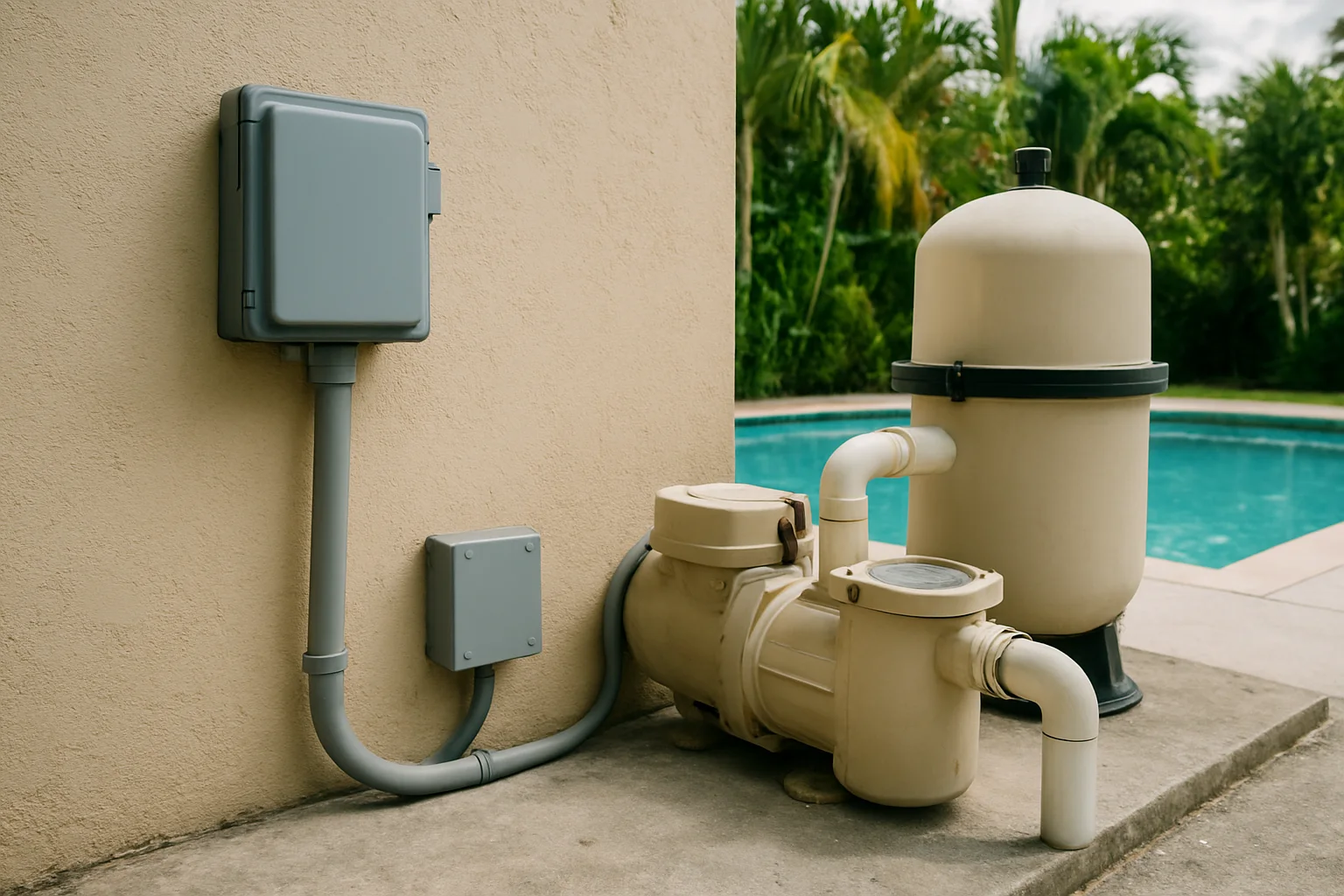
Why Pool and Spa Wiring Deserves Extra Attention in Northwest Florida
Pools, spas, and hot tubs are a welcome part of life in Bay, Walton, and Okaloosa counties, especially when warm weather stretches across much of the year. But the same features that make these amenities enjoyable also make them sensitive to electrical problems. Water, metal components, outdoor equipment, and long cable runs all increase the importance of correct design, bonding, grounding, and maintenance. When something is not right, the warning signs can be subtle at first, then become much more serious. For homeowners, the safest approach is to treat pool and spa electrical concerns as issues that deserve prompt professional attention rather than delay or guesswork.
Because this is a seasonal homeowner resource prepared for current use, it is meant to help you recognize when something needs a licensed electrician’s diagnosis, not to encourage hands-on troubleshooting. Outdoor electrical systems can involve hidden faults, corroded parts, overloaded circuits, damaged conduits, or equipment that no longer meets the needs of the property. Professional evaluation is especially important around water features because a small electrical defect can create a hazard that is not obvious from the surface. 850 Electrical, part of veteran-owned A Superior Mechanical, serves homeowners across Bay, Walton, and Okaloosa counties, FL, and can help assess these systems safely. If you suspect a problem, call 850-258-3225 for help.
How Pool, Spa, and Hot Tub Systems Depend on Correct Electrical Design
Pool and spa wiring is not just about making the pump or heater run. These systems often require coordinated electrical design that accounts for dedicated circuits, proper conductor sizing, correct protection, bonding of metallic parts, and outdoor-rated materials. A spa may need one type of supply arrangement, while a pool pump, heater, lighting circuit, or salt system may each place different demands on the electrical service. If the original installation was rushed, modified over time, or exposed to coastal weather, the system can develop weak points that may not show up until equipment begins acting strangely.
Professional diagnosis matters because the visible symptom is often not the true cause. For example, a tripping breaker may point to a failing motor, a loose connection, a moisture intrusion issue, or a load problem elsewhere in the circuit. Flickering lights may reflect voltage drop, damaged wiring, or a control issue. A qualified electrician can look at the full system, not just the appliance. That broader view is important for outdoor living spaces in Northwest Florida, where humidity, salt air, storms, and frequent use can all influence how long components last and how they perform over time.
Warning Sign: Breakers That Trip Repeatedly
One of the most common early warning signs is a breaker that trips more than once. Homeowners may reset it and hope the issue disappears, but repeated tripping is a sign that the circuit is doing more than it should or that a fault is present. In a pool or spa setting, that could involve an aging pump motor, a heater problem, a wiring defect, a loose termination, or an issue with connected accessories. It is also possible that the equipment is no longer matched properly to the electrical load it is asking for.
A professional diagnosis begins by determining whether the breaker is protecting the circuit as intended or responding to an abnormal condition. The electrician may inspect the panel, the disconnect, the wiring path, the equipment connections, and the load characteristics of the pool or spa system. That process helps separate a true overload from a damaged component or environmental problem. Homeowners should not keep resetting a breaker as a routine fix, because repeated interruption can be a symptom of stress in the system. In a wet environment, that is not something to dismiss. A careful assessment can help identify the real issue before equipment is damaged further or the hazard grows.
Warning Sign: Lights That Flicker, Dim, or Behave Irregularly
Pool and spa lighting should be steady and predictable. If lights flicker, dim, buzz, or behave inconsistently, the problem may be more than a simple bulb issue. Outdoor lighting around water features can be affected by loose connections, moisture entry, failing transformers, incorrect voltage, or damaged fixtures. In some cases, a homeowner notices the problem only after a storm, after landscaping work, or after the equipment has been running for a while. Even if the lights still turn on, irregular behavior is a sign that the circuit needs attention.
Professional diagnosis matters because lighting symptoms can overlap with broader wiring problems. An electrician will examine the fixture, the supply path, the controls, and any related outdoor electrical components to determine whether the issue is localized or part of a larger concern. This is especially important when lighting is integrated into pool equipment areas, spa controls, or exterior living spaces. Since water and electricity are a high-risk combination, homeowners should not assume that a flickering light is harmless. A proper inspection can reveal whether the problem is related to corrosion, loose wiring, degraded insulation, or a fault in the control system, and can guide safe next steps without unnecessary replacement of parts that are still serviceable.
Warning Sign: Warm, Hot, or Discolored Equipment and Connections
Heat where it should not be present is always worth attention. If a breaker, switch, disconnect, control panel, outlet, or equipment cover feels unusually warm, or if you notice discoloration, melting, odor, or warping, the system may be experiencing resistance at a connection or an overloaded condition. Around pools and spas, heat-related warning signs may appear in equipment pads, accessory circuits, or control enclosures. Coastal moisture, age, and repeated use can all contribute to connections loosening over time. What begins as a small temperature increase can become a much larger problem if ignored.
Professional assessment is important because visual clues do not tell the whole story. An electrician can check whether heat is being caused by loose terminations, improper conductor sizing, failing components, or a control issue that is causing the equipment to work harder than it should. The goal is not simply to cool the symptom, but to understand why it is happening. In many cases, that means inspecting the entire path from the service equipment to the spa or pool component. Homeowners should avoid using or touching obviously heat-damaged electrical parts and should arrange for a qualified diagnosis as soon as possible. Heat damage in a wet outdoor setting is a serious indicator that the system needs professional review.
Warning Sign: GFCI Devices That Trip or Stop Working Normally
Ground-fault protection is a critical safety feature around pool and spa equipment. If a GFCI device trips occasionally, trips repeatedly, or will not reset normally, there may be a genuine fault in the connected equipment or wiring. Sometimes homeowners first notice that a pump, spa, or light will not stay on, and the issue seems random. Other times, the device appears to trip without a clear pattern. In either case, the behavior deserves more than a quick reset. A GFCI can be responding to moisture, damaged wiring, a deteriorating component, or an imbalance that requires investigation.
A professional diagnosis is especially useful here because a tripping GFCI is not the problem itself; it is the protection device warning that something may be wrong. An electrician can determine whether the device is operating correctly, whether the equipment is causing nuisance tripping, or whether there is a wiring concern upstream or downstream of the device. This matters because replacing a protective device without identifying the cause can leave the real hazard in place. For homeowners in Northwest Florida, where moisture and outdoor exposure are common, dependable ground-fault protection is essential. If a GFCI is not behaving as expected, it should be treated as a signal to request a full inspection rather than to keep forcing the circuit back into service.
Warning Sign: Corrosion, Rust, or Moisture Intrusion
Outdoor electrical systems in Bay, Walton, and Okaloosa counties must contend with humidity, rain, salt air, condensation, and sometimes storm-related exposure. Over time, these conditions can damage enclosures, fasteners, conduit fittings, and internal connections. Corrosion or rust around pool equipment, spa panels, junction areas, or outdoor receptacles can indicate that the system has been exposed to moisture or that weatherproofing is no longer adequate. White residue, greenish discoloration, swollen conduit parts, or moisture inside enclosures are also signs that should not be ignored.
Professional diagnosis is important because moisture problems are not always visible at the exact point where the electrical fault exists. Water can travel along surfaces, enter through compromised seals, or affect wiring connections inside a box that appears intact from the outside. An electrician can trace likely entry points, evaluate whether the enclosure and wiring methods remain appropriate, and identify what needs repair or replacement. In some cases, the best fix is not a simple component swap but a broader correction to the installation so the same problem does not recur. For pool and spa owners, corrosion should be treated as evidence that the system needs a closer look, especially after heavy rain, tropical weather, or long periods of outdoor exposure.
Warning Sign: Pumps, Heaters, or Controls That Start and Stop Erratically
A pool pump or spa system that starts and stops on its own, struggles to maintain operation, or behaves unpredictably may be showing an electrical or control issue. Homeowners sometimes assume the equipment is just old, but erratic operation can also signal failing relays, loose wiring, control board problems, voltage issues, or a motor that is under strain. If the equipment seems to work only sometimes, especially after weather changes or during periods of heavy use, that inconsistency is a reason to seek a professional diagnosis.
An electrician can investigate whether the issue originates in the supply side, the control side, or the equipment itself. That may involve reviewing how the system is wired, checking for signs of overheating or mechanical wear, and confirming whether the circuit is delivering power consistently. The advantage of a professional assessment is that it can prevent unnecessary replacement of equipment that is actually reacting to a wiring or control defect. It also helps ensure the system is not being forced to operate under conditions that could shorten its life or create a safety issue. Homeowners should not rely on repeated manual restarts as a solution. With pool and spa systems, inconsistent operation is often an early sign that something more significant is developing.
Warning Sign: A Tingling Sensation, Shock, or Stray Current Concerns
Any sensation of tingling, shock, or unusual electrical feeling near a pool, spa, or surrounding deck should be treated as urgent. Even if the sensation is brief or seems minor, it can indicate that something in the electrical system is not functioning correctly. The source may involve bonding, grounding, damaged equipment, a wiring fault, or another condition that requires immediate attention. Because water and bare skin create a dangerous combination, homeowners should not attempt to test, confirm, or continue using the system in hopes that the feeling goes away.
This is one of the strongest reasons to call a professional right away. A trained electrician can inspect the system methodically and evaluate the pool or spa equipment, the associated circuits, and the grounding and bonding components that help maintain safety. That diagnosis is not about making assumptions from a single symptom. It is about finding the path the current may be taking and determining what corrective action is needed. Homeowners should avoid using the area until the issue has been professionally assessed. In a pool or spa environment, any shock-related concern deserves prompt, qualified attention rather than waiting for another sign or trying to reproduce the sensation. Safety in this setting depends on quick response and thorough evaluation.
Warning Sign: Outdoor Receptacles or Switches That Fail in Wet Weather
Outdoor receptacles and switches near pool areas can be especially vulnerable to weather. If outlets stop working after rain, feel loose, show discoloration, or have covers that do not close properly, the issue may involve moisture intrusion, damaged wiring, aging parts, or deterioration from exposure. Homeowners may also notice that certain accessories only work intermittently when the weather is humid or windy. Because these components are outdoors, their reliability is directly tied to how well they are protected and installed.
Professional diagnosis helps determine whether the problem is isolated to a receptacle or switch, or whether the issue reflects a broader outdoor wiring concern. An electrician can inspect for weatherproofing failures, incorrect installation methods, worn parts, and signs that the circuit needs more than a simple device replacement. This kind of assessment is especially valuable around pools and spas, where exterior outlets may power cleaning equipment, lighting, or other amenities. The goal is to restore dependable operation without overlooking the underlying reason the weather made the problem worse. In a Northwest Florida climate that can shift from dry to very wet quickly, outdoor electrical parts should be evaluated anytime they begin failing in connection with rain or humidity.
How a Professional Electrical Diagnosis Works
A professional electrical diagnosis begins with listening to the homeowner’s observations and then inspecting the system as a whole. Rather than focusing on only the visible symptom, an electrician looks at the equipment, wiring, protection devices, enclosures, and surrounding conditions. This may include identifying which components are involved, when the problem appears, whether weather affects the issue, and whether the system has been modified over time. For pool and spa wiring, that bigger picture is essential because symptoms often overlap and one fault can influence several parts of the system.
The value of professional diagnosis is that it is systematic. A qualified electrician can use appropriate tools and methods to check connections, evaluate circuit performance, look for environmental damage, and determine whether the issue is electrical, control-related, or equipment-related. Homeowners benefit because the diagnosis can help avoid unnecessary replacement of functioning parts and can focus attention on the true source of the concern. It also provides a safer path forward when the symptoms involve water, heat, tripping protection, or shock concerns. If the problem is not obvious, that does not mean it is not serious. It simply means the system needs trained eyes and the right process to identify what is happening and what repair approach makes sense.
What Homeowners Can Notice Safely Before Calling for Help
There are safe, non-invasive observations homeowners can make before requesting service. You can note when the problem started, whether it happens during startup or after the system has run for a while, whether it follows rain or humidity, and whether only one component is affected or several. You can also observe visible signs such as rust, discoloration, condensation inside covers, unusual sounds, odors, or repeated breaker trips. These details can be very helpful during a professional visit because they point the electrician toward likely causes more quickly. The key is to observe, not intervene.
What you should not do is open enclosures, handle exposed wiring, bypass protection devices, or keep resetting equipment in hopes of “seeing if it works.” Pool and spa electrical systems deserve caution because the wrong action can increase risk. If a device is hot, cracked, wet, sparking, or giving off a burning smell, the safest choice is to avoid using that equipment and request professional help. Clear notes and photos of visible symptoms, taken from a safe distance, can help the electrician understand the issue without putting anyone at risk. This kind of preparation supports a better diagnosis while keeping the homeowner out of harm’s way.
When to Call 850 Electrical for Pool, Spa, and Hot Tub Concerns
If your pool, spa, or hot tub is showing repeated electrical warning signs, the right next step is a professional assessment. That includes tripping breakers, failing GFCI devices, flickering lights, corrosion, erratic operation, heat damage, weather-related failure, or any shock-related concern. These systems are too important to treat casually, especially in a coastal and humid region where outdoor components are constantly challenged. A proper diagnosis can help you understand whether the issue is isolated, recurring, or part of a larger electrical condition that needs correction.
850 Electrical, part of veteran-owned A Superior Mechanical, serves Bay, Walton, and Okaloosa counties, FL. If you need help evaluating pool, spa, or hot tub wiring concerns, call 850-258-3225. A professional inspection can provide clarity, improve safety, and help protect the equipment you rely on for comfort and recreation. Homeowners do not need to guess at the cause or keep cycling equipment in hopes that the symptom disappears. When water and electricity meet, the safest choice is careful diagnosis by a qualified electrician who can assess the system thoroughly and recommend the appropriate next step.
Explore related electrical care
- Pool, Spa & Hot Tub Wiring
- Home Theater & AV Wiring
- Security System Wiring
- 24 Hour Emergency Electrical Service
- Battery Backup Systems
- Ceiling Fan Services
Continue reading
- Whole Home Rewiring Warning Signs Northwest Florida Homeowners Should Know
- Security System Wiring Warning Signs Northwest Florida Homeowners Should Not Ignore
- Home Theater and AV Wiring Warning Signs Northwest Florida Homeowners Should Not Ignore
Talk with the 850 Electrical team for help with your home or business.