
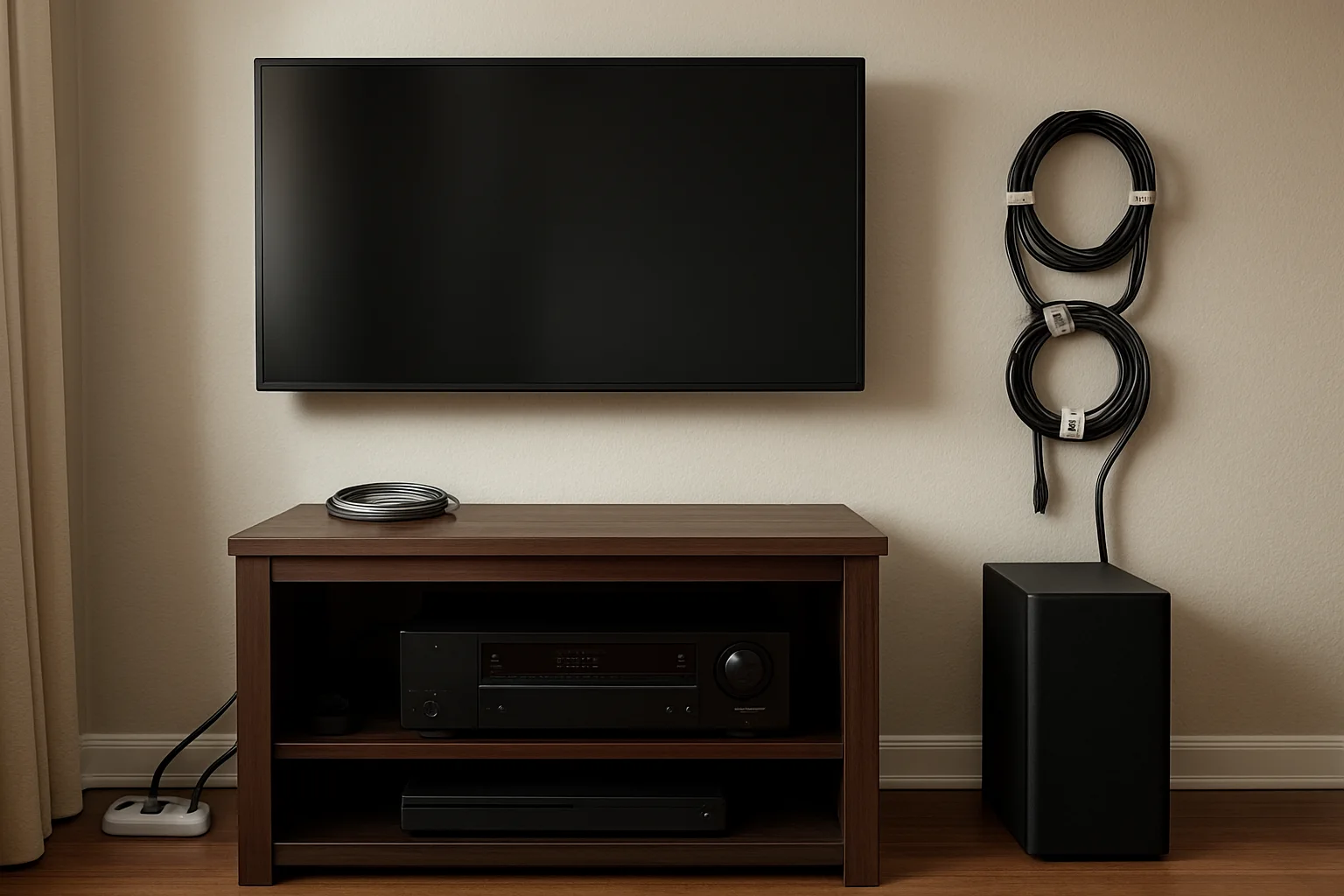
Why AV wiring deserves a close look
A home theater or whole-home audio system can seem simple from the outside: a TV, a receiver, a few speakers, and maybe a streaming device or projector. But behind that convenience is a network of power, signal, and control wiring that has to work together cleanly and safely. When something is off, the symptoms can look like a bad speaker, a failing TV, or a weak internet connection when the real issue is wiring, grounding, overload, or an installation that no longer matches how the room is used. For homeowners in Northwest Florida, where humidity, storms, and remodeling are part of normal life, those hidden issues can surface slowly and become harder to diagnose over time.
A careful understanding of warning signs matters because AV systems are often blended with general household electrical service. A circuit that was once adequate may now support a bigger display, soundbar, gaming consoles, subwoofers, network gear, and charging devices. Cords can be pinched behind furniture, cables can be run too close to heat or moisture, and old connections can loosen with age or vibration. Professional assessment helps sort out whether the trouble is in the equipment itself, the signal path, the power supply, or the wiring arrangement supporting it. For homeowners who want the system to perform reliably, the first step is noticing patterns rather than guessing at a single bad component.
What makes Northwest Florida homes different
Homes in Bay, Walton, and Okaloosa counties face conditions that can influence the performance of AV wiring. Coastal air brings humidity and salt exposure that can affect metal connections over time. Afternoon thunderstorms can bring power fluctuations, surges, or brief interruptions that may not damage a system immediately but can weaken sensitive electronics or reveal poor wiring practices. In newer homes, open-concept layouts and media rooms often encourage larger or more complex entertainment setups than the original electrical planning anticipated. In older homes, additions and remodels sometimes leave behind mixed wiring conditions that are not obvious until a homeowner starts having AV problems.
Seasonal use also plays a role. A system might work fine during a quiet stretch, then show problems when guests visit, when the game room gets more use, or when holiday gatherings increase the load on one area of the home. Outdoor TVs and patio audio systems may face their own set of issues, especially when wiring transitions between indoor and outdoor spaces. In this region, professional diagnosis is valuable because the right fix depends on the environment as much as the device. An experienced electrician can evaluate whether the wiring route, circuit capacity, protection devices, and connection points are appropriate for local conditions and the way the room is actually used.
Flickering displays and intermittent shutdowns
One of the most common warning signs is a display that flickers, blanks out briefly, or powers off and back on without a clear reason. Homeowners often assume the television is failing, but the source may be a loose outlet, voltage drop, an overloaded circuit, or a poor-quality connection somewhere in the AV chain. Intermittent shutdowns can be especially frustrating because they are not constant. The problem may appear only when the subwoofer kicks in, when a gaming console is active, or when several devices are on at the same time. That pattern suggests the issue may be tied to power delivery rather than the display alone.
Professional assessment looks beyond the symptom and checks the conditions around it. An electrician can evaluate the circuit feeding the entertainment area, look for heat at receptacles or connections, and determine whether the load on the circuit is reasonable. They can also identify signs of a failing surge device, a damaged cord, or a weak connection that may be interrupting power momentarily. Because these symptoms can point to hidden electrical stress, it is important not to keep resetting devices and hoping the issue disappears. A correct diagnosis can prevent repeated equipment damage and can help protect the home if the underlying problem is more serious than a single appliance issue.
Buzzing, humming, or crackling sounds
Audio systems are built to reproduce sound accurately, so extra noise that was not part of the content is a clear warning sign. A low buzz, hum, crackle, or static sound can come from grounding issues, loose terminations, signal interference, damaged cables, or an electrical problem shared by nearby devices. Sometimes the sound changes when a lamp turns on, when a refrigerator cycles, or when a dimmer is adjusted. That kind of reaction often points to electrical interference entering the audio path or to a wiring arrangement that is not well isolated from other household loads.
It is tempting to focus only on the speaker or receiver, but professional diagnosis examines the entire path. An electrician can check whether power and signal cables are too close together, whether connectors are secure, and whether the system is being affected by a grounding condition elsewhere in the home. They can also look for signs of a circuit that is carrying more than intended or sharing space with equipment that introduces noise. Homeowners should not pull apart wall plates or open enclosures themselves, since that can create a shock hazard and make the original issue harder to identify. A methodical inspection helps distinguish a simple equipment fault from a wiring problem that could continue to affect the system until corrected.
Picture or sound that cuts out when the volume rises
If a home theater performs normally at low volume but cuts out or distorts when the sound gets louder, that is often a clue that the system is being strained. The cause may be the amplifier, but it may also be the electrical supply supporting it. Higher volume can increase demand on the equipment, and if the circuit is already burdened by other devices, the system may behave unpredictably. In some homes, the problem shows up only during action scenes or sports events when multiple components are working harder at once. A display or receiver that seems fine during casual use can suddenly expose a hidden wiring or load issue under heavier demand.
Professional evaluation helps determine whether the issue is in the audio gear, the cable path, or the power feeding the space. An electrician can test the circuit and look for symptoms of voltage sag, loose connections, or improper load distribution. They can also help homeowners understand whether the current setup is matched to the room’s use or whether the installation needs a dedicated or reorganized electrical approach. The goal is not to make the system louder or more powerful through guesswork, but to ensure that it has a stable foundation. When sound cuts out under load, that is a warning worth investigating before the problem spreads to other electronics or creates unnecessary wear on the equipment.
Warm outlets, switches, or equipment cabinets
Heat is one of the clearest warning signs that something in the electrical path is not right. Outlets that feel warm, switches that seem hotter than expected, or media cabinets that trap noticeable heat around power strips and adapters should not be ignored. AV setups often pack many devices into a small area, and that concentration can create poor airflow, stressed cords, or overloaded receptacles. Even when the equipment itself runs normally, heat can point to loose connections or too much current on a single circuit. A cabinet with a receiver, modem, gaming system, streaming box, and surge protection all in one place may look neat, but the hidden wiring conditions can still be under strain.
A professional inspection can identify whether the heat is coming from normal equipment operation or from a problem in the electrical supply. Electricians can assess load levels, check for deteriorated receptacles, and confirm that the outlet and circuit are suitable for the arrangement in use. They can also recommend practical changes that improve safety and performance, such as better circuit organization or improved outlet placement. Homeowners should not ignore warmth simply because the system still works. Heat often appears before a more obvious failure, and in some cases it is an early sign that a connection is loosening or that the circuit is carrying more than it should. Catching that early can help prevent equipment damage and reduce risk in the room.
Tripped breakers and repeated resets
A breaker that trips once may have a simple explanation, but repeated tripping around a media room or entertainment area deserves a closer look. Home theater equipment, powered subwoofers, projectors, and network gear can create a load pattern that behaves differently from standard household lighting or appliance circuits. If the breaker trips whenever several pieces of equipment run at once, that may indicate the circuit is undersized for the current use or that the wiring has a fault. In some cases, the breaker is doing its job by interrupting unsafe conditions. In others, it is revealing that the system was never set up to handle the demand placed on it today.
Professional diagnosis is important because resetting a breaker over and over does not solve the cause. An electrician can determine whether the issue is overload, a failing device, a loose connection, or a broader circuit concern. They can also compare the actual use of the room with the capacity of the branch circuit and recommend corrective steps based on the home’s layout. Homeowners should avoid treating repeated resets as a normal inconvenience. Breakers are protective devices, and frequent trips are a message from the system that something needs attention. Proper evaluation helps separate a temporary overload from a condition that could damage equipment or create a safety concern if left unresolved.
Video lag, dropouts, and signal loss that seem random
Not every AV problem is electrical power related. Video that cuts out, a projector that loses signal, or a sound system that drops connection at random can reflect issues in the wiring path itself. HDMI and other low-voltage connections are sensitive to cable condition, distance, connector quality, and how the wiring was routed through the home. If signal cables are bent too sharply, pinched behind furniture, run near noisy power sources, or connected through outdated splitters or adapters, the system can behave inconsistently. Homeowners may blame the streaming service or the television when the real issue is in the cable pathway.
A professional diagnosis can distinguish between a signal problem and a power problem, which is essential for choosing the right fix. Electricians and qualified AV-focused technicians can inspect the route, verify connections, and identify whether the installation needs better cable management, separation from electrical lines, or improved termination points. They can also evaluate whether the system design is realistic for the room size and the equipment being used. The point is not to keep adding adapters in hopes of making the issue disappear. Reliable AV performance depends on clean signal paths and sound installation practices. When dropouts appear without a clear pattern, the safest approach is to have the system checked before the problem worsens or leads to repeated equipment replacement.
Storms, surges, and power quality concerns
Northwest Florida homeowners are familiar with weather that can change quickly. Thunderstorms, utility interruptions, and brief surges can affect home electronics even if the lights do not fully go out. Home theater systems are particularly sensitive because they combine multiple components, many of which communicate digitally and rely on stable power. A surge or power disturbance may not destroy equipment immediately, but it can create the kind of intermittent issues that are hard to trace later. If a system begins acting strangely after a storm, that timing is worth noting, even if the failure appears minor at first.
Professional assessment after weather-related problems is useful because the damage may not be obvious. An electrician can evaluate whether the home’s protective devices are appropriate, whether receptacles or connections were affected, and whether the system is now showing signs of hidden stress. They can also help homeowners understand the difference between a one-time outage issue and a pattern that suggests inadequate protection or wiring weakness. This matters for both indoor and outdoor entertainment spaces, where equipment may be more exposed. A careful review can reduce the chance of repeat damage and can help restore confidence that the system is operating on a stable electrical foundation rather than a compromised one.
Hidden problems behind walls and media cabinets
Many AV issues start in places homeowners cannot easily see. Behind a wall-mounted TV or inside a media cabinet, cables may be compressed, receptacles may be crowded, or older wiring may be reused in ways that no longer match current needs. A system can look organized on the outside while hiding conditions that create heat, interference, or intermittent faults. In homes that have been remodeled, cabling may have been added in stages, leaving mixed materials and connection points that are difficult to evaluate without opening the right access points. That is why a quick visual check at the TV itself may miss the actual source of the problem.
Professional diagnosis brings structure to that hidden side of the system. Electricians can inspect accessible wiring routes, look for signs of improper connections, and assess whether the installation meets the needs of the room as it is used today. They can also help homeowners plan improvements that keep power, signal, and ventilation organized rather than crowded together. This is especially valuable when equipment is stacked tightly in a cabinet or routed through a wall where airflow is limited. Homeowners should not attempt to trace concealed wiring by cutting into walls or opening electrical enclosures. A professional assessment protects the home, avoids unnecessary damage, and gives a clearer answer about what is actually causing the system trouble.
Why professional diagnosis is better than guesswork
AV problems often invite guessing because the symptoms overlap. A humming speaker might be blamed on the receiver, a flickering image on the TV, or a breaker trip on one single appliance. But these symptoms can overlap because the underlying causes overlap too. Power quality, grounding, load balance, cable routing, connection integrity, and equipment age can all influence the same system. Swapping parts randomly may sometimes mask the issue for a while, but it rarely explains why the problem started in the first place. For homeowners, the value of professional diagnosis is clarity. It turns a vague complaint into a measurable problem that can be fixed with the right approach.
An electrician’s role is to evaluate the electrical side of the system and help determine whether the concern is rooted in the home wiring, the circuit design, or the equipment setup. That may include looking at the condition of outlets, checking load distribution, reviewing the path of power and low-voltage cabling, and identifying any signs of stress or mismatch. The result is a more reliable plan and fewer unnecessary replacements. Professional diagnosis is also important because it respects safety. A system that seems merely annoying can be showing signs of a condition that should not be ignored. Getting the right answer early is often the most efficient way to protect both the equipment and the home.
What homeowners can check safely before calling
There are a few safe observations homeowners can make before scheduling service. You can note when the problem occurs, which devices are on, whether it happens during storms or only at certain times of day, and whether the issue affects one piece of equipment or the entire setup. You can also look for visible signs such as a warm outlet cover, a loose plug that does not stay seated, discoloration on a receptacle, or a cabinet that seems to trap too much heat. These observations are helpful because they give the electrician a clearer picture of the pattern. The more specific the pattern, the faster a professional can narrow down the likely cause.
What homeowners should not do is open receptacles, remove cover plates, push tools into outlets, or rewire equipment that is already acting unpredictably. Those actions can create shock hazards and may erase the clues that help identify the real issue. It is also wise not to keep forcing a system to operate if it repeatedly trips breakers, overheats, or emits unusual noises. A safe observation checklist is useful only when it stays observational. Once the signs point to a possible electrical or wiring concern, the next step should be a professional inspection. That is the best way to move from uncertainty to a dependable solution without risking injury or additional damage.
How 850 Electrical supports home theater and AV wiring needs
Homeowners in Bay, Walton, and Okaloosa counties who are dealing with home theater or AV wiring concerns need a professional who can evaluate the whole electrical picture, not just the visible equipment. 850 Electrical, part of veteran-owned A Superior Mechanical, serves the region with electrical service that can help diagnose the wiring and power conditions affecting entertainment systems. Whether the concern is a flickering display, repeated breaker trips, hum in the speakers, or a setup that no longer matches the way the room is used, a professional assessment can identify the source and guide the next step. The goal is to improve reliability while keeping safety at the center of the work.
If your home theater or AV system is showing warning signs, it is worth having the electrical side reviewed before the problem grows more expensive or more disruptive. An informed inspection can distinguish equipment trouble from a home wiring concern and can point to practical solutions that fit the space. For service in Northwest Florida, homeowners can contact 850 Electrical at 850-258-3225. An appointment for professional diagnosis is the best way to protect your equipment, reduce uncertainty, and make sure the system supporting your entertainment is as dependable as the rest of your home.
Explore related electrical care
- Home Theater & AV Wiring
- Pool, Spa & Hot Tub Wiring
- Security System Wiring
- Smart Home Integration
- Whole Home Backup Solutions
- Whole Home Rewiring
Continue reading
- Whole-Home Backup Power Warning Signs Northwest Florida Homeowners Should Not Ignore
- Smart Home Integration Warning Signs Northwest Florida Homeowners Should Not Ignore
- Security System Wiring Warning Signs Northwest Florida Homeowners Should Not Ignore
Talk with the 850 Electrical team for help with your home or business.