
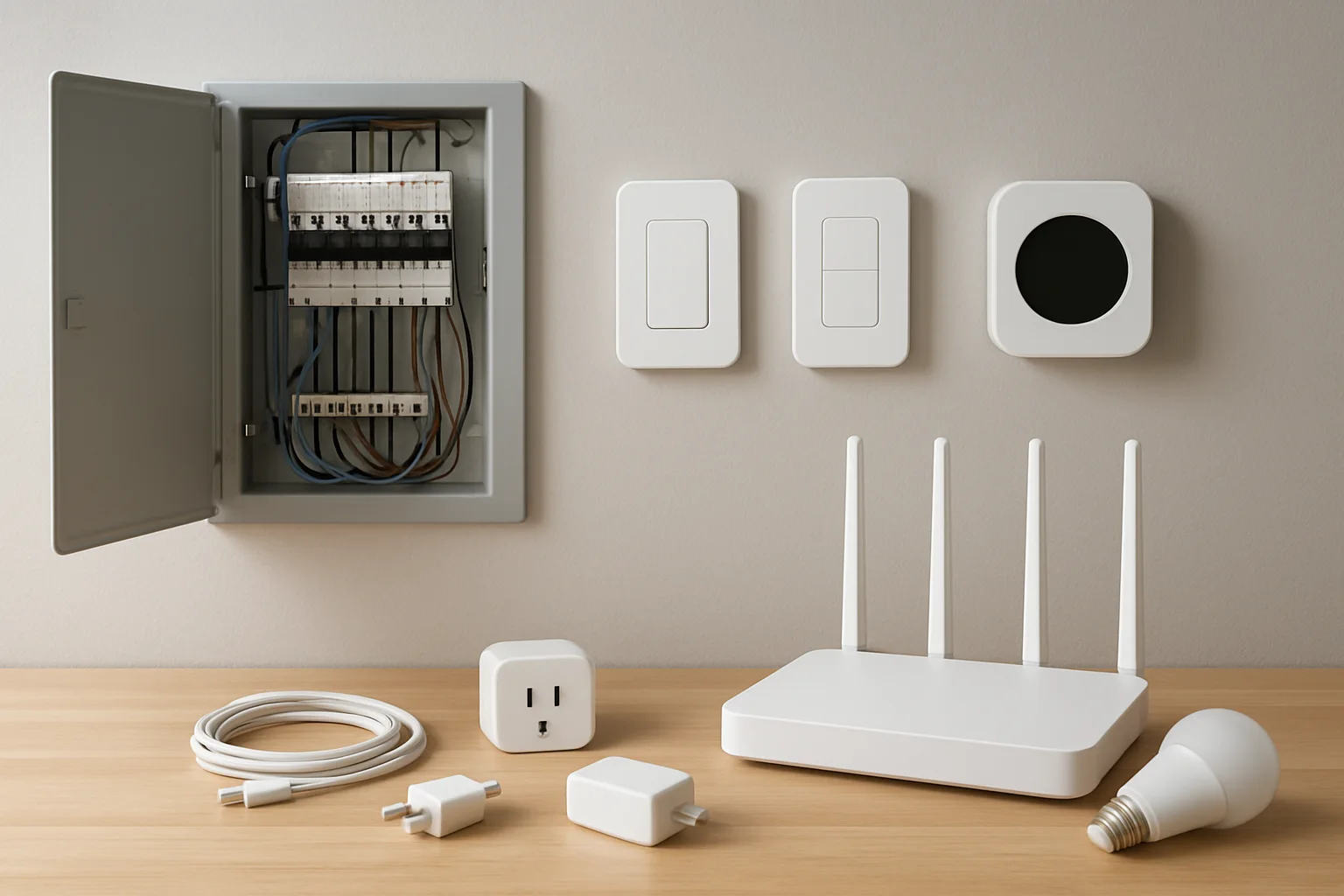
Why smart home issues deserve a closer look
Smart home features can make everyday life easier, from app-controlled lighting and thermostats to connected cameras, doorbells, locks, and whole-home automation. In Northwest Florida, those conveniences also depend on a home’s electrical system, Wi-Fi coverage, device compatibility, and the quality of the original installation. When one part of that chain starts to fail, the symptoms are not always obvious. A light that flickers only when a certain scene is activated, a doorbell that drops offline during heavy weather, or a smart switch that seems to reset without reason can all point to a larger integration issue rather than a single bad gadget.
For homeowners, the challenge is knowing when a problem is a normal technology hiccup and when it suggests an electrical issue that needs professional attention. That distinction matters because smart devices are not just accessories anymore; many are tied into daily routines, home security, comfort, and energy use. In coastal and storm-prone parts of Florida, heat, humidity, power fluctuations, and network interference can all stress these systems. A professional assessment helps determine whether the concern is device-related, wiring-related, or a compatibility issue across several components.
Frequent disconnects and devices going offline
One of the clearest warning signs of a smart home integration problem is repeated disconnection. If devices disappear from the app, stop responding to voice commands, or require frequent re-pairing, the issue may not be the device alone. Homeowners sometimes assume the router is the only culprit, but persistent offline behavior can also be linked to weak power delivery, overloaded circuits, poor device placement, or interference from other equipment. When several devices in different rooms show the same behavior, the problem may extend beyond the network and into the electrical system.
Professional diagnosis looks at the pattern, not just the symptom. An electrician can help determine whether the issue is isolated to a single manufacturer’s equipment, a communication problem between hubs and devices, or a home wiring condition affecting reliability. In some cases, older electrical panels or mixed-generation upgrades create conditions that make modern smart devices less stable. A trained assessment helps homeowners understand what is happening without guessing or replacing equipment unnecessarily. That saves time and can prevent repeated frustrations when the root cause remains untouched.
Lights that flicker, dim, or behave unpredictably
Smart lighting should feel consistent. If lights flicker when turned on, dim unevenly, respond slowly, or brighten and fade without a command, the system may be struggling with compatibility or circuit conditions. Some smart switches and dimmers require specific wiring arrangements or load types. When those conditions are not met, the result can be noisy performance, buzzing, delayed response, or a light that appears to work only part of the time. In homes with layered upgrades, a smart device may be installed into a circuit that was never designed for its exact requirements.
Flickering should never be dismissed as a minor annoyance. It can point to loose connections, overloaded circuits, improper device matching, or issues farther upstream in the electrical system. A professional can trace whether the behavior is triggered by the fixture, the dimmer, the load, or the circuit itself. That matters because the fix may not be replacing the visible device. Sometimes the real issue is hidden in the box, the wiring path, or the panel. A proper diagnosis helps homeowners avoid trial-and-error replacements that do not resolve the root cause and may create additional safety concerns.
Smart devices that reset, reboot, or lose settings
When smart thermostats, switches, hubs, or appliances reboot on their own or lose saved settings, homeowners often assume the device is defective. That can happen, but repeated resets also suggest instability in power delivery. Brief voltage dips, loose connections, or circuit interruptions can cause electronics to restart even if the outage is so short that the rest of the home barely notices. In a smart home, those small interruptions can create big frustrations, especially when they affect schedules, automations, or security-related devices.
A professional electrical assessment can identify whether the device is receiving clean, steady power and whether the circuit is properly supporting its load. In some cases, the issue may be related to shared circuits that experience brief demand spikes from other appliances. In others, the electrical system may need review because the device is sensitive to conditions that older systems were not built to handle. Rather than blaming the newest device, homeowners benefit from a systematic check that considers power quality, wiring integrity, and how multiple devices interact on the same branch circuit.
Delayed response between command and action
Smart homes should feel responsive. When you tap an app or issue a voice command, the delay should be minimal and consistent. If lights turn on several seconds late, scenes activate in the wrong order, or automated routines behave erratically, there may be a deeper integration problem. While internet speed can affect cloud-connected devices, lag can also reflect poor hub placement, wireless congestion, device incompatibility, or an electrical issue affecting one or more components on the system. In some cases, the delay appears only during peak usage times, which can make it harder for homeowners to identify the pattern.
Professional diagnosis helps separate network latency from electrical instability. An electrician can review whether the affected devices are on a circuit with heavy or inconsistent load, whether their power source is compromised, or whether the installation requires better planning for future expansion. Smart technology works best when the electrical and communication parts are designed to support each other. If response times are getting worse, it is worth examining the whole system rather than assuming the app is simply slow. A careful assessment can uncover whether the problem sits in the wiring, the device ecosystem, or both.
Warm outlets, buzzing sounds, or unusual odors
Heat, buzzing, or unusual odors around outlets, switches, or smart controls should be treated as important warning signs. These symptoms can indicate loose connections, overload, damaged components, or a device that is not suited to the circuit it is on. Even if the smart device still functions, abnormal heat or sound means the system is operating outside ideal conditions. Homeowners should not ignore these clues because smart devices are often installed in areas where wiring is already crowded or where multiple components share limited space in the box.
A professional diagnosis is especially important when a smart device is tied to a switched outlet, dimmer, or control module that gets warm to the touch. The visible device may be the first thing noticed, but the root cause could be in the wiring behind it or in how the circuit was originally configured. An electrician can evaluate the condition of the connection points, the compatibility of the device, and the load on the circuit. That process helps reduce the chance of ongoing stress to the electrical system and provides a clearer path forward than simply replacing a faceplate or swapping brands.
Automation routines that work sometimes but not always
A smart home routine that works one day and fails the next can feel like a software issue, but inconsistent automation often has multiple causes. If a scene controls several lights, a thermostat, and a fan, any weak link in the chain can disrupt the whole routine. Homeowners may see some devices execute properly while others miss commands, especially when the system depends on several brands or older equipment mixed with newer technology. In that situation, the house may not be “too smart” so much as insufficiently integrated.
Professional assessment helps map how the devices communicate and where the breakdown occurs. An electrician familiar with smart home integration can identify whether the issue is linked to power supply, circuit design, device compatibility, or control placement. Some routines fail because a device loses power briefly, while others fail because the original installation did not account for how many connected devices would eventually be added. A diagnosis should include the electrical context, not just the app behavior, so homeowners can decide whether the best solution is to repair, reconfigure, or upgrade part of the system.
Breaker trips and unexplained power interruptions
If a smart device installation seems to trigger breaker trips or repeated power interruptions, that is a sign the electrical system needs attention. Smart devices themselves do not automatically cause the problem; rather, they may expose an underlying circuit issue, an overloaded branch, or a mismatch between equipment and wiring capacity. Homeowners in Northwest Florida often add connected features gradually, which means a circuit that once had plenty of margin may now support several devices, chargers, fixtures, and appliances. The result can be instability that appears only after the latest addition.
A professional electrician can evaluate the full load on the circuit and determine whether the issue is related to demand, wiring condition, or device installation. This is important because repeated tripping is not something to work around. It signals that the electrical system is protecting itself from a condition that should be identified and corrected. In smart homes, breaker behavior may also reveal that devices were spread across the house without a strategic plan for load balance. A careful review can help homeowners understand which circuits are strained and how to improve reliability without sacrificing the convenience of connected technology.
Security devices that do not stay reliable
Smart doorbells, cameras, sensors, and locks are often among the most valued parts of a connected home because they support safety and convenience. But if a camera goes dark, a sensor misses activity, or a lock hesitates, the issue is more than an inconvenience. Reliability matters most for devices that homeowners depend on for entry, monitoring, and alerts. Inconsistent performance may stem from weak Wi-Fi, battery issues, or app settings, but it can also be connected to electrical supply problems if the device is hardwired or paired with a transformer, chime, or control circuit.
Because security devices are part of a home’s first line of awareness, they deserve professional evaluation when problems recur. An electrician can help determine whether the hardwired components are functioning correctly, whether the circuit is delivering stable power, and whether the installation was adapted properly for the specific device. This is especially important in homes where older wiring was updated in stages. A camera or doorbell that “mostly works” may still be unreliable enough to create blind spots. Professional diagnosis gives homeowners a clearer picture of whether the issue is local to one device or part of a larger integration problem.
After storms, surges, or repeated utility interruptions
In Northwest Florida, severe weather can interrupt power, strain home electronics, and expose weak points in connected systems. After a storm or surge event, smart devices may behave differently even if they were not visibly damaged. Homeowners might notice devices that no longer pair correctly, lights that behave inconsistently, or automation settings that seem to have been forgotten. A temporary outage can reveal problems that were already present, including sensitive components, marginal wiring, or equipment that lacks adequate protection.
Professional evaluation after a disruptive power event is wise because not all damage is obvious. Some equipment can appear functional while experiencing intermittent failure under load. An electrician can inspect how the system recovered, whether the panel or subcomponents show signs of stress, and whether surge protection or other safeguards need review as part of a broader home strategy. The goal is not only to restore the smart devices, but to understand whether the electrical system is prepared for future interruptions. That is especially relevant in a coastal region where homeowners need connected systems to remain dependable through changing weather conditions.
When adding new devices makes old problems worse
A smart home often expands gradually. A homeowner may start with a few smart bulbs, then add a thermostat, camera, doorbell, switches, and automated plugs. As the system grows, older issues that were easy to ignore can become more noticeable. A circuit that was already marginal may now show delayed response or flicker. A network that handled a few devices may struggle when the home becomes more connected. If problems seem to increase after each upgrade, the home may need a coordinated review rather than another isolated fix.
Professional diagnosis is valuable because it looks at how the new devices interact with the existing electrical layout. The issue may be less about the newest product and more about the system’s overall capacity and design. An electrician can help homeowners determine whether certain circuits should be rebalanced, whether a device should be moved to a more suitable location, or whether the home would benefit from a more organized plan for future expansion. Smart home integration works best when upgrades are treated as part of an electrical strategy, not just a collection of separate purchases. That approach can prevent recurring frustration and help the technology feel dependable over time.
What professional diagnosis should include
A thorough professional assessment should do more than confirm that a smart device is malfunctioning. It should look at the condition of the wiring, the load on the circuit, the compatibility of the device with the existing setup, and any signs of stress in related components. In some cases, a homeowner may need help understanding whether the issue is electrical, networking-related, or a combination of both. A good diagnosis identifies the root cause instead of treating the symptom in isolation. That is especially important when several devices are involved, because one weak point can create misleading symptoms elsewhere in the system.
For homeowners, the value of professional diagnosis is clarity. Rather than guessing at which device to replace, they can learn what is actually limiting performance and what changes would improve reliability. That can include identifying worn connections, load imbalances, or installation details that do not support the system’s current demands. For smart home integration, the right solution often depends on seeing the home as a connected whole. 850 Electrical, part of veteran-owned A Superior Mechanical, serves Bay, Walton, and Okaloosa counties FL and can help homeowners evaluate these concerns with an electrical-focused approach. For service, call 850-258-3225.
Explore related electrical care
- Smart Home Integration
- Home Theater & AV Wiring
- Smart Electrical Panel Installation
- Specialty & Smart Electrical Services
- Whole Home Backup Solutions
- Whole Home Rewiring
Continue reading
- Whole-Home Backup Power Warning Signs Northwest Florida Homeowners Should Not Ignore
- Home Theater and AV Wiring Warning Signs Northwest Florida Homeowners Should Not Ignore
- Whole Home Rewiring Warning Signs Northwest Florida Homeowners Should Know
Talk with the 850 Electrical team for help with your home or business.