
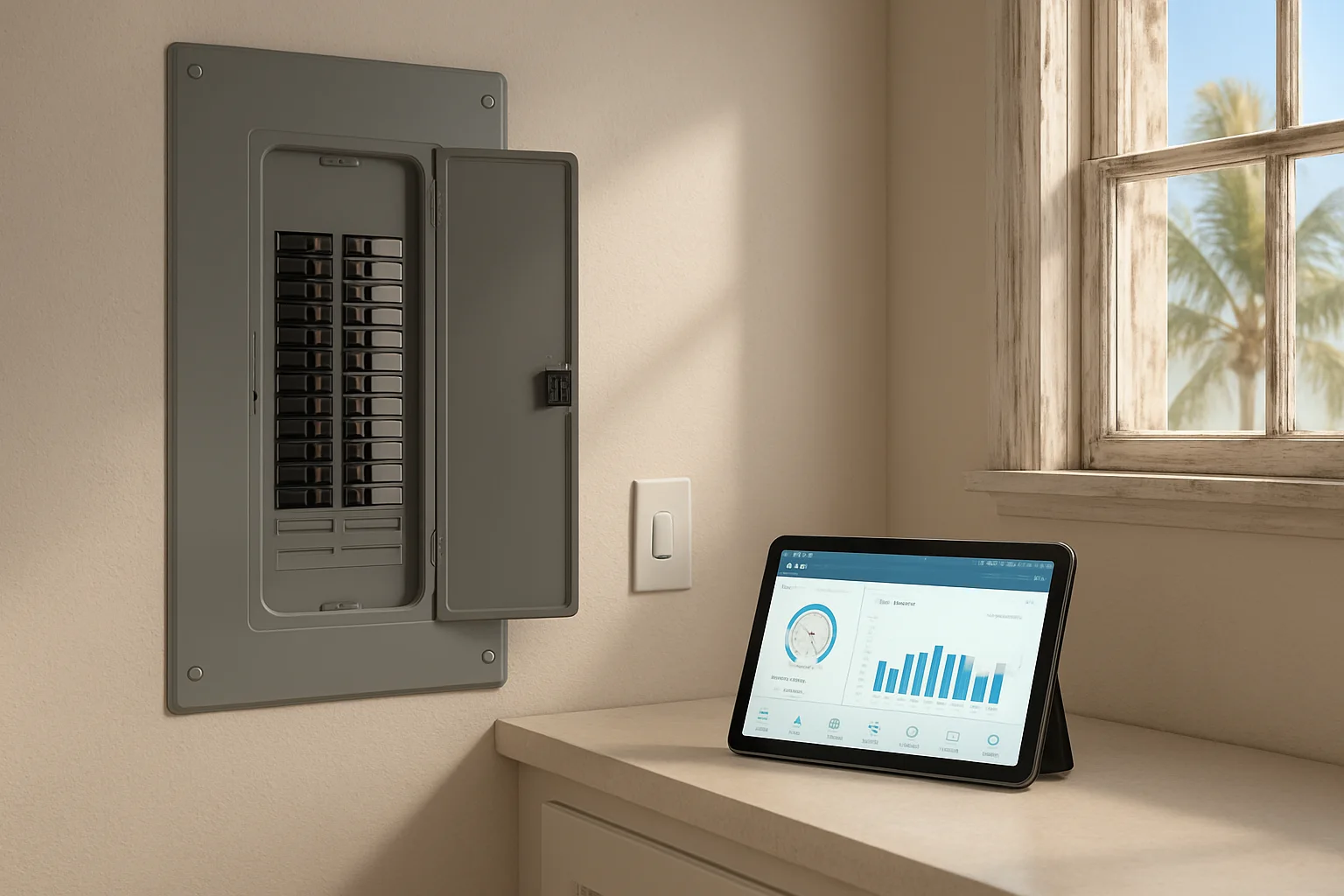
Why smart electrical panels matter for Northwest Florida homes
A smart electrical panel is designed to give homeowners clearer visibility into how electricity is being used, which circuits are active, and where unusual demand may be building. For families in Bay, Walton, and Okaloosa counties, that visibility can be especially useful because local homes face a mix of seasonal cooling loads, storm-related power interruptions, vacation-home occupancy patterns, and changing household schedules. A well-planned panel upgrade can support better load management, help identify circuit issues sooner, and make it easier to understand what your home needs before small concerns become larger electrical problems.
It is important to think of a smart panel as part of a broader electrical system rather than a stand-alone gadget. The panel is only one piece of the home’s electrical infrastructure, and its effectiveness depends on the condition of the service equipment, wiring, breakers, grounding, surge protection, and the overall electrical demand of the home. Professional assessment is the safest way to determine whether your home is a good candidate for smart panel installation, whether other improvements should happen first, and how to plan the work so that it supports your long-term goals instead of just solving one immediate issue.
How a smart electrical panel supports preventive care
Preventive electrical care is about finding stress points before they cause outages, nuisance trips, damaged equipment, or unsafe overheating. A smart panel can support that process by making electrical usage easier to monitor and manage. Instead of relying only on a breaker trip or a sudden appliance failure to signal trouble, homeowners may gain insight into which circuits are carrying the greatest load, when peak demand occurs, and whether certain patterns suggest a need for further evaluation. That kind of information can be particularly helpful in homes with heat pumps, dehumidifiers, pool equipment, workshops, or multiple entertainment systems.
A smart panel does not replace hands-on electrical inspection, but it can complement it well. A professional electrician can combine the panel’s data with an assessment of breaker condition, visible wear, circuit balance, grounding, and any signs of overheating or outdated equipment. This matters because some electrical issues are not obvious from daily use. For example, a circuit may continue to work while gradually becoming overloaded, or a panel may show age-related concerns that are not visible to the homeowner. Preventive care works best when technology and inspection are used together, with the panel serving as an information source rather than a substitute for expertise.
What makes Northwest Florida different for electrical planning
Northwest Florida homeowners contend with climate and lifestyle factors that shape electrical planning. Long cooling seasons can keep air-conditioning systems running heavily for extended periods, while humidity control can add additional electrical demand. Coastal and inland weather patterns can bring thunderstorms, lightning exposure, and brief outages that affect sensitive electronics and HVAC equipment. Seasonal occupancy also matters: some homes are lived in year-round, while others may be used seasonally, rented periodically, or left vacant for stretches of time. Each pattern changes what a smart panel may help you track and how important remote visibility can be.
Because of these local conditions, panel planning should be seasonal and practical. A homeowner might benefit from using the winter months to assess equipment age and future needs, then using the warmer months to verify that the electrical system can support cooling loads and other summer demands. A smart panel can help homeowners see how the home behaves under different conditions, but the real value comes from pairing that data with a professional evaluation that considers service size, branch circuit condition, storm preparedness, and expansion plans such as new appliances, a home office, a detached structure, or an electric vehicle charger. Local context should guide the electrical solution, not the other way around.
Signs your current panel may need attention
Homeowners often wonder when a panel should be evaluated for upgrade or replacement. Warning signs can include frequent breaker trips, lights dimming when appliances start, humming or buzzing at the panel, visible corrosion, warmth around the equipment, or a panel that is clearly older and no longer well matched to household demand. Some homes may also show signs through the way they are used: more electronics than the home was originally designed for, new HVAC equipment, added square footage, or outbuildings and amenities that were never part of the original electrical plan. These are not always emergencies, but they are reasons to schedule a professional assessment.
It is also worth paying attention to smaller patterns. If certain circuits seem overloaded, if extension cords have become a regular part of daily living, or if a homeowner is always deciding which appliance to use less often just to avoid a trip, the panel may not be keeping up with the home’s needs. A smart panel can improve understanding, but the underlying issue may still be panel capacity, circuit design, or equipment age. An electrician can determine whether the best path is a smart panel installation, a service upgrade, targeted circuit improvements, or a combination of steps. The goal is not simply to modernize, but to make the whole electrical system safer and more reliable.
What a professional assessment includes
A professional electrical assessment begins with a review of how the home is used and what electrical demands are present or anticipated. The electrician will typically consider existing appliances, HVAC systems, major entertainment equipment, workshop tools, pool or spa equipment, and any future plans that could increase demand. In many cases, this conversation is just as important as the physical inspection because electrical systems should be sized and organized around real household behavior, not just the original construction plan. If a homeowner wants smart panel features, the assessment should also address how those features will be used and whether they are a good match for the home.
The inspection itself may include a close look at the service equipment, breaker condition, wiring access, grounding and bonding concerns, signs of wear, and any evidence of moisture intrusion or corrosion. The electrician may also evaluate whether the panel location is practical and whether nearby conditions could affect serviceability. In some homes, additional work may be recommended before or alongside the panel installation, such as improving surge protection or addressing outdated components. This type of assessment is important because smart technology should be installed into a system that is already sound. An electrician can help determine whether the panel will truly improve visibility and control, or whether a different electrical improvement should come first.
Seasonal planning: preparing before summer heat
In Northwest Florida, summer often brings the highest electrical demand of the year. Air conditioning, dehumidifiers, ceiling fans, refrigeration, and home-office equipment can all be used more heavily during the hottest months. That means spring is a good time for homeowners to plan ahead, especially if they suspect the panel is aging or undersized for current needs. A smart panel can be particularly useful if the homeowner wants to track peak demand or understand how cooling loads affect the rest of the house. But the planning should begin early, before the first truly hot stretch of weather puts the system under pressure.
The best seasonal strategy is to make decisions before the emergency season begins. A professional can help determine whether the panel should be upgraded now, whether the home would benefit from better load organization, and whether other protective measures should be added at the same time. This is also the right season to talk about how a smart panel might support more efficient use of electricity, such as understanding which circuits are carrying the biggest loads and whether certain equipment can be scheduled more thoughtfully. The purpose is not to chase novelty. It is to prepare the home so that when temperatures climb, the electrical system is already positioned to handle the demand with greater confidence.
Seasonal planning: storm readiness and outage resilience
Storm readiness in this part of Florida is not just about shutters and supplies. Electrical systems also deserve attention before severe weather arrives. Lightning, utility interruptions, and power restoration events can all affect panel performance and home electronics. A smart electrical panel can provide better visibility into what happened before and after an outage, and in some setups it can help homeowners manage important circuits more intentionally. Even so, the panel should be viewed as one element in a broader storm-readiness plan that may include surge protection, generator planning where appropriate, and careful attention to grounding and service equipment condition.
A professional assessment is especially valuable if the home has experienced repeated power quality issues, storms, or unexplained equipment problems. An electrician can determine whether the existing panel is suitable for added protection, whether the home’s electrical system needs updates first, and how to approach installation in a way that supports resilience. Seasonal planning should also consider what gets powered first during an outage recovery period. Homes with refrigeration needs, medical equipment, sump or pump systems, or remote work demands may need a more thoughtful circuit strategy. A smart panel can help organize that thinking, but it should be installed as part of a professionally designed plan, not as a reaction to the last storm.
Seasonal planning: fall and winter maintenance windows
Fall and winter are often overlooked electrical planning seasons, yet they can be ideal times to evaluate the home’s panel and overall system. After a long cooling season, homeowners may notice patterns that were not obvious earlier in the year, such as frequent breaker use, new appliance loads, or circuits that seem more strained than expected. Cooler weather can also make it more practical to schedule electrical work before the next summer arrives. For homeowners considering a smart panel, this is a useful time to think ahead about whether the installation should be paired with other preventive improvements.
This season is also helpful for households that vary between full-time occupancy and vacation or seasonal use. A smart panel may provide reassurance by making it easier to monitor the home when no one is there regularly, but the system still needs to be evaluated in person before installation. If the home has long-standing electrical issues, the fall or winter months are a good opportunity to address them in a lower-pressure period. A professional electrician can assess whether the existing panel is ready for smart technology, whether the branch circuits are organized appropriately, and whether any changes should be completed before the next heavy-use season. Planning now can prevent rushed decisions later.
When smart panel installation is a good fit
Not every home needs the same electrical solution, and smart panel installation is most valuable when the homeowner has a clear reason for wanting better control, better visibility, or better planning. Homes with high electricity use, multiple major appliances, growing technology needs, or future expansion plans often benefit from more advanced monitoring and circuit management. Smart panels can also be useful where homeowners want clearer information about daily use patterns, or where they want to better understand which areas of the home are driving demand. The key is to match the product to the actual household need.
A professional electrician can help determine whether smart panel installation makes sense as a standalone upgrade or whether it should be combined with service work, panel replacement, or other electrical improvements. Some homes may need outdated equipment addressed first, while others may be ready for a direct upgrade. In some cases, the best answer is not a smart panel at all, but a different solution that better fits the home’s condition and the homeowner’s goals. Good guidance should always be based on inspection and planning, not a one-size-fits-all pitch. That is why a professional assessment is essential before any installation decision is made.
What homeowners should avoid doing themselves
Electrical panels are not a DIY project. Even a homeowner who is comfortable with general home maintenance should not attempt to open, modify, relocate, or reconfigure panel equipment without professional training and the proper tools. The risks include electric shock, arc flash, fire, damage to appliances, and the possibility of creating hidden problems that may not show up until much later. Smart panel installation is especially unsuitable for do-it-yourself work because it involves both electrical safety and system configuration. A mistake can affect not just one circuit, but the reliability of the entire home.
Homeowners can still be helpful without taking on hazardous work. It is useful to observe patterns such as breaker trips, appliance behavior, dimming lights, unusual smells, or visible discoloration near electrical equipment, and then share that information with a licensed electrician. Homeowners can also keep records of new appliances, renovation plans, and seasonal usage changes, all of which help with assessment. The important distinction is that observation and communication are appropriate, while hands-on panel work is not. Safe electrical care depends on letting trained professionals handle the technical installation and troubleshooting while the homeowner provides accurate information about how the house behaves.
How a smart panel can support everyday budgeting and organization
Although a smart panel is not primarily a financial product, it can help homeowners make more informed choices about how the home is used. By showing how circuits behave and when demand rises, the system can make it easier to identify electrical habits that may be worth adjusting. For example, a homeowner may realize that several high-demand devices are being used at the same time, or that certain areas of the home are drawing more power than expected. That kind of information can support better planning, especially in a household where energy use changes with the seasons or with occupancy.
The organizational value can be just as important as the monitoring value. A panel that is better understood is easier to manage over time, and that can reduce uncertainty when a breaker trips or when a new appliance is added. For homeowners in coastal and inland Northwest Florida alike, that clarity can be valuable because the electrical system is often asked to work hard through long cooling seasons and storm-related interruptions. A professional can explain what data the panel will provide, how that data should be interpreted, and whether other improvements would make the system easier to manage. The right installation should make the home simpler to understand, not more complicated.
Choosing a local electrician and planning the project
For homeowners in Bay, Walton, and Okaloosa counties, working with a local electrical contractor means the person evaluating the home is more likely to understand regional weather, housing styles, and common seasonal concerns. That matters because smart panel installation is not just about hardware. It is about choosing a solution that fits the home, the climate, and the homeowner’s long-term plans. A good contractor will begin with questions, inspection, and explanation, then recommend a path that addresses safety, compatibility, and practical use. The homeowner should expect a discussion of the existing panel, the condition of related equipment, and any additional steps that may be necessary before installation.
A clear project plan also helps the homeowner prepare. Depending on the home, the electrician may recommend temporary power interruptions during work, coordination with other electrical upgrades, or a phased approach if multiple issues need attention. Good planning reduces surprises and helps ensure the installation supports preventive care rather than just adding technology. If you are exploring smart electrical panel installation or want a seasonal assessment of your home’s electrical needs, 850 Electrical, part of veteran-owned A Superior Mechanical, serves Bay, Walton and Okaloosa counties. Call 850-258-3225 to discuss your home’s needs and schedule a professional evaluation tailored to your property and seasonal goals.
A practical homeowner checklist for seasonal electrical planning
A simple checklist can make electrical planning easier from season to season. Start by noting whether the home has had breaker trips, dimming lights, outlet problems, or unusual panel noise. Then list major appliances, HVAC equipment, and any new electrical additions planned for the near future. It also helps to think about seasonal changes: when the home is hottest, when it is most occupied, when it may be vacant, and what equipment becomes most important during storms or outages. This information gives a professional a much clearer picture of what the electrical system needs to support.
The next step is to schedule a professional assessment before the home reaches a stress point. A smart electrical panel may be the right answer, or it may be part of a larger solution that includes panel replacement, circuit improvements, or added protective measures. The important thing is to treat electrical planning as ongoing preventive care rather than an emergency-only task. With the right assessment and seasonal strategy, homeowners can make informed decisions that support safety, reliability, and convenience throughout the year. For Northwest Florida homes, that kind of planning is especially valuable because the demands on the electrical system change with the weather, the season, and the way the home is used.
Explore related electrical care
- Smart Electrical Panel Installation
- Electrical Installation
- EV Charger Installation
- Indoor Lighting Installation, Repair & Upgrades
- Kohler Generator Installation
- Lighting & Fixture Installation
Continue reading
- Seasonal Electrical Planning for Northwest Florida Homes: Preventive Care and Smart Service Priorities
- Smoke Detector and Carbon Monoxide Installation for Northwest Florida Homes: Seasonal Planning and Preventive Care
- Smart Home Integration for Northwest Florida Homes: Preventive Electrical Care and Seasonal Planning
Talk with the 850 Electrical team for help with your home or business.