
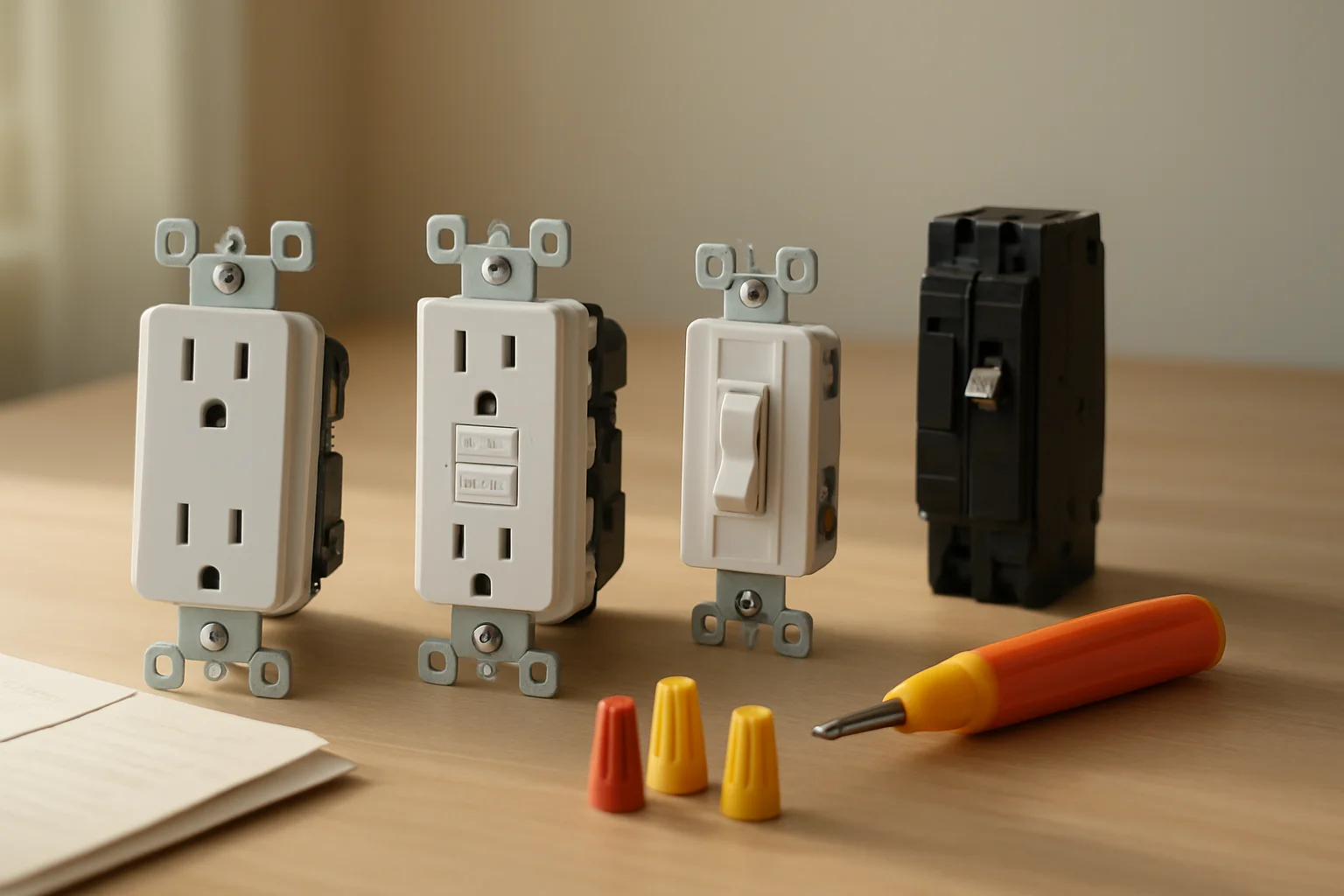
Why device upgrades matter in Northwest Florida homes
Many homeowners think of electrical devices as background components until something stops working. In reality, switches, outlets, dimmers, receptacles, GFCIs, AFCIs, smoke alarm wiring connections, surge protection devices, and other everyday components are part of the safety and comfort system of the home. When these devices age, loosen, corrode, or become incompatible with newer appliances and electronics, they can create nuisance problems at first and more serious concerns later. For homeowners in Bay, Walton, and Okaloosa counties, the coastal climate and seasonal humidity can add extra stress to electrical components over time, especially in garages, laundry areas, kitchens, bathrooms, and outdoor locations.
Upgrading devices is not only about making the home feel newer. It can improve reliability, reduce interruption, support modern appliance loads, and help a home better match current safety expectations. Some issues are obvious, such as a receptacle that feels warm or a switch that crackles. Others are subtle, like a circuit that trips only when multiple devices run at once or a plug that no longer fits securely. A professional assessment helps determine whether the concern is isolated to one device or whether the bigger issue involves wiring, grounding, box fill, circuit loading, or aging infrastructure that needs a broader solution.
How everyday wear shows up in switches and outlets
Switches and outlets often give early warning signs before they fail completely. You may notice a switch that feels loose, a rocker that does not snap cleanly, an outlet that grips plugs poorly, or a device cover that no longer sits flush with the wall. These are not just cosmetic concerns. Loose physical fit can allow movement, which can create heat or arcing inside the box. If a homeowner also notices discoloration around the device, a faint buzzing sound, or a plastic odor, that is a stronger sign the device deserves prompt attention from a licensed electrician. Even when power still seems to work, the device may be operating beyond its intended life or may be damaged internally.
In many homes, wear comes from everyday use rather than a single dramatic event. High-traffic areas such as kitchens, hallways, home offices, and bedrooms with multiple charging devices can place repeated stress on devices. Older outlets may no longer hold cords tightly, and older switches may become less dependable after years of use. A professional electrician can test the device, inspect the box and conductors, and check whether the issue is limited to a worn component or tied to wiring conditions such as back-stabbed connections, loose terminals, or heat damage. That diagnostic step matters because replacing a faceplate alone will not solve an underlying electrical hazard.
Signs a receptacle is no longer doing its job safely
A receptacle that seems to work on and off, only powers some plugs, or requires a cord to be positioned just right should be evaluated. Other warning signs include visible scorch marks, a plug that falls out too easily, a crack in the device body, or a tripped breaker that appears after using the same outlet repeatedly. In coastal Florida homes, corrosion can also play a role, especially where humidity or salt air reaches outdoor or semi-exposed locations. A receptacle may look minor from the outside while internal contacts have weakened or oxidized enough to create a poor connection.
A professional diagnosis includes more than a quick replacement. The electrician will usually confirm voltage and polarity, inspect grounding and bonding conditions, assess whether the circuit is overloaded, and determine whether the receptacle type matches the area it serves. For example, kitchens, baths, garages, laundry areas, unfinished spaces, and exterior locations often have specific protection needs. A device that is simply old may benefit from replacement, but repeated failure can signal a circuit issue or a location that needs a different device type. Homeowners should avoid assuming that every loose or damaged outlet is the same problem. Identifying the reason behind the symptom is the key to choosing the right upgrade and preventing the issue from coming back.
When GFCI protection should be reviewed
Ground-fault circuit interrupter devices are designed to help reduce shock risk in locations where water and electricity may be close together. Over time, homeowners may notice a GFCI that trips too often, will not reset, or seems to have become more sensitive than it once was. In some cases, the device itself is old or faulty. In others, the problem may be downstream wiring, a damp location, a connected appliance with leakage, or a circuit layout that needs correction. Because GFCI devices are used in important protective roles, a change in behavior should not be ignored or treated as a simple annoyance.
Professional evaluation is especially important when a GFCI serves bathrooms, kitchens, outdoor spaces, garages, laundry areas, or pool-related equipment. A homeowner may only see a reset problem, but the electrician can check whether the circuit is wired correctly, whether the load and line conductors are landed properly, and whether the connected devices or receptacles are creating the repeated fault. The right professional diagnosis helps distinguish between a failing device and a useful protective trip caused by an actual condition on the circuit. That distinction matters because some repeated trips indicate a true electrical issue that should be corrected before the device is replaced. This is one of the clearest examples of why a device upgrade and a safety inspection often belong together rather than being handled separately.
Why AFCI and modern protection devices may be recommended
Arc-fault circuit interrupter protection is another area where older homes can benefit from review. AFCI protection is intended to help reduce certain fire risks linked to arcing conditions. Homeowners may not always know whether their home has the protection required by more current standards or whether older panels and devices were upgraded over time in a piecemeal way. If a breaker trips unexpectedly after a new appliance, lamp, vacuum, or power strip is used, that may be a sign that the circuit merits professional review rather than simple reset-and-ignore handling. It may be a device compatibility issue, but it can also be a sign that wiring conditions need attention.
A professional electrician can help determine whether an AFCI device is appropriate for the circuit, whether the existing breaker or receptacle is functioning properly, and whether the home’s overall electrical system supports the added protection without nuisance tripping. This is not something a homeowner should guess at, because the diagnosis depends on wiring layout, load conditions, and the type of equipment being used. An electrician can also explain whether the concern is best addressed by replacing a single device, moving the load to a different circuit, or making broader corrections. In homes that have been remodeled in phases, it is common to find a mix of older and newer protection approaches. A systematic review can bring the home closer to current expectations without unnecessary replacement of parts that are still performing well.
How dimmer and smart switch problems appear
Dimmers and smart switches add convenience, but they also introduce more points of failure and compatibility considerations. Flickering lights, buzzing sounds, delayed response, lights that do not dim smoothly, or smart switches that disconnect from the network can all point to a device issue. Sometimes the problem is not the switch alone but the type of bulb connected to it, the condition of the neutral conductor, or an incompatibility between the control device and the lighting load. A homeowner may notice the room lights behave differently after a bulb change or after a fixture is replaced, which is a clue that the control system should be reviewed as a whole.
Professional diagnosis is especially valuable with these newer devices because the cause is not always obvious to the eye. An electrician can determine whether the switch is rated for the load, whether the fixture and bulb combination are compatible, and whether the wiring in the box supports the control device correctly. In some cases, the best upgrade is a simple replacement with a standard device. In others, a more suitable dimmer, an updated neutral-dependent control, or a reconfiguration of the circuit may solve the issue. Homeowners should be cautious about assuming that a smart home problem is purely digital. Electrical compatibility and circuit conditions still matter, and a safe, reliable solution depends on both electrical and functional diagnosis.
Heat, odor, and discoloration are never minor signs
A warm outlet, a switch plate that feels hot, a faint burning odor, or brown marks on the wall around a device should be treated as urgent warning signs. These symptoms can indicate loose connections, overloaded circuits, internal device damage, or conductors that have been stressed by heat. Even if the device still appears to function, continued use can make the problem worse. In a humid climate, homeowners may occasionally dismiss a strange odor as moisture or dust, but electrical heat and insulation breakdown can smell similar to something far less harmless. When there is any sign of heating, the safest choice is to stop using the circuit and have it checked by a professional.
An electrician’s diagnosis will focus on the device, the wiring termination, and the broader conditions that may have contributed to overheating. That may include checking the breaker size, wire condition, box space, splices, load levels, and the integrity of connected equipment. One device may need replacement, but if the underlying issue is a loose conductor or an overloaded circuit, replacing the visible part alone is not enough. This is where professional assessment protects the homeowner from false confidence. A device that looks only mildly discolored may already have internal damage not visible from the front. Trained evaluation helps determine whether the problem is localized, whether adjacent devices are affected, and whether the circuit should be taken out of service until repairs are completed.
Outdated two-prong receptacles and missing grounding concerns
Many older homes still have ungrounded receptacles or mixed receptacle types that reflect years of partial updates. Some homeowners only notice the issue when they try to plug in a modern appliance, surge strip, or computer and find that the connection feels wrong or the equipment does not behave as expected. While adapters may seem like a simple fix, they do not create a true grounding path by themselves. If the home’s wiring system does not provide grounding where required, the safest path is to have a professional evaluate the circuit and recommend the correct upgrade strategy rather than improvising a workaround.
A licensed electrician can test for grounding presence, identify whether the branch circuit can be upgraded appropriately, and determine the best device type for the location. Sometimes the solution involves replacing a receptacle with a proper grounded device on a grounded circuit. Other times, additional circuit work is needed, especially if the wiring is very old or if the box and conductors are not suitable for the current load or device type. For Northwest Florida homeowners, grounding matters not just for convenience but for helping modern electronics and protection devices operate as intended. A professional assessment gives clarity about which outlets can be improved safely and which need more than a simple swap.
When frequent tripping points to a device or circuit mismatch
A circuit breaker that trips repeatedly is often blamed on the breaker itself, but the underlying cause may be a device or load mismatch. A homeowner might add a new appliance, outdoor equipment, holiday lighting, or a power-hungry workstation and then begin seeing interruptions. The circuit may be fully functional, but the combination of devices connected to it may exceed what it is designed to handle. In other cases, a particular receptacle or switch is failing and causing intermittent faults that lead to tripping. The symptom looks the same from the homeowner’s perspective, but the diagnosis can be very different.
Professional troubleshooting includes tracing which devices are on the circuit, testing the load under normal conditions, and checking the integrity of every connection involved. An electrician can determine whether the issue stems from a single failing outlet, an overloaded branch circuit, a damaged appliance, or a breaker that is no longer behaving correctly. This kind of assessment is important because blindly replacing the breaker or the most visible outlet may not solve the real problem. A thoughtful diagnosis also helps homeowners decide whether they need a dedicated circuit for a specific appliance or whether an upgrade to the device itself is enough. That decision should be based on actual electrical conditions, not guesswork or trial and error.
Why coastal humidity and salt air can matter
Northwest Florida’s environment can be hard on electrical devices, especially in areas where moisture, condensation, or salty air reach the home’s exterior or semi-exposed spaces. Outdoor receptacles, porch switches, garage outlets, and devices near entryways or utility areas may age more quickly than the same parts inside a dry interior room. Corrosion can appear as greenish or whitish residue on metal parts, reduced plug contact, intermittent operation, or difficulty resetting protective devices. These changes may happen gradually, so a homeowner may not notice them until a device begins to fail completely.
A professional electrician can determine whether environmental exposure is the main issue or whether the device is being affected by installation details such as missing covers, worn seals, or improper enclosure protection. In some cases, the fix is a better-rated replacement. In others, the device is only showing the effect of a deeper installation problem that should be corrected at the same time. Because coastal conditions are part of life in Bay, Walton, and Okaloosa counties, it is wise for homeowners to have outdoor and damp-location devices reviewed periodically. The goal is not to replace everything on a schedule, but to identify which devices have been stressed by the environment and which still have useful life left. Professional inspection helps make that distinction.
What a professional electrical diagnosis actually looks like
A proper diagnosis begins with listening to the homeowner’s observations and then verifying the conditions in the field. An electrician will ask when the issue started, which devices are involved, what seems to trigger the problem, and whether the issue happens all the time or only under certain conditions. From there, the electrician may test voltage, continuity, grounding, protection devices, and load behavior while visually inspecting the device, the box, and nearby wiring. If the situation requires it, the electrician may also check multiple locations on the same circuit to see whether the symptom is isolated or part of a larger pattern. This process is important because the visible device is often only one clue.
Good diagnosis also means ruling things out. The electrician may determine that the problem is not the outlet itself but a loose conductor in the box, a failing switch, a worn appliance cord, or a wiring layout that has become incompatible with newer equipment. That distinction protects homeowners from unnecessary replacement and helps focus the repair where it will actually matter. It also provides a clear explanation of the options, from a direct device replacement to a more involved correction. For homeowners, the value of professional assessment is confidence: confidence that the issue has been identified correctly, that the chosen upgrade addresses the real cause, and that the electrical system is being treated as a connected whole rather than a collection of disconnected parts.
When to schedule service and what to expect from a local electrician
Homeowners should consider scheduling service when a device is visibly damaged, repeatedly fails, feels loose, trips protection devices, shows heat or odor, or no longer works reliably under normal use. It is also smart to request an evaluation during a larger home project, after appliance changes, after storm-related issues, or when moving into an older property whose electrical history is incomplete. In many cases, a timely visit can prevent a small device concern from becoming a bigger repair later. Even if the problem seems minor, having a professional inspect it is often the most efficient way to decide whether replacement, repair, or broader system review is appropriate.
For homeowners in Bay, Walton, and Okaloosa counties, 850 Electrical, part of veteran-owned A Superior Mechanical, serves the area with professional electrical service focused on diagnosis and practical solutions. A local electrician can help identify which devices need attention, which are still serviceable, and whether the issue is limited to a component or tied to the circuit itself. The best next step is not to guess but to have the concern evaluated by someone who can safely inspect, test, and explain the findings. If your home has an outlet, switch, or protection device that is acting differently than it should, professional diagnosis can help you choose the right upgrade with less uncertainty and more peace of mind. Phone 850-258-3225.
Explore related electrical care
- 24 Hour Emergency Electrical Service
- Battery Backup Systems
- Ceiling Fan Services
- Circuit Breaker Panels & Rewiring
- Commercial Electrical New Construction
- Data Network Cabling
Continue reading
- Warning Signs Your Home’s Lighting Fixtures Need Professional Attention in Northwest Florida
- Outlet and Switch Installation Warning Signs Northwest Florida Homeowners Should Not Ignore
- Outdoor Landscape Lighting Warning Signs Northwest Florida Homeowners Should Never Ignore
Talk with the 850 Electrical team for help with your home or business.