
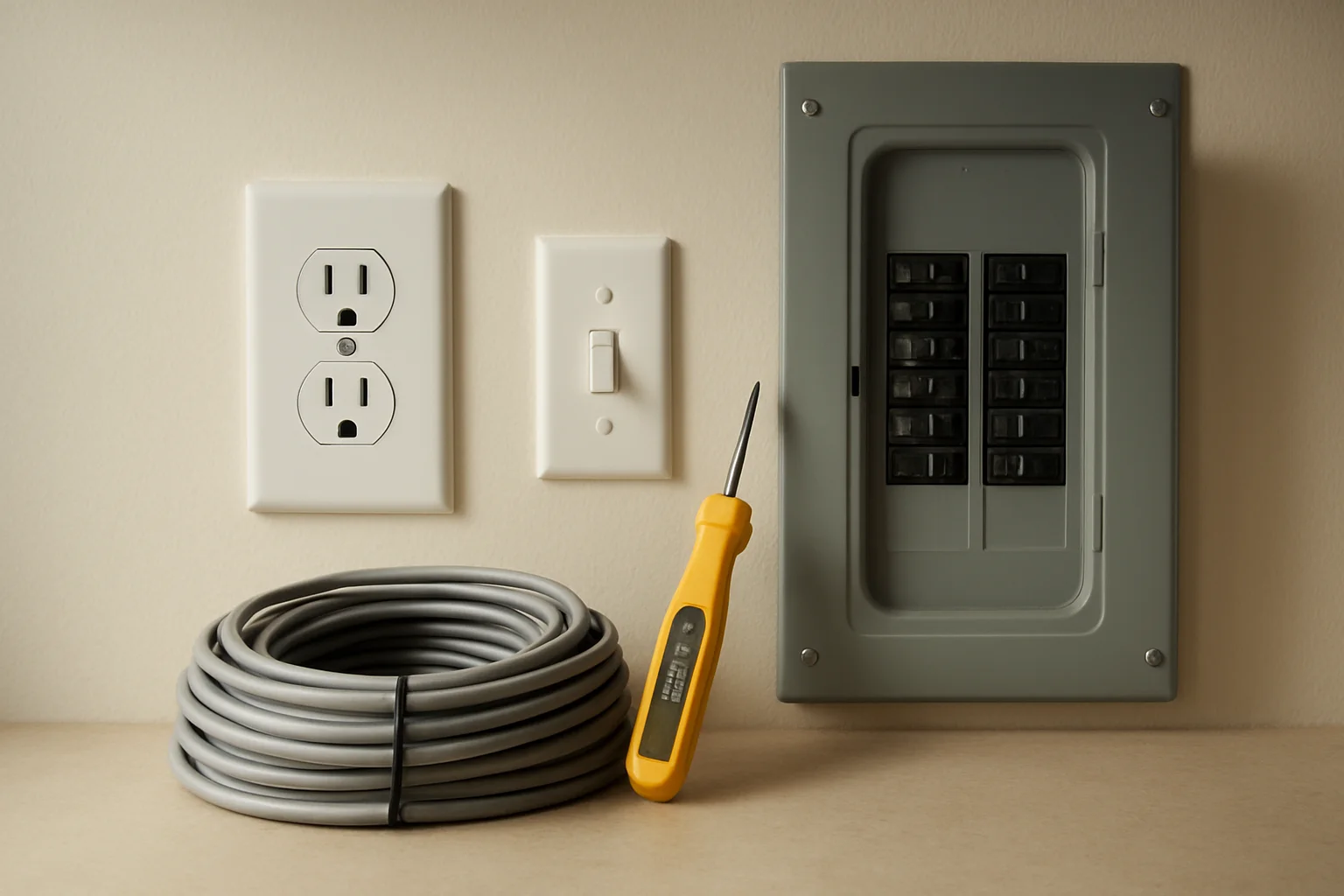
Why outlets and switches matter more than many homeowners realize
Outlets and switches are small parts of a home, but they shape how safely and comfortably you use electricity every day. When they work correctly, they are easy to overlook. When they begin to fail, the symptoms can range from minor annoyances to serious safety concerns. In Northwest Florida homes, where humidity, storms, older construction, and heavy seasonal use can all affect wiring and devices, these problems deserve prompt attention. A worn outlet or switch may seem like a simple inconvenience, but it can signal loose connections, aging materials, overloads, or hidden wiring conditions that need professional evaluation.
Homeowners often notice the problem before they understand the cause. A switch that feels warm, an outlet that no longer grips a plug firmly, or a receptacle that works only sometimes may point to deterioration inside the wall rather than a surface issue. Professional diagnosis matters because the visible device is only one part of the system. An electrician can evaluate the device, the wiring, the box, the circuit capacity, grounding, and related components to determine whether repair, replacement, or a broader correction is the right solution. That kind of assessment helps protect both the home and the people living in it.
Warning signs that an outlet may need professional attention
One of the most common warning signs is physical looseness. If a plug slips out of an outlet easily, the contacts inside the receptacle may be worn. That can create intermittent power, heat buildup, or a small arc when a cord shifts. Another concern is discoloration around the outlet faceplate or device opening. Brown or darkened marks can indicate heat stress, which should never be ignored. Even if the outlet still seems to function, heat damage suggests the connection has not been performing properly and may require immediate professional inspection.
Other signs are less visible but just as important. A receptacle that stops working after a reset, works only when a cord is positioned a certain way, or behaves differently from nearby outlets may have an internal fault or a wiring issue upstream. In homes where appliances, chargers, televisions, or workspace equipment are used heavily, the problem can show up first as an annoying interruption and later as a safety hazard. A licensed electrician can test the circuit, identify whether the issue is isolated to one device or part of a larger pattern, and recommend the correct replacement or correction based on the actual condition found.
Warning signs that a switch should not be ignored
Switch problems often start subtly. A wall switch that feels unusually stiff, loose, gritty, or soft when toggled may be wearing out internally. If the switch produces a crackling sound, flickers the connected light, or must be held in a certain position to keep the light on, it is no longer performing reliably. These symptoms can indicate worn contacts, failing internal parts, or loose wiring at the device or in the box. A switch that controls a fan, light, porch fixture, or multi-location lighting circuit should operate smoothly and consistently; anything less deserves professional attention.
Heat is another warning sign. If a switch cover feels warm or hot to the touch, that is not normal and should be evaluated promptly. Dimming or flickering lights controlled by the switch may also point to a loose connection, especially if the issue occurs more often when the light has been on for a while. In some homes, the switch itself is not the root cause but the point where a larger issue becomes noticeable. A professional diagnosis helps separate a worn-out switch from a circuit problem, overloaded load, or equipment mismatch. That distinction matters because replacing only the visible part without understanding the cause can leave the hazard in place.
Why Northwest Florida conditions can accelerate wear
Northwest Florida weather and home conditions can be hard on electrical devices. Humidity can contribute to corrosion over time, especially in older homes or in rooms where moisture is more common. Salt air exposure in coastal areas can also be a factor in the broader environment, even when the electrical devices are indoors. Repeated heat, seasonal storms, and the demands of air conditioning and other high-use equipment place additional stress on circuits and connections. Outlets and switches are not designed to last forever, and local conditions can shorten their useful life compared with a home in a milder environment.
Storm-related power disturbances can also expose weak points. After outages, surges, or repeated interruptions, a homeowner may notice that a previously reliable outlet or switch starts behaving differently. Sometimes the problem is immediate, and sometimes it becomes noticeable only later when a device is used more frequently. This is why a professional evaluation is valuable after unusual electrical events, not only when a device is already visibly damaged. An electrician can look for signs of stress, test the circuit under appropriate conditions, and determine whether the issue is isolated wear or a symptom of broader service needs.
When an outlet or switch issue may involve the circuit, not just the device
A failed outlet or switch is not always the actual source of the problem. Sometimes the issue lies in the wiring feeding the device, a loose connection in another part of the circuit, a poor splice, or an overloaded branch circuit. That is why homeowners should not assume that replacing the visible part will solve everything. For example, if multiple devices on the same circuit have become unreliable, the problem may be upstream. If one outlet works but the next one in line does not, there may be a break in the circuit path. Professional diagnosis is needed to identify where the failure starts and whether the correction must extend beyond a single outlet or switch.
This distinction matters because electrical systems work as networks. A symptom seen in one room may be caused by a connection in another. An electrician can test voltage, continuity, grounding, load conditions, and the condition of the box and conductors to identify the true source. This approach avoids guesswork and helps ensure the new device, if one is needed, is installed into a safe and properly functioning circuit. For homeowners, that means a more dependable result and a clearer understanding of whether the issue was localized wear or a larger system concern.
Signs of unsafe conditions that call for prompt service
Some symptoms suggest urgency rather than routine maintenance. Burning odors near an outlet or switch should always be taken seriously, even if the device appears to be working. Audible buzzing, crackling, or popping can also signal arcing or loose connections inside the wall. A circuit breaker that trips repeatedly after using a specific outlet or switch may be telling you the circuit is overloaded, the device is damaged, or there is another fault that needs professional diagnosis. If a device is visibly charred, melted, or blackened, it should be treated as a serious concern.
Homeowners should also pay attention to behavior that changes suddenly. A fixture that flickers after years of stable use, a receptacle that becomes unreliable after plugging in a new appliance, or a switch that begins to feel warm where it never did before all deserve attention. Even if no immediate emergency is present, these are not normal conditions. The safest next step is to stop using the affected device if possible and have the issue evaluated by a qualified electrician. Professional inspection can determine whether the device needs replacement, whether the circuit has a load issue, or whether a broader repair is needed to prevent damage from continuing.
Why professional diagnosis is more reliable than guessing
Electrical symptoms can overlap. A dimming light might suggest a failing switch, but it could also reflect a loose conductor, an incompatible control device, or a problem in the fixture. An outlet that no longer charges a device could be defective, but the issue may also involve a tripped upstream protection device, a broken connection, or a problem in a nearby box. Because many electrical issues look similar from the outside, diagnosis requires testing rather than assumptions. Professional electricians use their training and tools to identify the actual failure point and assess the condition of the entire circuit path.
Guessing can lead to incomplete fixes. Replacing a switch without checking the load or wiring may leave heat stress or arcing unaddressed. Swapping out an outlet without examining the box condition, grounding, or circuit capacity may not solve the problem at all. A professional assessment reduces uncertainty by confirming what is worn, what is safe, and what needs correction. For homeowners, that means decisions are based on evidence, not just symptoms. It also helps prevent repeated service calls for the same unresolved issue, because the underlying cause is more likely to be identified the first time.
How electricians assess an outlet or switch problem
A professional assessment starts with listening to the homeowner’s observations. When did the problem begin? Does it happen all the time or only sometimes? Does it affect one room or several? Has there been recent storm activity, renovation work, or appliance changes? Those details help narrow down the likely cause. From there, the electrician can inspect the device, look for visible damage, and test the circuit to understand how it behaves under real conditions. This is a careful process focused on finding the source, not merely replacing what looks old.
The assessment may also include checking the box fill, conductor condition, grounding, and the relationship between the device and the rest of the circuit. In some cases, the electrician may find that the outlet or switch is the problem. In other cases, the visible device is only part of a larger issue. Either way, the value of professional diagnosis is that it produces a clear path forward. Rather than relying on trial and error, the homeowner gets an informed recommendation about repair, replacement, or circuit correction. That makes the work more dependable and helps prevent recurring problems.
When replacement is usually the right path
There are situations where replacement is the most practical and responsible option. If an outlet or switch is physically damaged, loose, overheated, discolored, or no longer functioning as intended, replacing the device is often the next step after proper diagnosis. Devices also wear out with age, especially in homes where they are used frequently or exposed to environmental stress. When the internal contacts are no longer making firm connections, or when the switch mechanism has become unreliable, repair is usually not the best long-term answer. A new installation can restore dependable operation when it is sized and selected appropriately for the circuit and application.
Replacement can also be appropriate when the existing device no longer matches the home’s needs. A room may require a different type of switch control, a more secure receptacle connection, or updated protection features depending on the circuit and use. The important part is that the choice is made based on the electrical system as a whole. An electrician can determine whether the existing wiring and box conditions support the new device and whether any related corrections are needed. That helps ensure the replacement does more than simply look new. It functions properly, fits the circuit, and supports safer day-to-day use.
Why outlet and switch upgrades are often worth considering
Many homeowners think of outlet and switch work only when something fails. But upgrading devices can also be a practical maintenance decision, especially in older homes or spaces that see heavier use than before. Kitchens, home offices, living areas, garages, and outdoor-adjacent spaces often place different demands on electrical devices today than they did years ago. A professional can help evaluate whether the current devices are suited to the way the home is actually used. Sometimes an upgrade improves reliability, convenience, or compatibility with modern appliances and lighting without requiring a major renovation.
That said, upgrades should still be approached thoughtfully. Not every device should be changed simply because newer products exist. The right solution depends on the circuit, location, and intended use. In Northwest Florida, where homes can face moisture, heat, and seasonal wear, an electrician may recommend device types or installation approaches better suited to the environment. The goal is not to sell the newest item; it is to match the installation to the real conditions in the home. That is another reason professional diagnosis matters. It helps distinguish between a simple wear issue, a needed safety correction, and an optional improvement that could make the home more functional.
What homeowners can do before calling for service
Homeowners can make the service visit more productive by observing and noting the symptoms. It helps to write down which outlet or switch is affected, what room it is in, what happens when it is used, and whether the problem is constant or occasional. If multiple devices seem involved, list them separately. Mention any recent events such as a power outage, storm, renovation work, a new appliance, or an unusually warm outlet cover. These details can help the electrician focus on the likely source more quickly. Good information does not replace inspection, but it does support it.
Homeowners should also avoid using clearly damaged devices. If a receptacle is visibly charred, a switch is making noise, or a breaker keeps tripping, it is wise to stop using that part of the circuit until it has been checked. Do not assume the issue will go away on its own. Electrical problems rarely improve without attention, and waiting can allow more wear or damage to develop. The safest and most efficient approach is to document the symptoms and arrange a professional evaluation. That gives the electrician the best chance to identify the cause and recommend the right correction the first time.
Why seasoned local service matters for Bay, Walton, and Okaloosa homes
Homes in Bay, Walton, and Okaloosa counties vary widely in age, layout, and electrical demands, so a one-size-fits-all answer is rarely enough. Some houses have older devices that have simply reached the end of their useful life. Others have newer construction but specific issues related to load, moisture, or past work. Local experience matters because it helps an electrician recognize patterns that fit the region’s housing stock and environmental conditions. When outlets and switches are involved, a careful look at the home’s overall setup can reveal whether the issue is isolated or part of a larger maintenance need.
850 Electrical, part of veteran-owned A Superior Mechanical, serves this region with professional outlet and switch installation and diagnosis support. Homeowners who want a dependable evaluation can call 850-258-3225 to discuss concerns and schedule service. Whether the issue is a single unreliable outlet, a switch that no longer feels right, or a pattern of related electrical symptoms, the goal is to identify the real cause and provide a sensible solution. For Northwest Florida homeowners, that kind of local, professional attention can make the difference between a temporary fix and a lasting correction.
The bottom line for homeowners
Outlet and switch problems are often easy to dismiss at first, but they should be taken seriously when symptoms appear. Loose receptacles, warm switches, discoloration, buzzing, intermittent power, and repeated breaker trips are all signs that something in the electrical system needs attention. In a climate like Northwest Florida’s, everyday wear can be accelerated by humidity, storms, and heavy home use. That makes prompt diagnosis especially important. The visible device may be the part that fails, but the underlying cause could involve the circuit, wiring, or load conditions behind it.
The safest approach is to rely on professional assessment rather than assumptions. An electrician can determine whether the issue calls for repair, replacement, or a broader correction, and can install the right device for the situation. For homeowners, that means better safety, better reliability, and less guesswork. If an outlet or switch in your home has changed behavior, do not ignore it. Document the symptoms, limit use if needed, and seek a qualified diagnosis so the problem can be addressed correctly.
Explore related electrical care
- Outlet & Switch Installation
- Electrical Installation
- EV Charger Installation
- Indoor Lighting Installation, Repair & Upgrades
- Kohler Generator Installation
- Lighting & Fixture Installation
Continue reading
- Smoke Detector and Carbon Monoxide Installation: Warning Signs Northwest Florida Homeowners Should Not Ignore
- Power Generator Installation Warning Signs Northwest Florida Homeowners Should Not Ignore
- Electrical Installation Warning Signs Northwest Florida Homeowners Should Never Ignore
Talk with the 850 Electrical team for help with your home or business.