
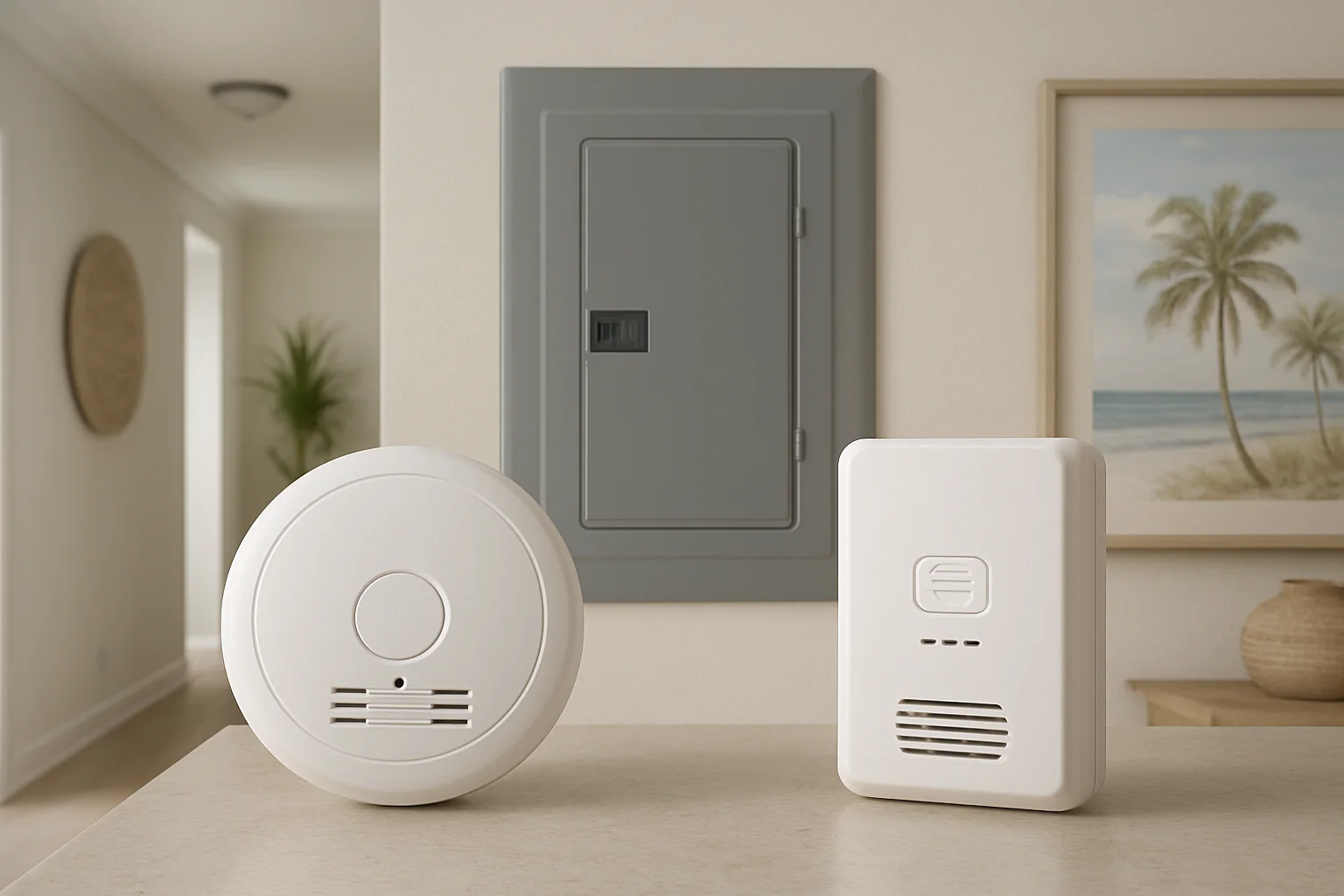
Why these devices matter in Northwest Florida homes
Smoke detectors and carbon monoxide alarms are two of the most important safety devices in a home, yet they are often treated like background fixtures until something goes wrong. In Northwest Florida, homeowners deal with a mix of coastal humidity, heavy summer cooling, occasional storms, attached garages, and fuel-burning appliances that can all affect how these devices perform. A well-installed alarm system can provide early notice of danger, but only if the devices are chosen, placed, and maintained correctly for the home’s conditions.
This is why professional assessment matters. A technician can look beyond the surface and evaluate whether the home has the right number of devices, whether the units are positioned properly, whether they are interconnected as needed, and whether age, wiring, or environmental factors are limiting performance. For families in Bay, Walton, and Okaloosa counties, smoke detector and carbon monoxide installation is not only about meeting a basic safety expectation; it is about making sure the system is actually reliable when it is needed most.
How smoke and carbon monoxide risks differ
Smoke and carbon monoxide are both dangerous, but they behave very differently, and that difference affects how alarms should be installed. Smoke is a visible byproduct of combustion that can rise, spread, and change direction depending on airflow, ceiling shape, and HVAC operation. Carbon monoxide, by contrast, is an odorless gas that can collect in enclosed areas and move with air currents in ways that are not obvious to occupants. Because the hazards are different, one type of alarm cannot always substitute for the other.
Homeowners sometimes assume that if they have a smoke alarm in the hallway, they are covered for everything. In reality, many carbon monoxide concerns are tied to fuel-burning appliances, attached garages, generators, or heating equipment, and those risk points require their own careful evaluation. A professional installer considers where each hazard may originate, how air moves through the house, and whether the device type chosen matches the room conditions. That assessment helps reduce blind spots that may not be obvious to someone walking through the home casually.
Warning signs that your alarms may not be enough
One of the clearest warning signs is a home that has alarms, but not enough of them, or alarms that are not located where they can provide early notice. A detector in one part of the house does not necessarily protect bedrooms, hallways, or additions. If a home has multiple levels, a garage, enclosed utility space, or a long hallway, the layout itself may create gaps in coverage. Homes that have been remodeled over time can also end up with inconsistent placement if new rooms were added without updating the safety system.
Another warning sign is device behavior that seems abnormal, such as frequent chirping, repeated nuisance alarms, failure to respond during testing, or units that appear discolored, dusty, or outdated. Even when the alarm is not actively sounding, age can be a hidden issue. Many homeowners do not know how old their devices are because they inherit them with the house. A professional inspection can identify whether a unit is at the end of its useful life, whether it is correctly wired or battery-backed, and whether the overall system should be upgraded to better protect the household.
Placement problems homeowners often overlook
Placement is one of the biggest reasons alarms do not perform as expected. Smoke detectors should be installed in locations that can provide early warning while minimizing false triggers from kitchens, bathrooms, or places with routine steam and dust. Carbon monoxide alarms need to be positioned with the layout of the home in mind so they can alert occupants before levels become dangerous, while still avoiding locations where airflow or environmental conditions may interfere. In practice, this means the right location is not always the most obvious one to a homeowner.
Northwest Florida homes can present special placement challenges because of open floor plans, vaulted ceilings, enclosed garages, and HVAC systems that may distribute air unevenly. A professional can assess ceiling height, proximity to vents, nearby appliances, and the home’s traffic patterns to determine where devices should go. The goal is not simply to mount a box on the wall or ceiling. The goal is to create a detection network that works with the home’s structure instead of against it, helping ensure that alarms are heard and can provide meaningful early warning.
Environmental factors in coastal and humid climates
Humidity, salt air, dust, and temperature swings can all affect electrical safety devices over time. In a coastal region, homes may experience more corrosion around exposed components, greater dust accumulation, and more environmental wear than a similar home in a drier climate. That does not mean alarms fail simply because of location, but it does mean they should be evaluated with local conditions in mind. A device that looks intact on the outside may still be affected internally by age, contamination, or poor installation conditions.
Humidity can also contribute to nuisance alarms if the wrong type of device is used or if placement is too close to bathrooms, laundry areas, or kitchen steam. Homeowners sometimes respond by disabling or removing alarms, which creates a serious safety gap. Professional diagnosis helps distinguish between a truly defective device and one that is reacting to an unsuitable location or environmental issue. With the right assessment, an electrician can recommend a safer configuration that is better matched to the realities of Northwest Florida living.
When nuisance alarms signal a real installation issue
Repeated nuisance alarms should never be dismissed as mere annoyance. Sometimes they point to a device that needs cleaning, replacement, or repositioning. In other cases, they may indicate that the wrong type of alarm was installed for the area, or that the room is receiving air movement, humidity, or contamination that interferes with normal operation. Even if the alarm is not responding to a real emergency, the false alerts themselves can lead occupants to ignore future warnings, which creates a serious risk.
A professional electrician can evaluate whether the issue is the unit, the wiring, the power source, or the surrounding environment. They can also determine whether alarms are interconnected properly so that one unit’s activation triggers the rest of the system as intended. This kind of diagnosis is especially valuable in homes where owners have replaced devices in pieces over time, leaving a patchwork of old and new models. Rather than guessing, the electrician can inspect the system as a whole and help restore confidence that the alarms will work when needed.
The role of professional testing and diagnosis
Testing an alarm is more than pressing the button and hearing a chirp. That basic test only confirms that the sounder works under a limited condition. A professional assessment may include checking the power source, verifying wiring connections, reviewing placement, evaluating the age of the unit, and looking for signs of damage, corrosion, dust buildup, or installation errors. If the home uses interconnected alarms, the technician can verify that the devices communicate correctly from room to room.
Diagnosis is especially important because not every alarm problem is visible. A homeowner may hear occasional chirps but not know whether the cause is a low battery, a power interruption, a deteriorating device, or a compatibility issue with other alarms in the home. A trained electrician can isolate those possibilities and recommend the proper fix. That reduces guesswork and helps avoid unnecessary replacements or temporary solutions that do not address the underlying problem. For homeowners who want peace of mind, professional testing is the clearest path to a reliable system.
Age, replacement cycles, and hidden wear
Smoke detectors and carbon monoxide alarms do not last forever. Over time, sensors age, components wear down, and plastic housings become brittle or discolored. Even if a unit still chirps when tested, it may no longer be dependable in real conditions. Many homeowners are surprised to learn that alarms should be evaluated for replacement based on age, not just appearance. A device that looks fine on the outside can still have internal wear that limits its ability to respond properly.
This is one reason a home safety check should include a conversation about installation dates, model types, and whether the home’s current devices are still appropriate for their locations. A professional does not need to speculate; they can inspect the labels, assess the condition, and help determine what should be replaced now versus what can remain in service for the time being. In an archive-season resource like this one, the point is not to chase the newest product trend. The point is to make sure your current system is still capable of protecting the people who live in the home.
Special considerations for fuel-burning appliances and garages
Homes with gas water heaters, furnaces, fireplaces, generators, or attached garages deserve extra attention when it comes to carbon monoxide protection. These features are common in many households, and they can all affect risk in different ways. A garage, for example, is not a living space, but it can still be a source of fumes that migrate into the home if the layout allows it. Fuel-burning appliances also need to be considered in relation to ventilation and nearby sleeping areas.
Professional assessment helps identify where the highest risks are likely to occur and whether the current device layout addresses them. A homeowner may assume that a single alarm near the bedrooms is enough, but if there is an attached garage or a utility area near the living space, the overall strategy may need to be revised. The goal is to create layered protection that reflects how the home is actually used. That can include adjusting placement, adding devices in appropriate locations, or replacing outdated units with a configuration better suited to the household.
Interconnected systems and whole-home coverage
In many homes, especially larger or multi-level ones, interconnected alarms offer better protection than isolated standalone units. When alarms are interconnected, activation in one area can alert occupants throughout the house, which can be especially important at night or when bedrooms are spread out. However, this type of system must be installed correctly to function as intended. If devices are mixed incorrectly, improperly wired, or not compatible with one another, the system may not provide the broad alerting homeowners expect.
A professional can determine whether the home’s existing setup supports interconnected coverage and whether additional units are needed to eliminate dead zones. They can also inspect the wiring and confirm that the alarm network is consistent from room to room. For families in Bay, Walton, and Okaloosa counties, this matters because coastal homes and renovated homes often have a mix of construction eras and electrical updates. A whole-home approach helps ensure that safety is not limited to the rooms where a previous installer happened to stop.
What a professional installation visit typically evaluates
A homeowner benefit of hiring a licensed electrician is that the visit is not limited to mounting a device. The electrician can evaluate the condition of the electrical system, confirm whether the proposed alarm type is appropriate, and identify any placement concerns that may reduce performance. They can review the home’s layout, ceiling heights, occupancy patterns, appliance locations, and existing devices to build a more complete picture of the safety needs. This kind of review is especially useful after remodeling, storm-related repairs, or a move into a home with an unknown alarm history.
During the evaluation, the electrician may also look for signs that the home needs a broader electrical safety check. For example, problems with wiring, power interruptions, or damaged mounting surfaces can affect alarm reliability. The homeowner receives more than an installation; they receive a professional diagnosis of how the system fits the house. That is important because smoke detector and carbon monoxide installation is most effective when it is part of an overall safety strategy, not a single isolated task completed without context.
Why homeowners should avoid shortcuts and guesswork
It can be tempting to replace an alarm quickly, move a device from one room to another, or assume that an off-the-shelf unit will solve every problem. But shortcuts can create hidden risks. A device placed in the wrong location may alarm too often, fail to warn early enough, or simply not provide the coverage a household needs. If the system is older or partially updated, an isolated fix may leave other weak points untouched. Guesswork is especially risky when dealing with carbon monoxide, because the gas is not detectable by human senses.
Professional work helps eliminate uncertainty. Instead of relying on trial and error, a trained electrician can explain what the home needs and why. That may involve replacing outdated units, improving placement, adding coverage in key areas, or correcting an issue with the electrical side of the system. The result is a safer and more understandable setup for the homeowner. For many families, that clarity is just as valuable as the device itself because it turns a vague concern into a practical safety plan.
Getting help from a local Northwest Florida electrical team
If you are concerned about smoke detector or carbon monoxide coverage in your home, the next step is a professional assessment rather than a guess. A local electrician can review your current devices, explain warning signs, and recommend an installation approach that fits your home’s layout and daily use. This is especially helpful if your alarms are chirping, seem outdated, are located awkwardly, or if you are not sure whether the house has complete coverage. The right evaluation can bring peace of mind and help protect the people and property you care about most.
850 Electrical, part of veteran-owned A Superior Mechanical, serves Bay, Walton, and Okaloosa counties in Florida. Homeowners who want to discuss smoke detector and carbon monoxide installation can call 850-258-3225 for help. As an evergreen seasonal resource, this article is meant to support current homeowner education and encourage timely action when warning signs appear. For the safest outcome, let a qualified professional determine what your home needs rather than relying on assumptions or temporary fixes.
Explore related electrical care
- Smoke Detector & Carbon Monoxide Installation
- Electrical Installation
- EV Charger Installation
- Indoor Lighting Installation, Repair & Upgrades
- Kohler Generator Installation
- Lighting & Fixture Installation
Continue reading
- Power Generator Installation Warning Signs Northwest Florida Homeowners Should Not Ignore
- Outlet and Switch Installation Warning Signs Northwest Florida Homeowners Should Not Ignore
- Electrical Installation Warning Signs Northwest Florida Homeowners Should Never Ignore
Talk with the 850 Electrical team for help with your home or business.