
Why backup power matters in Northwest Florida
In Bay, Walton, and Okaloosa counties, power interruptions can happen for many reasons: tropical weather, high winds, salt air exposure, fallen trees, grid repairs, and overloads during peak demand. For homeowners, the real issue is not just inconvenience. A prolonged outage can affect refrigeration, medical devices, climate control, security systems, internet service, well pumps, and the ability to keep a home safe and livable. Backup power planning is especially important in a region where warm, humid conditions can turn a short outage into a fast-moving comfort and safety problem.
A standby or portable generator is not a one-size-fits-all solution. The right system depends on what you need to keep running, how your home is wired, how much capacity you use at once, and how your property is set up. That is why generator installation starts with a professional assessment rather than a guess. A licensed electrician can evaluate your electrical panel, transfer equipment needs, fuel considerations, and the circuits that matter most so the final system is sized and installed correctly for the home.
Warning sign 1: frequent outages are disrupting daily life
One of the clearest signs that generator installation deserves serious attention is repeated disruption from utility outages. If your home loses power often enough that you have started keeping ice chests ready, rearranging work schedules, or worrying every time a storm appears in the forecast, the problem has moved beyond an occasional inconvenience. Frequent outages also create a pattern of risk for families who rely on refrigerated medications, home office setups, or devices that must stay powered to remain functional.
A professional diagnosis looks at more than how often the lights go out. An electrician can review what those outages actually interrupt in your home and help determine whether a partial-home backup plan or whole-house generator is more appropriate. Sometimes homeowners think they only need power for a few outlets, only to discover that HVAC controls, the refrigerator, internet equipment, garage doors, and sump or well equipment are all tied to a larger electrical dependency. A good assessment turns scattered frustration into a defined backup strategy.
Warning sign 2: your HVAC or refrigeration cannot tolerate outages
In Northwest Florida, heat and humidity make air conditioning and refrigeration two of the most important systems to protect. If an outage quickly warms the home to uncomfortable or unsafe levels, or if food loss becomes a regular concern after even short interruptions, that is a strong signal that backup power planning should move up the priority list. Homes with large refrigerators, freezers, wine coolers, or temperature-sensitive items can suffer losses that add up faster than many families expect.
Professional diagnosis begins with identifying startup and running demands, not just looking at the nameplate on an appliance. HVAC systems often require more power at startup than they do while running, and that difference matters when selecting a generator. An electrician can determine whether your AC can be supported directly, whether soft-start technology or load management would help, and whether the generator should be sized to carry the entire home or only selected loads. This prevents underpowered systems and helps avoid the disappointment of installing equipment that cannot actually support the most important appliances.
Warning sign 3: your electrical panel is old, crowded, or stressed
A generator installation often reveals larger electrical issues that have been developing quietly over time. If your electrical panel is full, outdated, frequently tripping, or showing signs of wear, that is a warning sign that the home needs a professional review before any backup power system is installed. A crowded panel can make it difficult to add transfer equipment safely and may indicate that the home’s electrical distribution is not ideal for new loads. In some homes, the panel itself may be the limiting factor, not the generator concept.
A qualified electrician will inspect the panel’s condition, available spaces, service capacity, grounding, and overall compatibility with the desired generator setup. This step is important because the generator must integrate with the home’s existing electrical system in a way that is safe, code-conscious, and manageable during both normal use and outage conditions. The diagnosis may also uncover issues that should be corrected before installation, such as loose connections, corrosion, or load imbalances. Addressing those problems first creates a more reliable system and reduces the chance of trouble later.
Warning sign 4: power quality problems are becoming noticeable
Not every backup-power conversation begins with a complete blackout. Sometimes the signs are subtler. Lights that flicker, appliances that reset, electronics that behave erratically, or motors that sound strained can all suggest that the home is experiencing electrical issues that deserve attention. While these symptoms do not automatically mean a generator is required, they do indicate that the home’s electrical system needs a closer look. In a storm-prone region, homeowners may also notice that brief interruptions are enough to make clocks, routers, and smart-home equipment lose settings or go offline.
Professional diagnosis helps separate utility-side issues from home-side issues. An electrician can determine whether the problem is tied to the service drop, the panel, branch circuits, or equipment sensitivity. That matters because a generator installation should support a home that is already electrically sound. If a home has underlying wiring or service concerns, those should be identified and addressed as part of the planning process. The result is not just backup power, but a more stable electrical environment overall.
Warning sign 5: you depend on electronics, connectivity, or medical support
Modern homes rely on more than lights and outlets. Internet service, security systems, remote work equipment, network hardware, home medical devices, and communication tools can all be affected by an outage. If your family members work from home, attend school online, monitor alarms, or rely on electrically powered health equipment, backup power becomes a planning issue rather than a comfort upgrade. Even a short outage can have outsized effects when the home depends on continuous connectivity or specific powered devices.
A professional assessment focuses on essential loads and on the sequence in which they must operate. Some equipment should stay on constantly, while other equipment can be cycled or managed during peak use. An electrician can help identify the critical circuits that matter most and determine whether the generator system needs automatic transfer, selective circuit backup, or a broader solution. This kind of planning is especially valuable for families that cannot afford guesswork when the power goes out. The goal is to support real household needs, not just a theoretical list of appliances.
Warning sign 6: your home has special electrical or fuel considerations
Some properties are simply more complex than others. Homes with wells, electric gates, large workshops, detached buildings, multiple HVAC systems, or unusual service layouts may need a more detailed generator plan. If your home has additions, renovations, or older electrical work that was done in stages, there may be hidden challenges that affect how backup power should be installed. In those cases, a generator should never be chosen solely by online calculator or guesswork. The installation has to fit the actual property and the way power is used there.
Professional diagnosis includes reviewing how electricity is distributed across the home and what support systems a generator will need to integrate with. Fuel type, fuel availability, service clearances, location of the equipment, and routing of electrical connections all matter. For some homes, the best solution is a standby generator that supports selected circuits. For others, the answer may involve panel upgrades or load management before installation can happen. The more complex the home, the more important it is to have an experienced electrician map the details before equipment is selected.
How professionals evaluate generator size and load needs
Sizing a generator correctly is one of the most important parts of the process. A unit that is too small may struggle to start major appliances, while one that is oversized for the home can add unnecessary cost and complexity. Professional evaluation starts by listing the loads that must remain powered, then separating must-have systems from convenience items. This distinction helps create a practical plan for outage conditions instead of trying to power every circuit equally. Many homeowners are surprised by how much clearer their priorities become once the home is reviewed with an electrician.
The assessment usually includes calculations for startup demand, running demand, and how various appliances interact when they are all used at once. That is especially important in Florida homes where AC systems can represent a major share of the electrical load. The electrician may also recommend load management strategies to help keep the system stable. The point is not just to pick a generator with a big number on the label, but to match the equipment to the actual way the home uses power. That is how the installation becomes dependable rather than merely impressive on paper.
Transfer switches and why they matter
A generator does not safely power a home by simply being plugged in and turned on. It must connect through proper transfer equipment that separates utility power from generator power. This prevents dangerous backfeed and allows selected circuits or the whole home to receive backup electricity in a controlled way. For homeowners, transfer switches are often invisible after installation, but they are central to safe operation. Without the correct transfer setup, the system is not complete.
During a professional diagnosis, the electrician determines what kind of transfer equipment fits the home and generator type. Some homes use automatic transfer switches that switch over when an outage occurs, while others may use manual transfer equipment depending on the system design and homeowner needs. The right choice depends on convenience, code considerations, load requirements, and the extent of backup desired. Proper transfer equipment also helps ensure that the generator can return the home to utility power safely when service is restored. That controlled transition is one of the main reasons professional installation matters.
What a professional site assessment looks at outdoors
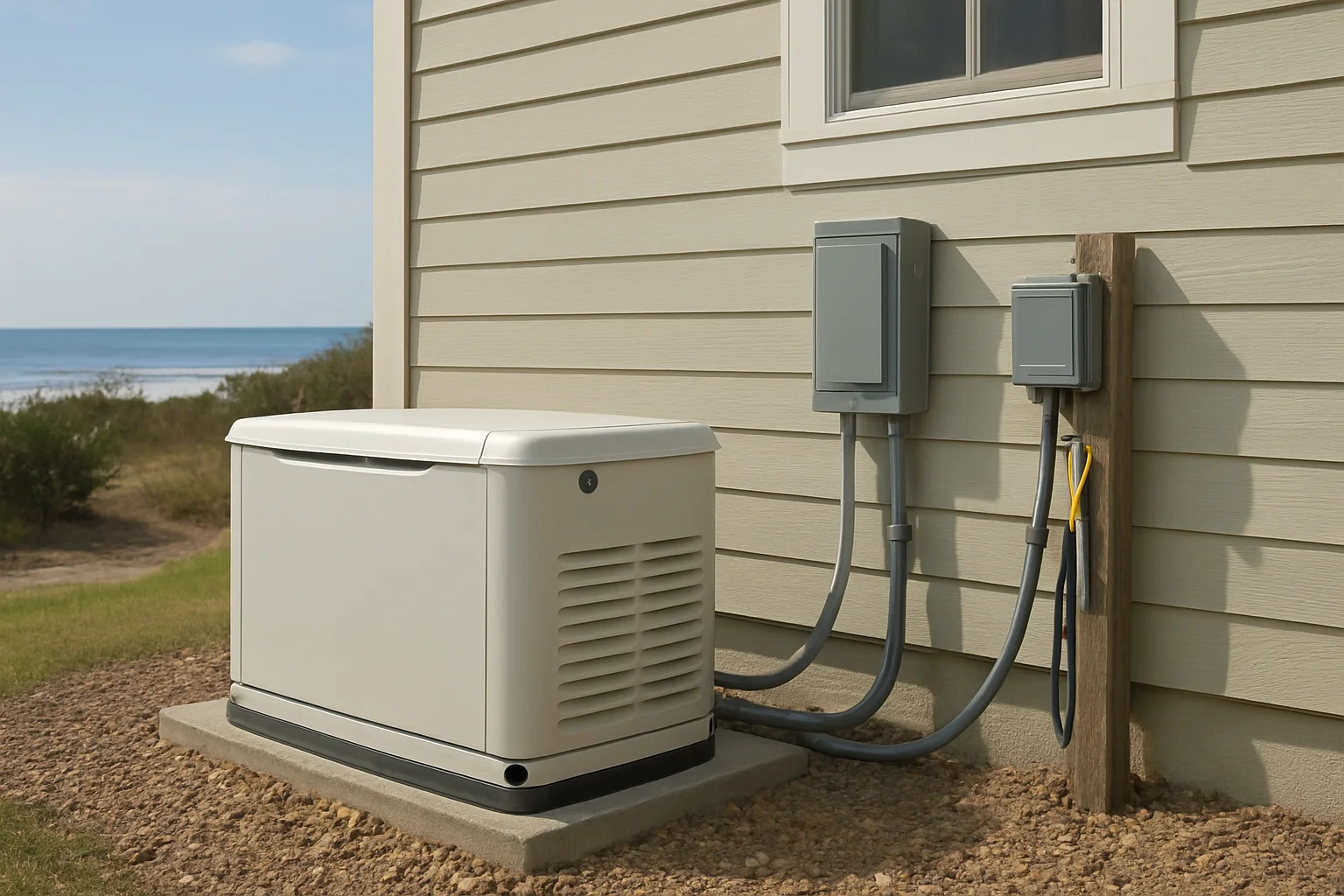
Generator installation is not only an electrical decision. The outdoor placement matters too. A professional assessment considers where the unit can sit safely and accessibly, while also accounting for clearances, airflow, noise, drainage, and service access. In coastal and near-coastal parts of Northwest Florida, weather exposure and corrosion resistance are additional practical concerns. The location should support reliable operation while keeping the equipment away from problem areas such as standing water, obstruction, or poor ventilation. That is not something homeowners should try to improvise.
The electrician or installer also reviews where conduits, fuel lines, and service paths would run so the final installation is orderly and maintainable. If the home’s layout makes a proposed location impractical, that is better discovered during assessment than after equipment has been purchased. A thorough site review helps avoid unnecessary relocations or code problems. It also gives the homeowner a clearer understanding of how the generator will fit into the property, both visually and functionally. Good placement is part of making the system reliable over time.
Why maintenance planning should begin before installation
Many homeowners think maintenance is something to worry about after the generator is already running, but the planning should begin earlier. The right installation should leave room for future service, easy access to components, and a realistic expectation of how the equipment will be cared for over time. That includes considering how often the generator will exercise, how fuel supply will be managed, and how the homeowner will know whether the system is ready when needed. A system that is difficult to service or inspect can become unreliable even if it was installed correctly at first.
Professional diagnosis often includes discussing the homeowner’s comfort level with monitoring and upkeep. Some systems are designed for relatively hands-off operation, while still benefiting from periodic professional checks. The electrician can explain what ongoing service should look like and what signs would justify a follow-up visit. This is especially helpful for households that want peace of mind rather than a learning curve. Thinking ahead about maintenance is not an extra step; it is part of making sure the generator will actually do its job in an emergency.
Common mistakes homeowners make when choosing backup power
One common mistake is assuming that one appliance problem means the entire house needs a very large generator. Another is choosing equipment based only on internet advice without considering the home’s panel, wiring condition, or actual load profile. Some homeowners also underestimate how much they rely on multiple small systems at once, such as internet equipment, chargers, pumps, and HVAC controls. These mistakes can lead to a backup plan that looks fine in theory but performs poorly when the outage arrives.
Professional diagnosis helps avoid those errors by grounding the decision in the home’s real electrical demands. It also prevents homeowners from focusing only on the generator itself and forgetting the rest of the installation. Transfer equipment, load balancing, placement, and service planning are all part of the finished system. When those pieces are handled as one project, the homeowner gets a better result and fewer unpleasant surprises. The best generator installation is not just about keeping lights on. It is about creating a complete, practical backup power strategy tailored to the home.
When to call 850 Electrical for an assessment
If you are noticing repeated outages, food loss, HVAC interruptions, electrical panel concerns, or growing dependence on powered devices, it may be time to have your home evaluated for generator installation. That is especially true if storm season has you thinking ahead about comfort, safety, and continuity. A professional assessment can help you understand whether a standby generator is appropriate, what size and type may fit your needs, and what electrical work might need to happen before installation. The earlier you start the conversation, the more options you usually have.
850 Electrical serves homeowners in Bay, Walton, and Okaloosa counties as part of veteran-owned A Superior Mechanical. The team can help evaluate warning signs, discuss backup power goals, and explain the installation path in practical terms. A careful diagnosis is the best first step because it turns a vague concern into a clear plan. If you want to prepare your home for the next outage with a system designed around your actual needs, call 850-258-3225 to schedule a professional review.
Explore related electrical care
- Power Generator Installation
- Kohler Generator Installation
- Electrical Installation
- EV Charger Installation
- Indoor Lighting Installation, Repair & Upgrades
- Lighting & Fixture Installation
Continue reading
- Whole-Home Backup Power Warning Signs Northwest Florida Homeowners Should Not Ignore
- Smoke Detector and Carbon Monoxide Installation: Warning Signs Northwest Florida Homeowners Should Not Ignore
- Outlet and Switch Installation Warning Signs Northwest Florida Homeowners Should Not Ignore
Talk with the 850 Electrical team for help with your home or business.