
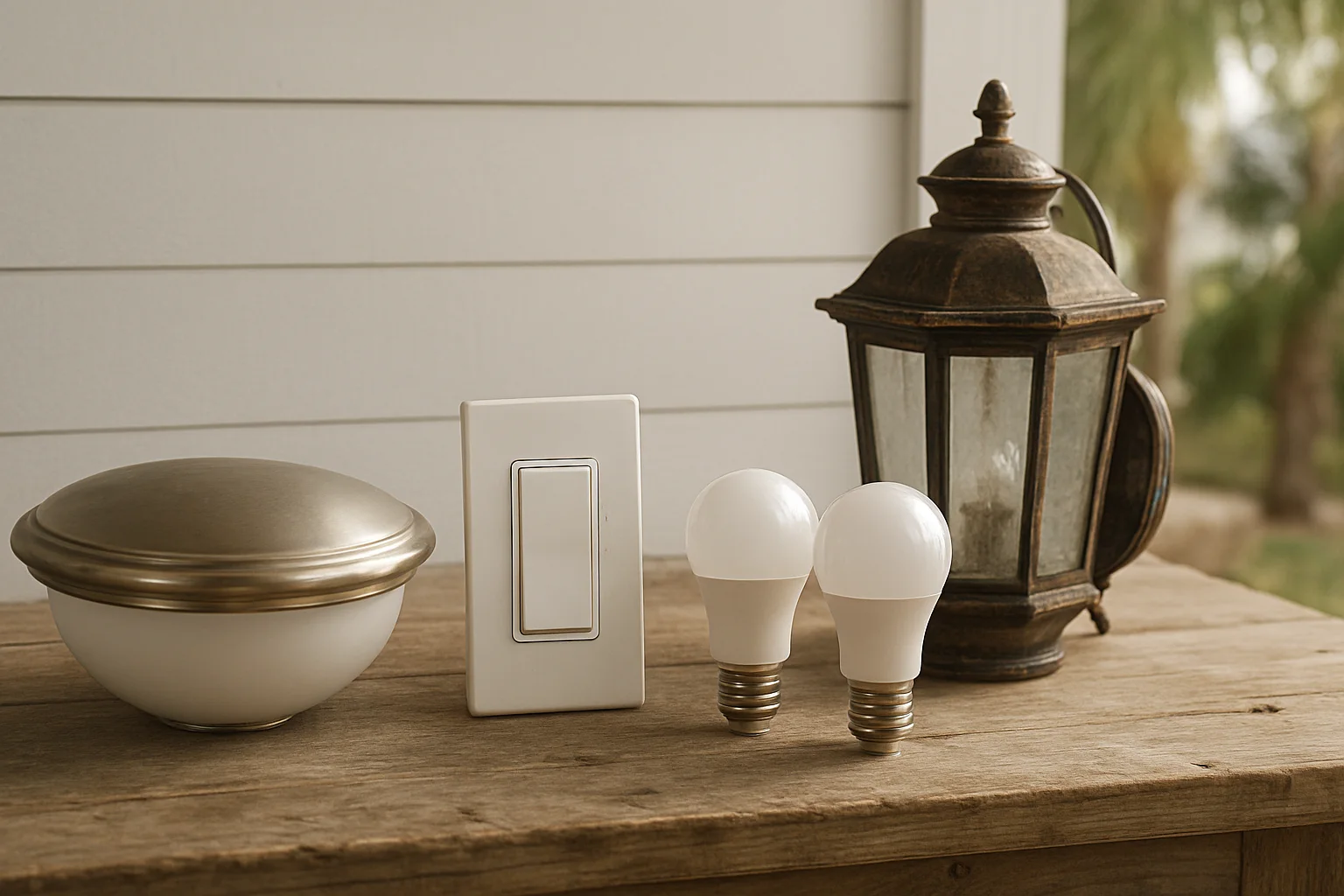
Why lighting warning signs matter in Northwest Florida homes
Lighting fixtures rarely fail all at once. More often, they send small signals first: a switch that feels warm, a light that flickers on windy days, a fixture that hums, or a bulb that burns out faster than expected. For homeowners in Bay, Walton, and Okaloosa counties, those signs deserve attention because local homes face a mix of humidity, salt air, summer heat, storms, and older wiring in some neighborhoods. What looks like a simple bulb problem can sometimes point to a loose connection, an overloaded circuit, or a fixture that is no longer suited to the conditions where it was installed.
Ignoring a lighting issue can create inconvenience, but it can also increase the risk of damage over time. A fixture that repeatedly malfunctions may be telling you something about the wiring behind the wall, the condition of the box, or the compatibility of the fixture with the circuit. Professional diagnosis helps separate a minor replacement need from a larger electrical concern. 850 Electrical, part of veteran-owned A Superior Mechanical, serves homeowners throughout this region with careful evaluation of lighting and fixture concerns so the right problem gets addressed the right way.
Flickering lights that keep coming back
A light that flickers once may have a loose bulb or a temporary interruption. A light that flickers again and again is different. Persistent flickering can be tied to a loose connection in the fixture, a problem at the switch, a dimmer that is not compatible with the bulb type, or a circuit issue affecting more than one room. In coastal and storm-prone areas, homes may also experience intermittent issues after power fluctuations or weather-related stress on electrical components.
Homeowners often notice flickering most when appliances turn on, during storms, or when a ceiling fan runs. Those patterns can be useful clues during a professional inspection. A qualified electrician can test the circuit, inspect the fixture wiring, check the switch and panel relationship, and determine whether the issue is isolated or part of a broader electrical condition. Because flickering can have several causes, replacing bulbs over and over without diagnosis may not solve the underlying problem and can delay a needed repair.
Lights that dim, surge, or behave unpredictably
A healthy lighting system should respond consistently. If a lamp dims when nothing else in the house is changing, or a ceiling fixture seems to brighten and fade on its own, the issue may be more than an old bulb. Voltage fluctuations, loose connections, incompatible controls, or circuit loading can all affect how a light performs. Homeowners sometimes describe this as the home “acting haunted,” but the more practical explanation is that electrical components are not delivering steady power the way they should.
Unpredictable lighting behavior is worth professional attention because it can be a symptom of a larger electrical imbalance. An electrician can trace the circuit, identify whether a switch leg, dimmer, neutral connection, or fixture component is involved, and recommend the safest path forward. In some cases, the fixture itself is fine, but the wiring or control device is not. In other cases, the fixture has reached the end of its useful life. Either way, a careful diagnosis prevents guesswork and helps you avoid repeatedly replacing parts that are not the real source of the issue.
Buzzing, humming, or crackling sounds from fixtures
Lighting fixtures should not call attention to themselves with sounds. A steady hum, buzz, or crackle can indicate a loose connection, a failing ballast or driver in certain fixture types, a dimmer mismatch, or a component vibrating under electrical load. If the sound changes when a dimmer is adjusted, that detail matters. If the sound is present even when the light is at full brightness, that points in a different direction. Sound is often one of the first clues that something in the fixture system is not operating normally.
Because sounds can come from multiple sources, professional inspection is the most reliable way to identify the cause. An electrician can listen for the location of the sound, inspect the fixture housing, test the switch and wiring, and determine whether the issue is inside the fixture or elsewhere on the circuit. In a humid coastal environment, corrosion and aging connections can also contribute to noisy operation. A buzzing or crackling fixture should not be ignored, especially if it is paired with heat, flickering, or odor, since those combined signs suggest the problem may be more serious than a simple nuisance.
Warm switches, hot fixtures, and unusual heat
Some warmth can be normal in certain lighting components, but a switch plate, ceiling fixture, or junction area that feels noticeably hot is not something to dismiss. Heat often points to resistance in the electrical path, and resistance can come from loose wires, overloaded circuits, poor connections, or a fixture that is not rated for the installed conditions. In homes with older wiring or updates made over time, a new fixture may not always be an ideal match for the existing setup without proper evaluation.
Northwest Florida’s climate can make heat-related issues more noticeable because enclosed spaces and attics may already run warm. That does not mean every warm fixture is dangerous, but it does mean the difference between normal operating warmth and abnormal heat should be checked professionally. An electrician can compare the fixture’s design and installation conditions against the circuit it uses, inspect the box and wiring, and identify whether the heat is a sign of overloading, poor contact, or a failing component. If you notice a warm switch, stop using the fixture and schedule an assessment rather than trying to troubleshoot by feel.
Frequent bulb burnout or shortened bulb life
When bulbs fail much sooner than expected, the fixture may be trying to tell you something. Repeated burnout can be caused by vibration, poor contact at the socket, overvoltage, incompatible dimmers, or a fixture that traps heat around the bulb. In some cases, homeowners assume the bulbs are low quality, but a pattern of repeated failure in the same fixture usually suggests a deeper issue. If a porch light, fan light, or recessed fixture burns out again and again, the problem may be in the installation rather than the bulbs themselves.
Professional diagnosis can identify whether the fixture is operating within its intended limits. An electrician can inspect socket condition, wiring integrity, and fixture compatibility, then determine whether the unit should be repaired, replaced, or adjusted. This is especially useful in homes that use a mix of older and newer lighting technologies, where the wrong combination of fixture, bulb, and control can create ongoing problems. Solving the cause instead of replacing bulbs repeatedly saves frustration and reduces the chance that a hidden wiring issue goes unnoticed.
Fixture damage from moisture, corrosion, or storm exposure
In coastal and near-coastal communities, moisture is a common stressor for outdoor and semi-outdoor lighting. Porch lights, patio fixtures, garage lights, and landscape-related fixtures can be affected by humidity, wind-driven rain, salt air, and temperature swings. Over time, moisture can lead to corrosion, rust, clouded lens covers, or degraded seals. Even when damage looks only cosmetic, water intrusion can affect wiring and connections behind the fixture.
After heavy rain or stormy weather, homeowners should pay attention to fixtures that flicker, stop working, or show signs of rust and condensation. Those symptoms can indicate that the fixture is no longer properly protecting its internal components. A professional electrician can inspect the enclosure, wiring, mounting, and weather resistance of the fixture to determine whether repair or replacement is appropriate. This is particularly important for exterior fixtures because a problem outdoors can affect not just appearance, but safety and reliability. Properly diagnosed outdoor lighting also helps maintain usable entryways, driveways, and outdoor living areas without relying on temporary fixes.
Switches, dimmers, and controls that do not respond correctly
Sometimes the light is not the problem at all. A switch that feels loose, a dimmer that causes fluttering, or a control that only works part of the time may be the real source of the issue. Homeowners may notice that the fixture works only after several tries, turns on with a delay, or behaves differently depending on how the switch is moved. Those are signs that the control device, wiring terminations, or compatibility between the switch and the fixture may need attention.
Modern lighting controls are not all interchangeable. Some fixtures require specific dimmers, some LED products are more sensitive to control quality, and some older switch boxes contain wiring conditions that make updates more complicated than they appear. A licensed electrician can evaluate the switch box, confirm whether the control is properly matched to the fixture, and determine if the issue is isolated or part of a broader circuit problem. That professional assessment matters because replacing a switch without understanding the rest of the circuit can leave the underlying issue unresolved or even create a new one.
When a fixture looks loose, crooked, or physically unstable
A lighting fixture should sit securely and evenly. If a ceiling light wobbles, hangs crooked, shifts when a fan or nearby door moves, or shows a gap at the canopy, it may not be properly supported. That can happen when mounting hardware has loosened, a box is not adequate for the fixture weight, or a past installation was never fully secured. Even if the light still turns on, physical instability is a warning sign that deserves more than a quick adjustment.
Professional diagnosis includes checking the mounting method, box support, wiring slack, and overall fit of the fixture. This is especially important with ceiling fans, large decorative fixtures, or heavy outdoor units. A fixture that is not properly supported can strain wiring and create hazards over time. Homeowners should avoid tightening or moving an unstable fixture themselves, since concealed wiring and support conditions are not always visible from the outside. A trained electrician can assess whether the fixture needs remounting, replacement hardware, or a different design suited to the location.
Signs that point beyond the fixture to the circuit or panel
A lighting problem is not always limited to one fixture. If multiple lights in different rooms act strangely, if a breaker trips when certain lights are used, or if several fixtures respond to appliance use, the issue may involve the circuit, neutral connections, or panel capacity. Homeowners sometimes focus on the most visible fixture because that is where the symptom appears, but an electrician may find that the real concern is upstream. That distinction is important because replacing the fixture alone would not solve a circuit-level problem.
Professional assessment helps trace symptoms from the fixture back to the circuit and, when needed, to the service equipment. In older homes, changes made over time may have created mixed wiring conditions that are not obvious to the homeowner. In newer homes, a poorly installed fixture can still reveal a branch-circuit issue that needs attention. A thoughtful diagnostic approach looks at how the lighting behaves in relation to the rest of the home, which provides a more accurate answer than replacing parts one by one. For homeowners, that means less guesswork and a clearer plan for repair or upgrade.
Why professional diagnosis is safer and more reliable than trial and error
Lighting issues can appear simple from the outside, but the cause often sits behind the fixture, inside a switch box, or somewhere along the circuit. Professional diagnosis reduces uncertainty by testing the actual electrical conditions rather than guessing from symptoms alone. An electrician can inspect the fixture, evaluate the wiring, verify compatibility between components, and determine whether the problem is local or systemwide. That kind of assessment is especially valuable when a home has older wiring, mixed fixture types, or signs of moisture exposure.
Trial and error can lead homeowners to replace bulbs, switches, and fixtures without ever finding the root cause. It can also mask symptoms that should have been evaluated sooner. Professional assessment is not just about fixing what is broken; it is about understanding why the problem happened and what can prevent it from recurring. For homeowners in Bay, Walton, and Okaloosa counties, that means getting practical guidance that fits the conditions of the home and the realities of the local climate. 850 Electrical can help homeowners make informed decisions about repair, replacement, and future maintenance without relying on unsafe guesswork.
What a professional lighting assessment typically looks for
A careful lighting assessment starts with the symptom, but it does not stop there. The electrician will usually want to know when the issue happens, how long it has been happening, whether it affects one fixture or several, and whether weather, appliances, or dimmer settings change the behavior. From there, the inspection may include the fixture itself, the socket or lamp connection, the switch, the wiring terminations, the mounting, and the circuit that serves the area. The goal is to identify both the immediate cause and any conditions that could make the problem return.
That process matters because lighting symptoms can overlap. Flickering might be caused by a bulb, a dimmer, or a loose neutral. Noise may come from the fixture or the control. Heat may be related to the bulb type, the enclosure, or the wiring. A professional assessment sorts those possibilities into a clear explanation and a practical plan. Homeowners benefit because the result is based on the actual electrical condition of the home, not on assumptions. In many cases, that means a simpler and more targeted solution than expected; in others, it prevents a small issue from developing into a larger one.
When to call 850 Electrical for help
If a light keeps flickering, a fixture hums or crackles, a switch feels warm, a porch light shows moisture damage, or multiple bulbs keep failing in the same location, it is a good time to schedule a professional diagnosis. The same is true if a fixture appears loose, dimming seems inconsistent, or a lighting control no longer responds properly. These signs do not automatically mean a major emergency, but they do mean the system deserves attention before the issue worsens. For homeowners in Northwest Florida, weather and humidity can add extra wear, making timely inspection especially worthwhile.
850 Electrical, part of veteran-owned A Superior Mechanical, serves Bay, Walton, and Okaloosa counties with lighting and fixture installation support and electrical troubleshooting tailored to local homes. An experienced assessment can help determine whether your issue calls for repair, replacement, or a broader circuit review. If you are noticing any of the warning signs discussed here, call 850-258-3225 to discuss the problem and arrange professional help. A careful diagnosis today can protect comfort, reliability, and peace of mind tomorrow.
Explore related electrical care
- Home Theater & AV Wiring
- Indoor Lighting Installation, Repair & Upgrades
- Lighting & Fixture Installation
- Outdoor Landscape Lighting Installation
- Smart Home Integration
- Whole Home Backup Solutions
Continue reading
- Warning Signs Your Home Electrical System Needs Professional Attention in Northwest Florida
- Whole Home Surge Protection in Northwest Florida: Warning Signs, Risks, and Professional Diagnosis
- Whole Home Rewiring Warning Signs Northwest Florida Homeowners Should Know
Talk with the 850 Electrical team for help with your home or business.