
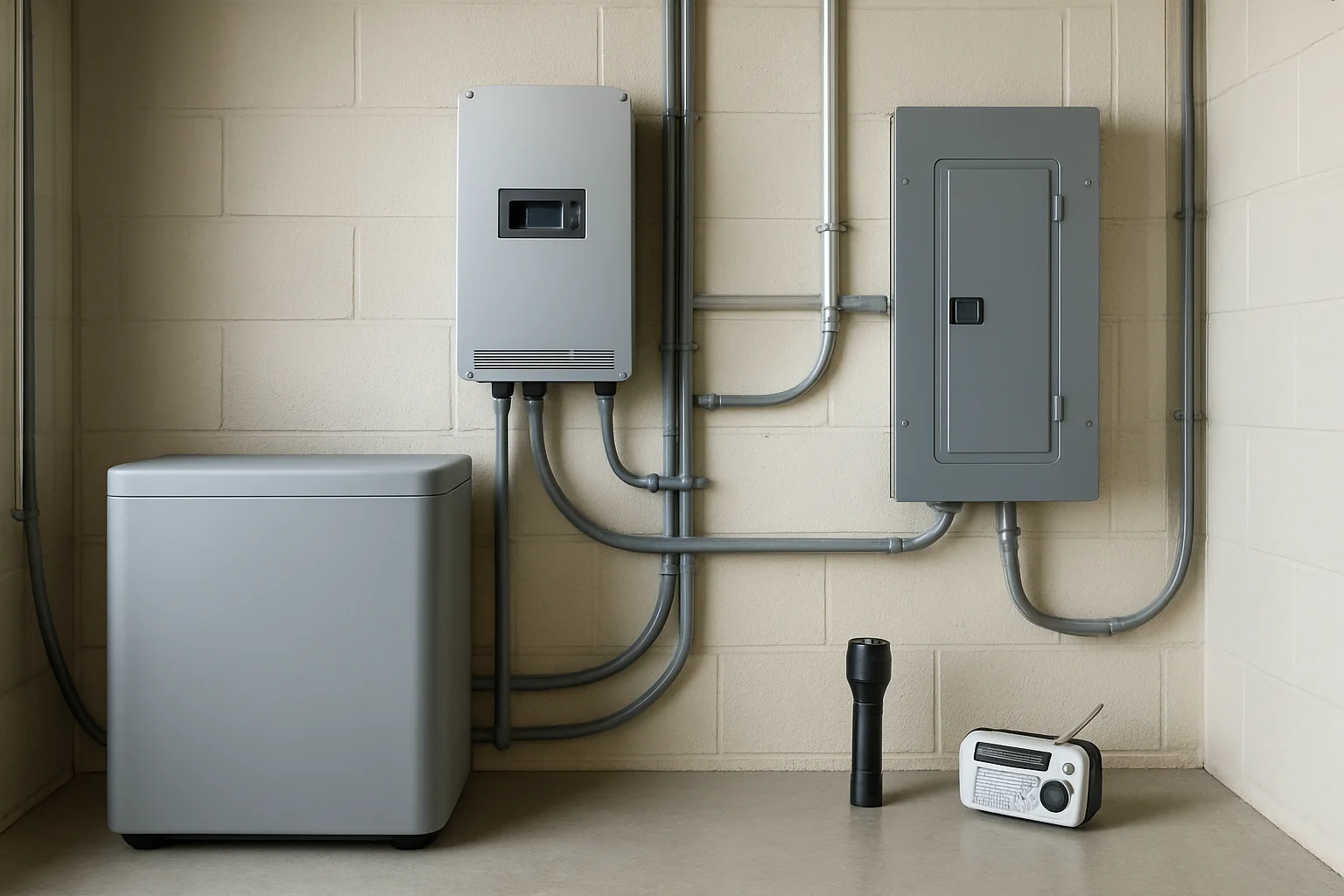
Why battery backup systems matter in Northwest Florida
Battery backup systems are no longer a luxury item for many Northwest Florida homeowners. Between seasonal thunderstorms, tropical weather, utility interruptions, and the everyday reality of sensitive electronics in modern homes, a dependable backup source can help keep essential circuits online when the main power drops. For families who rely on internet service, refrigeration, medical devices, security equipment, garage door openers, or home office setups, a battery backup system can reduce stress and help preserve normal routines during outages. In a region where weather can change quickly, readiness matters.
A battery backup system also supports better control over how your home responds to interruptions. Unlike a portable generator, which brings its own storage and operating considerations, a properly installed battery-based backup setup can operate quietly and automatically when configured for that purpose. That convenience is part of the appeal, but it also means homeowners may not notice a problem until a power event happens. Because backup systems sit idle much of the time, regular awareness of warning signs is important. Understanding the early clues of trouble can help you avoid being caught without power when you need it most.
How a home battery backup system works
At a basic level, a battery backup system stores electrical energy and releases it when grid power is interrupted or when the system is designed to manage peak demand. Many modern setups include batteries, an inverter or hybrid inverter, charging components, controls, and sometimes a transfer or load management arrangement that determines which circuits receive power. Some systems are paired with solar equipment, while others are charged from the utility supply alone. The configuration depends on the home, the backup goals, and the electrical design in place. Because these systems involve both stored energy and automatic switching, they must be evaluated as a complete system rather than as a single box on a wall.
For homeowners, the most important point is that battery backup performance depends on the health of several connected parts. A weak battery, a failing inverter, loose wiring, heat exposure, poor ventilation, or an undersized setup can all reduce performance. Even if the system appears to power on, it may not support the load it was intended to carry. That is why a professional diagnosis is so valuable. An electrician can determine whether the issue is isolated to one component or whether the entire system needs adjustment, repair, or redesign to match the home’s actual needs.
Warning sign 1: the system does not hold a charge as expected
One of the clearest signs of battery backup trouble is shortened runtime. If a system that once carried essential loads for a reasonable amount of time now drains much faster, there may be a problem with battery capacity, charging performance, load size, or internal system settings. Homeowners sometimes notice that the system seems to cycle down too quickly during brief outages or that it reports a lower reserve than expected. This change can happen gradually, which makes it easy to overlook until a storm or outage exposes the issue.
A professional diagnosis begins with a review of both the battery and the connected loads. The electrician may check whether the battery bank is aging normally, whether it is fully charging, and whether something in the home is pulling more power than expected. In some cases, the backup system may still be functional but no longer sized appropriately for current household demand. New appliances, added electronics, or changes in HVAC use can all affect performance. The key is not to guess. A trained electrician can separate normal battery wear from a setup issue that can be corrected before the next outage.
Warning sign 2: frequent alerts, fault codes, or warning lights
Many battery backup systems provide visual indicators, audible alerts, or app-based notifications when something is outside normal operation. Homeowners should pay attention when those alerts become frequent, persistent, or difficult to clear. Common examples include low battery warnings, communication faults, temperature warnings, inverter faults, or messages indicating that the system is not fully ready. Even if the backup system still seems to function, repeated alerts suggest that one or more parts need attention. Ignoring them can allow a small issue to turn into a larger failure during a storm or outage.
A professional diagnosis looks beyond the alert itself and examines the conditions behind it. The electrician may inspect the battery state, charging source, wiring connections, mounting location, ventilation, software or control settings, and any equipment coordinating the system with the home’s electrical panel. Alerts can sometimes point to a simple issue, such as a tripped protective device or poor connection, but they can also signal a more serious condition. The point of service is to identify the cause rather than reset the message and hope for the best. For homeowners, recurring warnings are a reason to schedule a professional evaluation promptly.
Warning sign 3: unusual heat, odor, or visible swelling
Battery equipment should not produce strong odors, visible distortion, or excessive heat during normal operation. If a homeowner notices a hot enclosure, discoloration around the unit, a swollen battery case, melting marks, or a smell that seems unusual, the system should be treated as a priority concern. These signs can indicate electrical stress, ventilation problems, internal battery damage, or other conditions that need immediate professional attention. Because battery systems store energy, abnormal physical changes should never be dismissed as cosmetic. A system that looks or smells wrong may be signaling a deeper problem.
A qualified electrician will assess the installation environment and the condition of the equipment without taking unnecessary risks. The evaluation can include checking clearances, airflow, enclosure condition, ambient temperature, and whether the system is installed in a location appropriate for the equipment type. The technician may also determine whether the home’s usage pattern is contributing to thermal stress. Northwest Florida homes can experience high heat and humidity, so the installation environment matters. Professional diagnosis helps identify whether the issue is related to a single failing component, an installation condition, or a design mismatch that should be corrected for safety and reliability.
Warning sign 4: backup power flickers, drops, or behaves inconsistently
A battery backup system should not feel unpredictable. If lights flicker, sensitive devices restart, or supported circuits briefly drop and return during backup operation, that inconsistency deserves attention. Some homeowners assume these events are just a sign of an outage, but unstable performance can point to a deeper issue with inverter output, transfer behavior, battery condition, or the way loads are connected. Even brief interruptions can be frustrating, and for certain devices they can be disruptive. A system that is supposed to provide smooth support should not act erratically under normal backup conditions.
Professional troubleshooting can determine whether the problem is in the backup system itself or in the home’s electrical distribution. An electrician may evaluate load balancing, inverter capacity, transfer timing, breaker condition, and the quality of the connections feeding critical circuits. In some cases, what appears to be a battery issue is actually a circuit design issue. In others, the battery or inverter may be nearing the end of useful service or experiencing a control fault. The benefit of professional assessment is that it considers the whole electrical picture, not just the most visible symptom. That is the fastest path toward a dependable correction.
Warning sign 5: shorter battery life after storms or during hotter months
Homeowners in Northwest Florida may notice that battery backup performance changes with the seasons. Hot weather can affect how equipment operates, and storms can increase the number of power interruptions or partial cycles the system experiences. If the battery backup seems to recover more slowly, run shorter, or reach full charge less often after a stretch of weather-related use, that may indicate aging batteries, environmental stress, or charging concerns. While some performance variation is normal, a noticeable decline should not be ignored. The system may be working harder than it should in the conditions where it is installed.
A professional diagnosis can help distinguish seasonal effects from actual defects. The electrician may review system history, installation location, ventilation, battery age, and charge patterns. If the equipment is in a garage, utility room, or other space that becomes especially warm, the environment may be part of the problem. The electrician can also assess whether the system is being asked to support more than it was designed to carry during extended outages. For homeowners, this type of evaluation is useful because it focuses on practical operation in local conditions, not just on theoretical specifications. The goal is backup power that is dependable when weather is at its worst.
Warning sign 6: the battery backup is struggling with new appliances or added loads
Many homeowners add appliances, electronics, or comfort equipment over time without revisiting the original backup plan. A battery backup system that once handled a few essential loads may now be under strain because the home’s electrical demand has grown. Signs of this problem include unexpectedly short runtime, repeated overload warnings, tripping, or a system that shuts down when too many devices are active. The issue may not be that the equipment is broken. Instead, it may simply be carrying more than it was designed to support. That is a common and fixable situation, but it requires a real assessment rather than assumptions.
A professional electrician can review the actual loads connected to the backup system and compare them with the equipment’s available capacity. This often includes identifying which circuits truly need backup power and which ones should remain off the system to preserve runtime. An electrician can also assess whether the battery backup needs expansion, reconfiguration, or a different control strategy. For homeowners, this is where expert guidance matters most. A system should match household priorities, not just sit in place with a hope that it will cover everything. Proper diagnosis helps align the backup system with how the home is truly used today.
Warning sign 7: visible wear, corrosion, or loose electrical components
Battery systems and the electrical equipment around them should be inspected for visible signs of deterioration. Corrosion, loose conduit fittings, damaged insulation, rusted hardware, missing covers, or water intrusion can all interfere with performance and safety. In humid coastal environments, components may age differently than they would in drier climates. Even if the battery itself is still functional, surrounding electrical issues can affect charging, transfer behavior, and system reliability. Visible wear should be treated as an important clue, especially if it appears alongside any performance problem. Good electrical systems depend on sound connections and clean, secure mounting.
Professional diagnosis includes a careful physical inspection of the installation as well as an assessment of how the components are interacting. The electrician can look for evidence of moisture entry, cabinet or enclosure damage, degraded fittings, and any condition that may place stress on the system. The technician may also verify that the backup equipment is still installed in a way that makes sense for the home and for local environmental conditions. A homeowner can notice that something looks off, but a professional can determine whether it is a minor maintenance issue or a sign of a broader system problem. That distinction matters when backup power is needed quickly.
What a professional battery backup diagnosis includes
A proper diagnosis is more than a quick glance or a reset. It starts with listening to the homeowner’s observations: what changed, when it changed, whether the issue appears during charging or discharge, and whether any error messages or unusual behaviors have been seen. From there, the electrician can examine the system as a whole. That may include checking wiring, connections, protective devices, enclosure condition, battery status, inverter operation, control settings, and the loads the system is expected to support. The goal is to understand both the symptoms and the electrical conditions behind them.
Professional diagnosis also considers the home’s overall electrical system. A backup issue may reflect a panel arrangement, load distribution, or equipment sizing concern rather than a defective battery alone. That broader view is important because fixing one component without addressing the root cause may only delay the next failure. A trained electrician uses tools and knowledge to verify performance in a way a homeowner cannot safely replicate. This is especially important with stored energy systems, where hidden faults can create operational problems long before anything looks obviously wrong. The benefit of service is confidence that the diagnosis is grounded in the actual system, not guesswork.
Why professional assessment is safer than trial-and-error troubleshooting
Homeowners are often tempted to test a battery backup system by repeatedly cycling it, checking connections, or trying to isolate a failure on their own. While it is reasonable to observe symptoms and note what happens, battery systems are electrical equipment that deserve caution. Trial-and-error approaches can mask the real issue, void useful diagnostic clues, or place a person in contact with energized components. There is also the practical concern that a system which seems minor today may be operating under a condition that worsens quickly. Safety and reliability both improve when the assessment is handled by someone who works with these systems professionally.
A qualified electrician can also rule out problems that are not obvious to the homeowner. For example, a battery may not be the only concern if the inverter, transfer arrangement, or connected circuit design is incorrect. A professional has the tools to measure performance under real conditions and evaluate whether the issue is intermittent, load-related, temperature-related, or equipment-related. That kind of diagnosis is especially valuable in homes where backup power is expected to support essential needs during severe weather. The point is not to overcomplicate the issue. The point is to solve it with a clear understanding of the system and the home it serves.
How homeowners can prepare for a service visit
Before a professional arrives, it helps to gather basic information about the system’s behavior. Homeowners can make a short list of the warning signs they noticed, including when they began, how often they occur, and whether they happen during charging, normal operation, or outages. If the system has any display messages or app notifications, those details are useful. It also helps to note whether any recent changes were made in the home, such as new appliances, electrical work, or changes to the rooms or circuits supported by the backup system. Clear observations make it easier for the electrician to focus on the most likely cause.
Homeowners should also ensure the area around the equipment is accessible. That does not mean opening equipment or attempting repairs, but simply making the installation reachable for a professional inspection. If the system is in a garage, utility area, or outdoor-adjacent space, keeping the area free of clutter can help the visit go smoothly. Professional diagnosis is most effective when the electrician can examine the unit, the panel connection, and the surrounding environment without obstacles. A little preparation can shorten the time it takes to identify the issue and determine the next step toward a reliable backup setup.
Choosing the right backup solution for the home
Sometimes a diagnosis reveals that the problem is not just a failing part, but a backup system that no longer matches the home’s needs. In that situation, homeowners may need to consider whether the current setup should be repaired, adjusted, or expanded. The right answer depends on the household’s priorities, the load profile, the existing electrical infrastructure, and the condition of the equipment. For example, a home that only needs a few essential circuits backed up may require a different configuration than one that supports more of the house. A thoughtful plan can improve reliability while keeping the system aligned with realistic use.
A professional electrician can help weigh those options based on the actual installation rather than a generic assumption. This is especially important in Northwest Florida, where homeowners may want backup power for storm readiness, comfort, communication, and everyday convenience. A system should be sized and arranged to serve the purpose it is meant to serve. That is why a diagnosis often becomes the starting point for a smarter long-term solution. Whether the result is repair, reconfiguration, or a new design direction, the homeowner gets information that supports a practical decision instead of a guess.
When to call 850 Electrical
If a battery backup system is showing warning lights, losing runtime, behaving unpredictably, or showing signs of heat, odor, corrosion, or physical wear, it is time to schedule a professional assessment. A system that does not perform as expected during routine conditions is unlikely to perform better during a storm or outage. For homeowners in Bay, Walton, and Okaloosa counties, timely service can help protect essential power and reduce the risk of being surprised when backup power is needed most. Electrical issues often become more inconvenient when weather is active, so responding early is the better choice.
850 Electrical, part of veteran-owned A Superior Mechanical, serves Bay, Walton and Okaloosa counties, FL. Homeowners who want a careful evaluation of battery backup warning signs can call 850-258-3225 to discuss their concerns and schedule professional diagnosis. Because every home and installation is different, a direct assessment is the best way to understand what is happening and what should be done next. Evergreen homeowner education is most useful when it points to practical action, and with battery backup systems, that action begins with a qualified inspection rather than assumptions or risky DIY work.
Explore related electrical care
- Battery Backup Systems
- Whole Home Backup Solutions
- 24 Hour Emergency Electrical Service
- Ceiling Fan Services
- Circuit Breaker Panels & Rewiring
- Commercial Electrical New Construction
Continue reading
- Electrical Repair Warning Signs Northwest Florida Homeowners Should Never Ignore
- Electrical Panel Warning Signs Northwest Florida Homeowners Should Not Ignore
- Electrical Installation Warning Signs Northwest Florida Homeowners Should Never Ignore
Talk with the 850 Electrical team for help with your home or business.