
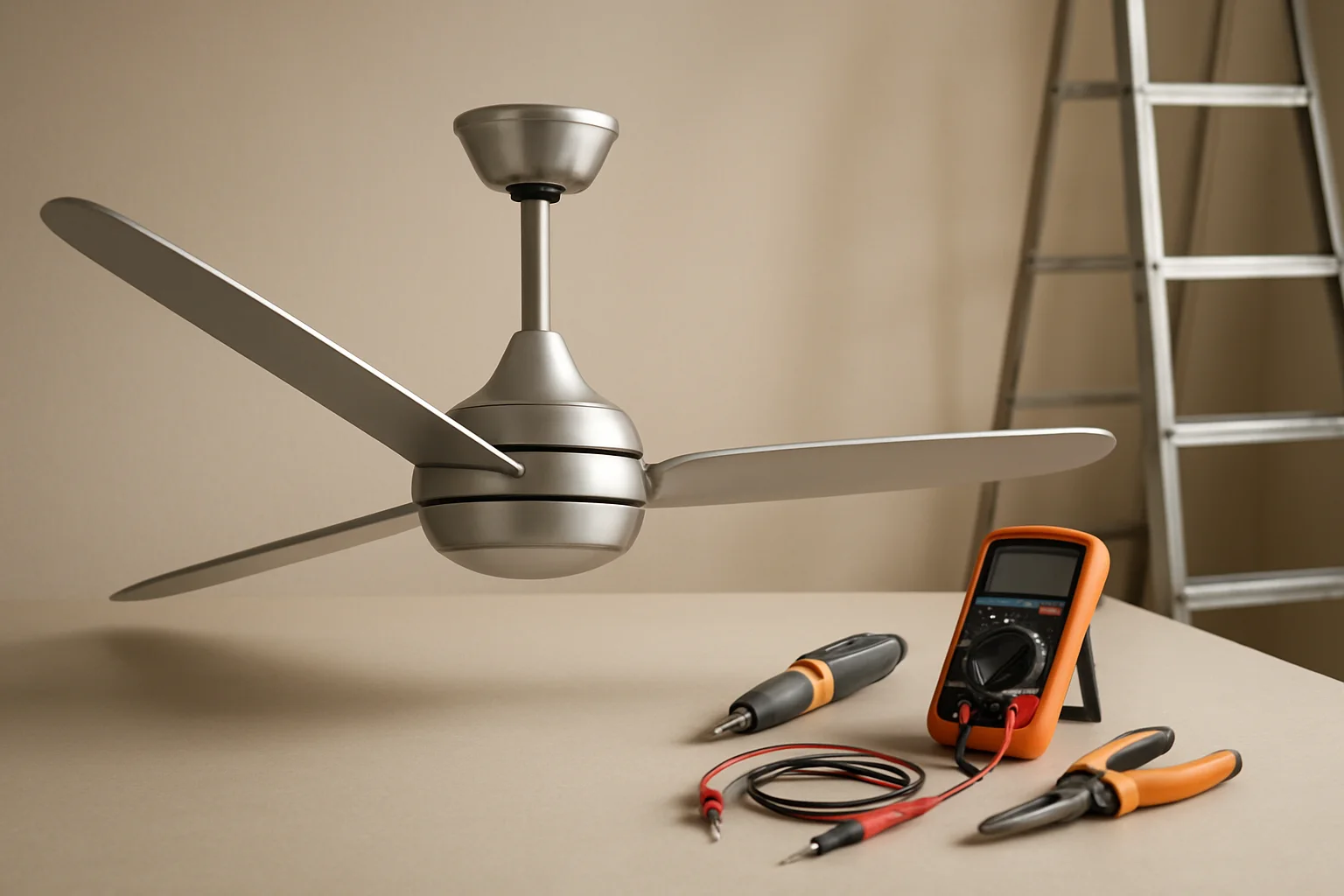
Why ceiling fans deserve regular attention
Ceiling fans often fade into the background because they seem simple: flip the switch, feel the air move, and move on. In Northwest Florida, though, fans work hard through long cooling seasons, humidity, salt air near the coast, and frequent use in bedrooms, living rooms, porches, and bonus spaces. Over time, even a dependable fan can develop issues that affect comfort, noise level, energy use, and safety. When a fan starts wobbling, slowing down, buzzing, or failing to respond the way it used to, those changes are worth noticing. They rarely appear all at once. More often, a homeowner sees a small change and then gradually gets used to it. That is why a seasonal checkup mindset is valuable: the earlier a problem is recognized, the easier it is for a qualified electrician to determine whether the issue is the fan itself, the electrical supply, the mounting, or another part of the system.
In a home, a ceiling fan is both a comfort device and an electrical fixture, which means the symptoms can come from different causes. A loose blade can create a wobble, but so can an unbalanced motor, an improper box, or a mounting issue hidden above the ceiling. A fan that hums may have a control compatibility issue, internal wear, or a loose connection. A homeowner can notice these signs without taking the unit apart. The safest and most useful next step is a professional assessment, not guesswork. For homeowners in Bay, Walton, and Okaloosa counties, 850 Electrical, part of veteran-owned A Superior Mechanical, can evaluate ceiling fan concerns and determine the right repair path. If you need help, call 850-258-3225.
The most common warning sign: wobbling or shaking
A ceiling fan should rotate smoothly with only minimal vibration. If it begins to wobble, shake, or create a visible blur at the blade tips, that is a sign something is off. Some wobble is caused by minor blade imbalance, but not every wobble is as simple as a single bent blade. In many homes, a fan that has become noticeably unstable may be showing symptoms of a worn motor, loose blade arms, a mounting problem, or an electrical box that was not intended to support the fixture’s movement. In humid coastal environments, hardware can loosen over time, and that can make a previously quiet fan start to act up.
A homeowner can observe whether the wobble happens at every speed or only at one setting, whether the fan has always done it or recently began, and whether it worsens after the fan runs for a while. Those details help an electrician narrow the issue during diagnosis. What should not happen is trying to “fix” the wobble by adding improvised weight, forcing parts, or tightening hardware without understanding what is actually loose. A professional inspection can determine whether the fan needs balancing, remounting, replacement parts, or a full replacement. The goal is not just to stop the movement but to make sure the fixture is properly supported and safe for long-term use.
Noise changes that point to a real problem
Ceiling fans normally make some sound, but homeowners usually know the difference between a soft airflow noise and an abnormal mechanical sound. Clicking, grinding, humming, rattling, scraping, or persistent buzzing can indicate a problem that deserves attention. A rhythmic click may come from loose hardware or blade alignment issues. Grinding can suggest motor wear or internal friction. A hum may be related to the control, wiring, or a compatibility issue between the fan and the dimmer or switch being used. Even a quiet rattle can signal that something has loosened and is vibrating as the fan runs. In a room that used to feel peaceful, these sounds become noticeable quickly.
It is important not to assume all fan noise comes from age alone. Some problems develop after a bulb change, a switch replacement, a recent storm, or a room renovation that altered the circuit or fixture support. In Northwest Florida, where storms and humidity are part of life, electrical components can be affected by moisture intrusion, corrosion, or repeated power events. A qualified electrician can trace the sound to the source by checking the mounting, blade hardware, control compatibility, wiring, and electrical box condition. That kind of diagnosis is more reliable than guessing based on the sound alone. If the noise is new, getting louder, or paired with heat, smell, or wobble, the fan should be professionally evaluated rather than left to worsen.
When the fan is slow, weak, or uneven
A ceiling fan that no longer moves air the way it used to may not be failing dramatically, but it is telling you something important. Sometimes the blades are dirty enough to reduce performance, especially in homes that collect dust, pollen, or cooking residue. Other times the problem is electrical: the motor may not be receiving the right power, the speed control may be failing, or the fan may be incompatible with the installed wall control. A weak fan may also be a sign of internal wear that reduces efficiency without stopping the fan completely. Homeowners often notice this first during the hottest months, when a room suddenly feels less comfortable even though the fan appears to be running normally.
Uneven performance matters too. If the fan only works well on one speed, starts inconsistently, or seems to surge and lag, that pattern can point to a control or wiring issue rather than just a dusty fixture. Professional diagnosis helps separate maintenance from repair. An electrician can check whether the motor, capacitor, switch, and wiring are operating within the fan’s intended design. That matters because ceiling fans are not one-size-fits-all; controls and fixtures need to match. If a fan is underperforming, it may be more cost-effective and safer to repair the correct electrical problem than to replace the whole fixture without understanding why performance changed in the first place.
Flickering lights and electrical symptoms around the fan
Many ceiling fans include integrated lighting, and that means a fan problem may show up as a lighting problem first. Lights that flicker, dim unexpectedly, brighten and fade, or work inconsistently when the fan speed changes can indicate an issue with the switch, dimmer, wiring, or the fan’s internal components. In some cases, the fan and light functions share a control that is no longer compatible with the fixture. In other cases, the issue may be a loose connection or a failing part inside the fan assembly. Because lighting and fan functions are interconnected, the symptom may seem minor while the underlying cause is more serious.
Homeowners should also watch for electrical behavior in the room as a whole. If the fan causes other lights to dim, if breakers trip, or if the switch plate feels warm, those are signs that call for prompt professional attention. These symptoms should never be treated as simple annoyance, because they can point to a wiring fault or overloaded circuit. A professional assessment can determine whether the issue is inside the fan, at the wall control, or in the broader circuit serving the room. An electrician can test safely, identify what is compatible with the fixture, and recommend the proper correction. This is especially important in occupied homes where family members may use the room daily and assume the problem is harmless because the fan still turns on.
Burning smells, heat, or a hot motor housing
A ceiling fan should not give off a burning smell, make the housing unusually hot, or leave a homeowner wondering whether something electrical is overheating. These are serious warning signs. A faint odor after a new installation may be one thing, but a persistent smell of hot plastic, electrical insulation, or scorched dust is not normal and should be addressed quickly. Likewise, if the fan motor housing becomes hot to the touch in a way that feels unusual compared to past operation, the fixture may be under strain. Overheating can happen because of internal wear, an electrical problem, incompatible controls, or a mechanical issue that is making the motor work harder than intended.
No homeowner should try to keep a suspiciously hot fan running in hopes that it will “work itself out.” Heat is one of the clearest indicators that a component may be failing or that the fixture is operating outside its safe range. A qualified electrician can inspect the fan, test the circuit, and determine whether the issue is repairable or whether replacement is the safer choice. This kind of evaluation matters because a fan can continue spinning even while conditions inside are deteriorating. Professional diagnosis helps prevent a small warning sign from becoming a more serious safety concern. If you notice odor, heat, or discoloration around the canopy, switch, or housing, turn the fan off and have it checked before using it again.
Remote, wall switch, and speed control problems
When a ceiling fan becomes difficult to control, homeowners often assume the remote batteries are weak or the wall switch is tired. Sometimes that is true, but recurring control problems can reveal a deeper issue. The fan may fail to respond to certain commands, reverse direction unpredictably, ignore speed changes, or turn on and off erratically. In homes with multiple controls, the symptoms can be confusing because the problem may involve the remote, receiver, wall switch, or internal wiring. A control issue that appears intermittent is especially worth a professional look because electrical faults often behave that way before they become constant.
It is also important to know that some fans and controls are not fully compatible. A dimmer designed for lights is not always appropriate for a fan. A mismatched control can cause humming, overheating, or poor performance. Rather than swapping parts at random, an electrician can identify what type of control the fixture needs and whether the fan itself is in good condition. Professional diagnosis helps homeowners avoid replacing usable components and helps ensure the final setup operates as intended. For busy households, this is not just about convenience. It is about making sure the control system is safe, reliable, and properly matched to the fixture and circuit.
Loose mounts, ceiling damage, and hidden support issues
A ceiling fan depends on more than the motor and blades. It also depends on secure mounting and a proper electrical box that can support the fixture’s movement and weight. If the fan starts to rock, the ceiling medallion shifts, the canopy appears loose, or you notice gaps where the fixture meets the ceiling, the problem may be related to support rather than the fan mechanism itself. In some cases, the fan was not installed with the right mounting hardware for a moving fixture. In others, normal vibration over time may reveal a weakness that was already there. What looks like a fan issue can actually be a ceiling or support issue.
This is one reason professional assessment is so important. An electrician can inspect the box, mounting bracket, fasteners, and visible ceiling area to determine whether the fixture is safely secured. Homeowners should not assume that a fan which still spins is automatically secure enough to keep using. Support problems can worsen gradually and are not always obvious from floor level. In coastal Northwest Florida homes, humidity and age can also affect the integrity of materials over time. A qualified review helps identify whether the remedy is a tightening, a remounting, a box replacement, or a full fixture change. The important point is that a ceiling fan’s stability must be confirmed, not guessed.
What a professional diagnosis actually checks
A proper ceiling fan diagnosis is more than a quick glance. A trained electrician looks at the symptom, then works backward to find the cause. That may include evaluating the fan’s balance, blade condition, mounting hardware, electrical box, wiring connections, control compatibility, motor behavior, and the condition of related switches or dimmers. The electrician may also consider whether the issue appears only under certain conditions, such as on one speed, after the fan has run for a while, or when the light is on. These details help identify whether the problem is mechanical, electrical, or both. A good diagnosis aims to fix the root cause instead of treating the symptom alone.
For homeowners, this process brings clarity. Instead of replacing parts one by one or living with an annoying problem, you get a clear explanation of what is happening and what the practical next step should be. That may be a repair, a control replacement, a remount, a cleaning and balancing service, or a full fan replacement if the fixture is no longer worth repairing. Professional assessment also helps ensure the work matches the home’s existing electrical system. In a region where homes range from older properties to newer construction, that matters a great deal. The right diagnosis reduces unnecessary expense and helps restore safe, comfortable operation the first time.
When replacement makes more sense than repair
Not every ceiling fan problem should lead to repair. Sometimes a fan is so worn, outdated, noisy, or incompatible with modern controls that replacement is the smarter and safer choice. Repeated motor trouble, chronic wobble, persistent electrical issues, or visible damage may all point toward replacement rather than another temporary fix. If a fan has already been repaired multiple times and still does not operate correctly, continuing to patch it can become frustrating and less practical. A professional can help you weigh whether the unit is worth keeping based on its condition, age, and the nature of the problem.
Replacement can also make sense when the fan no longer fits the room’s needs. A bedroom fan may be too small for the space. A living room fan may not be compatible with the lighting setup. A porch or coastal-area installation may benefit from a fixture better suited to moisture exposure. The important point is that replacement should be a decision based on inspection, not just appearance. An electrician can explain whether the current fan is still serviceable or whether starting fresh is the better long-term option. That kind of guidance helps homeowners avoid repeated service calls for a fixture that is simply nearing the end of its useful life.
Why Northwest Florida conditions can accelerate fan issues
Homes in Bay, Walton, and Okaloosa counties face conditions that can affect ceiling fans over time. Humidity can influence metal hardware, electrical connections, and overall wear. Coastal air may contribute to corrosion in some environments. Heavy seasonal use means fans run for long periods, which naturally increases strain on motors and controls. Dust, pollen, and airborne debris can also collect on blades and in housings, changing balance and reducing airflow. Even power disturbances from storms can leave behind electrical symptoms that are not immediately obvious. None of these factors automatically means a fan will fail, but they do make regular attention more worthwhile.
Because local conditions can affect different homes in different ways, the most helpful approach is a practical one: notice changes early and get them checked before the issue becomes larger. What matters most is not whether a fan is old or new, but whether it is still secure, responsive, quiet, and operating as intended. A professional electrician familiar with the region’s housing styles and environmental conditions can help distinguish between normal wear and a problem that needs correction. That kind of local awareness is useful because the same symptom can have different causes depending on the home, the fixture, and the electrical setup. For homeowners, that means better answers and fewer surprises.
Simple homeowner observations that help the electrician diagnose faster
Homeowners do not need to take anything apart to be helpful. In fact, the most useful observations are often the simplest ones. Note when the problem started, whether it happens all the time or only sometimes, whether it affects the fan, the light, or both, and whether the symptom changes with fan speed. If the issue began after a storm, a power outage, a bulb change, or a recent remodel, mention that too. These details help the electrician narrow the possibilities and focus on the likely source. Even basic notes about sound, heat, wobble, or performance can make the appointment more efficient and more accurate.
It also helps to avoid making the issue worse before the visit. Do not keep cycling a fan that smells hot, do not ignore sparks or breaker trips, and do not keep using a fan that seems unstable in a way that worries you. A professional diagnosis works best when the original symptom is still visible. The goal is safe, practical troubleshooting, not experimentation. If you want a ceiling fan concern evaluated in Bay, Walton, or Okaloosa counties, 850 Electrical, part of veteran-owned A Superior Mechanical, can help homeowners understand the issue and the next step. Call 850-258-3225 to arrange an assessment.
What homeowners can expect from a professional service visit
A professional ceiling fan service visit should bring answers, not more confusion. The electrician will typically begin by discussing the symptoms you have noticed and then inspecting the fixture, controls, and visible mounting conditions. From there, the electrician can determine whether the issue is related to balance, wiring, control compatibility, support, or internal wear. If the problem is straightforward, the fix may be simple. If the issue is broader, the electrician can explain why and outline the safest path forward. The point is to identify the true cause so the solution is appropriate to the home and the fixture.
Homeowners should expect clear communication about whether the fan can be repaired, should be replaced, or needs a related electrical correction first. That may include the control, switch, box, or wiring rather than the fan itself. Professional service is valuable because it ties the symptom to the system as a whole. Instead of guessing, you get a reasoned assessment from someone trained to work with residential electrical equipment. For homeowners in Northwest Florida, that means a ceiling fan can go from a nagging annoyance to a clearly understood issue. With the right diagnosis, you can restore comfort, reduce worry, and make a decision that fits both safety and the home’s needs.
Explore related electrical care
- Ceiling Fan Services
- 24 Hour Emergency Electrical Service
- Battery Backup Systems
- Circuit Breaker Panels & Rewiring
- Commercial Electrical New Construction
- Data Network Cabling
Continue reading
- Electrical Repair Warning Signs Northwest Florida Homeowners Should Never Ignore
- Electrical Panel Warning Signs Northwest Florida Homeowners Should Not Ignore
- Electrical Installation Warning Signs Northwest Florida Homeowners Should Never Ignore
Talk with the 850 Electrical team for help with your home or business.