
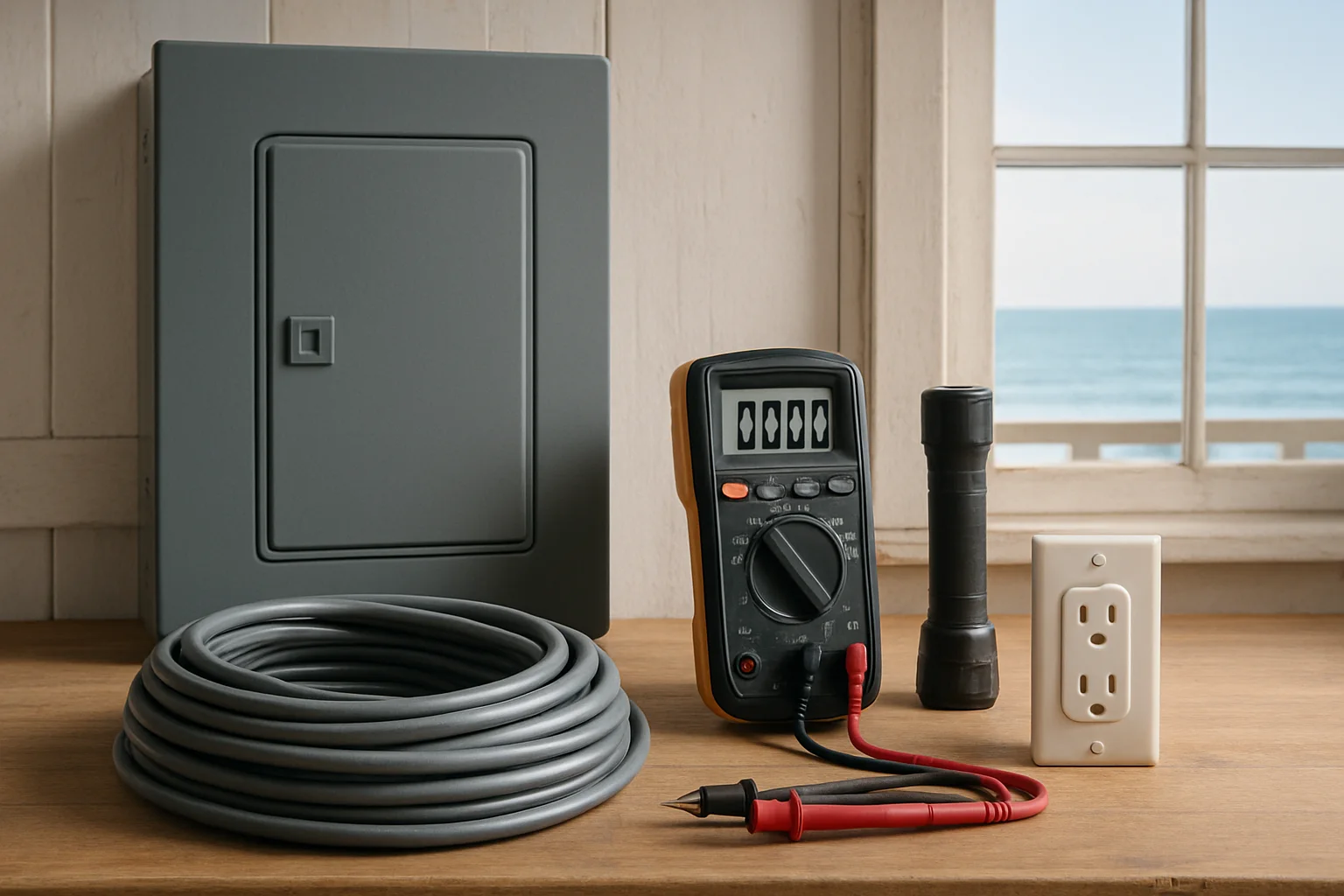
Why panels and wiring deserve timely attention
A home’s electrical panel and wiring are the backbone of everyday comfort, safety, and reliability. When they are working correctly, lights stay steady, appliances run normally, and breakers respond when something goes wrong. When either part starts to age, loosen, corrode, or become overloaded, the warning signs can be subtle at first. Homeowners in Bay, Walton, and Okaloosa counties often notice the symptoms before they know the cause: a tripping breaker, a warm panel cover, a flickering light, or outlets that seem to fail without explanation. Those are not issues to ignore or “wait out,” because electrical problems can progress from nuisance to hazard.
Northwest Florida’s climate adds its own stressors. Heat, humidity, salty coastal air, storms, and occasional power disturbances can all contribute to faster wear on electrical components. That does not mean every problem is severe, but it does mean homes here benefit from careful attention and timely professional diagnosis. A qualified electrician can determine whether a symptom comes from a simple circuit issue, an aging breaker, a damaged conductor, a loose connection, or a larger system concern. 850 Electrical, part of veteran-owned A Superior Mechanical, serves homeowners across the region with that kind of practical assessment. If you suspect a panel or wiring concern, calling 850-258-3225 for a professional evaluation is a smart next step rather than a guess-and-check approach.
How a circuit breaker panel fits into the whole electrical system
The breaker panel is the central control point for a home’s electrical distribution. Power enters the panel, is divided into branch circuits, and then travels to lights, receptacles, appliances, and dedicated equipment. Breakers are designed to protect the wiring by interrupting power when a circuit draws more current than it should. In a healthy system, the panel operates quietly in the background. Homeowners may only notice it when they reset a breaker after a temporary overload or when a licensed electrician opens the panel during service.
Problems begin when the panel is no longer matched to the home’s current electrical demands, or when age and wear affect how well it performs. Older panels were often built for a different era of appliances and household usage. Today’s homes may have more electronics, more HVAC demand, more kitchen equipment, and more charging devices than a house had when it was first wired. That added load does not automatically mean the panel must be replaced, but it does mean the system should be evaluated thoughtfully. A professional can compare the panel’s condition, capacity, breaker performance, and wiring layout against the home’s actual needs and determine whether repairs, upgrades, or further investigation are appropriate.
Warning signs that point to panel trouble
Some panel warning signs are obvious, while others develop slowly. Repeated breaker trips, especially on circuits that never used to have problems, can mean the breaker is doing its job because the circuit is overloaded or because something is failing. Lights dimming when large appliances start up may indicate a load issue, a loose connection, or a panel that is struggling to distribute power cleanly. Buzzing, crackling, or sizzling sounds coming from the panel should be treated as urgent, because electricity should not make those kinds of noises during normal operation.
Physical signs matter too. Rust, corrosion, discoloration, melted insulation, scorch marks, or a panel cover that feels unusually warm can all suggest an underlying issue. A breaker that will not stay reset, breakers that trip more often during hot weather, or breakers that seem to handle heat poorly are also worth professional attention. Homeowners should not remove the cover, test internal components, or attempt to determine the cause by touch. A trained electrician can inspect the panel safely, identify whether a breaker is worn or the panel itself is compromised, and explain what the findings mean in plain language. That diagnosis is especially important in coastal and humid environments where moisture and corrosion can accelerate deterioration.
Warning signs that point to wiring problems in the home
Wiring issues do not always show up at the panel. Sometimes the clues appear in rooms, outlets, or fixtures. A light that flickers when a fan or appliance starts, an outlet that feels loose, or a receptacle that is intermittently dead may indicate a wiring fault, a failing connection, or a device that is no longer making solid contact. Homeowners may also notice a faint burning odor near outlets or switches, visible discoloration around faceplates, or outlets that are warm when they should be cool. Those are all signs to schedule a professional diagnosis rather than continue using the circuit as normal.
Other symptoms can be more subtle. If a home has frequent power interruptions in one area, devices that reset unexpectedly, or breakers that trip despite low apparent usage, the wiring may need a deeper look. Older homes in particular may have legacy wiring that is no longer ideal for modern electrical loads, or junctions that have loosened over time. A professional electrician can trace the circuit, test connections, check for damaged conductors, and determine whether the issue is isolated or part of a broader pattern. This is where experience matters: the visible symptom may be in one room, but the root cause could be in the panel, a junction box, an upstream connection, or a device farther along the circuit.
Why Northwest Florida homes face extra electrical stress
Northwest Florida homeowners deal with environmental conditions that can be tough on electrical systems. High humidity can encourage corrosion over time, especially where metal components, connections, or outdoor equipment are exposed. Salt air near the coast can also be hard on external electrical parts and on any system components affected by moisture intrusion. Storm seasons can add power surges, interruptions, and system strain, while intense summer heat can increase demand on air conditioning and related circuits. All of that means panels and wiring may wear differently here than they would in a milder climate.
These conditions do not automatically mean a home has a defect, but they do make regular awareness important. Electrical systems often fail gradually, not suddenly. A connection can loosen a little at a time. Corrosion can build slowly. A breaker can become weaker with age. When the weather changes, those existing issues may become more visible because the system is working harder. A professional assessment helps separate environmental wear from more serious concerns. For homeowners in Bay, Walton, and Okaloosa counties, that can be the difference between catching a problem early and dealing with a larger repair after the warning signs have been ignored too long.
Age, home updates, and mismatched electrical capacity
One reason electrical problems appear in otherwise well-kept homes is simple: the house has changed, but the electrical system has not kept pace. A home may have been built for a lower electrical demand, then later received a remodeled kitchen, added HVAC equipment, new entertainment systems, home office devices, or more charging needs. Even if each addition seemed minor, the combined load can create strain on circuits and the breaker panel. That strain may show up as nuisance tripping, dimming lights, or outlets that cannot support the way the home is now used.
Age alone is not a reason to replace a panel or rewire a house, but age is a reason to evaluate. Older wiring systems may still function, yet not always with the flexibility or condition expected for today’s usage. Some panels and circuits may remain serviceable with targeted repairs, while others may benefit from a broader upgrade. A professional diagnosis considers the age of the system, the condition of visible components, the home’s electrical demand, and any recurring symptoms. That approach is much more reliable than assuming every problem is either harmless or requires a full overhaul. A skilled electrician can explain whether the issue is a single breaker, a specific branch circuit, or a larger capacity concern.
What a professional diagnosis actually includes
A professional electrical diagnosis is more than a quick glance at the panel. It typically begins with a conversation about the symptoms: what is happening, when it happens, how often it occurs, and whether it is tied to a particular appliance, room, or weather condition. That history helps narrow the possibilities before any tools come out. From there, the electrician can inspect the panel, look for visible damage or wear, and evaluate circuit labeling, breaker condition, and evidence of overheating, corrosion, or loose connections.
A thorough diagnosis may also involve testing voltage, checking circuit performance, and tracing affected lines to identify where the problem starts. In some cases, the issue is localized and relatively straightforward. In others, the findings point to a more systemic concern, such as multiple circuits showing age-related wear or a panel that is no longer a good fit for the home. The purpose of this process is not just to identify “a problem,” but to determine the cause, the scope, and the safest practical path forward. Homeowners benefit when the electrician explains the findings clearly, distinguishes between urgent and non-urgent conditions, and outlines realistic options without pressure or guesswork.
Why DIY electrical troubleshooting has limits
It is natural for homeowners to want to understand an electrical issue before calling for help, but there is an important line between observation and hands-on troubleshooting. You can note what is happening: which breaker trips, which room loses power, whether the problem occurs when an appliance starts, or whether there is visible damage or odor. Those observations are helpful. But opening a panel, testing live components, or attempting to repair wiring without the proper training and tools can create shock, fire, or equipment damage risks.
The danger is not only in the immediate hazard. Electrical systems can behave unpredictably when a connection is loose, a wire is damaged, or a breaker has failed in a way that is not obvious from the outside. What appears to be a simple nuisance may involve hidden heat buildup or intermittent arcing. Professional electricians are trained to assess those risks safely and to make decisions based on measurements, codes, and system behavior. If a homeowner suspects an issue, the safest approach is to leave the panel cover and internal wiring alone, avoid repeated resetting of a breaker that trips immediately, and call a licensed professional. The value of expert help is not just fixing the obvious symptom; it is identifying the real source before it becomes worse.
Common rewiring concerns in older or modified homes
Rewiring is not always about replacing every wire in a house. In many homes, the concern is that parts of the wiring system no longer match the current condition of the house or the way it is used. Older cable jackets can age, previous repairs may have been made inconsistently, or additions and remodels may have created a patchwork of wiring conditions. Outlets that are not grounded where grounding is expected, recurring circuit problems, or signs of overheating around switches and receptacles can all suggest that a closer evaluation is warranted.
Homeowners sometimes notice changes after remodeling, appliance upgrades, or room additions. A circuit that once seemed adequate may no longer handle the demand placed on it, or a previous alteration may have introduced a weak point. A professional electrician can determine whether the solution is a targeted repair, new dedicated circuits, replacement of worn devices, or more involved rewiring. The goal is not to recommend unnecessary work, but to restore reliable and safe operation based on the actual condition of the home. Because rewiring decisions depend on the home’s age, layout, materials, and service history, they should always be guided by inspection rather than assumption.
How to think about urgency when symptoms appear
Not every electrical symptom requires the same timeline, but every unusual symptom deserves attention. A single breaker trip after an obvious overload may be less urgent than repeated tripping without a clear reason. A flickering light in one room may be isolated, while multiple lights dimming across the home could suggest a broader issue. A warm outlet cover is concerning, but a burning smell, visible smoke, sparking, or heat at the panel should be treated as urgent. The right response depends on the symptom, but the common thread is that electrical issues should not be ignored because they seem minor at first.
Homeowners can make a few safe choices while waiting for professional help. If a particular circuit is clearly causing trouble, avoid using it until it is evaluated. If the issue involves smell, smoke, or heat, treat the situation seriously and get immediate professional assistance. If a breaker trips repeatedly, resist the temptation to keep resetting it over and over. That behavior can mask a serious problem and may worsen damage. A professional can help determine whether the concern is a simple repair, a panel issue, or a wiring defect, and can prioritize the work based on safety and system condition. In electrical work, the timing of the response matters almost as much as the repair itself.
What homeowners can safely observe before the appointment
Before an electrician arrives, it helps to gather information without disturbing anything. Make note of which breaker or circuit is involved, what equipment or room is affected, whether the issue is constant or intermittent, and whether anything unusual happened before the problem started. For example, did the symptom begin after a storm, after a new appliance was plugged in, or after the home experienced a power interruption? Those details can speed diagnosis and help the electrician narrow the source more efficiently.
It is also useful to notice whether the issue changes with time of day or with heavy electrical use. Does it happen when the air conditioning kicks on, when kitchen appliances run together, or only in humid or rainy weather? Even if the pattern is not obvious, the history still matters. A licensed electrician can use those observations to decide where to test first and what conditions to look for. The key is to observe, not to intervene. Do not remove outlet covers, disassemble fixtures, or open the panel in an attempt to “check” the problem. The safest and most productive homeowner role is to document what you see and share it during the professional inspection.
What professional recommendations may look like after diagnosis
After diagnosis, recommendations can vary widely depending on what the electrician finds. Some homes need a straightforward breaker replacement or repair of a single connection. Others may need targeted rewiring in one area, new dedicated circuits for heavily used equipment, or corrective work to address corrosion, heat damage, or outdated components. In some cases, a panel update may be the most practical way to improve reliability and bring the system into better alignment with current demand. The right recommendation depends on evidence, not assumptions.
A good professional explanation should help the homeowner understand the difference between immediate safety concerns, planned improvements, and optional upgrades. It should also make clear whether a problem is isolated or part of a larger trend. That matters because electrical decisions are often about priorities: what needs attention now, what can be planned, and what condition of the system should be watched over time. Homeowners in Northwest Florida benefit from that kind of clarity because weather, age, and usage all influence performance. When the diagnosis is done well, the next step is easier to understand and more likely to solve the real problem instead of only treating the symptom.
Choosing a local electrical professional you can trust
When you need help with a panel or wiring concern, choose a company that is local, responsive, and focused on diagnosis as well as repair. Electrical work is not just about swapping parts; it is about understanding how the whole system behaves in your home. That is especially important in regions like Bay, Walton, and Okaloosa counties, where environmental conditions and home age can affect electrical systems in different ways. A local professional is better positioned to understand the types of issues homeowners in the area commonly face and to recommend solutions suited to the home, not a one-size-fits-all answer.
850 Electrical, part of veteran-owned A Superior Mechanical, serves homeowners across Northwest Florida with professional electrical assessment and service. If you have warning signs such as repeated breaker trips, flickering lights, warm outlets, corrosion, buzzing from the panel, or other signs that suggest panel or wiring trouble, calling 850-258-3225 can help you get the issue evaluated promptly. The important step is not to guess at the cause or delay until the problem worsens. A careful diagnosis can protect the home, help preserve reliability, and give you a clear path forward based on what is actually happening inside the system.
Explore related electrical care
- Circuit Breaker Panels & Rewiring
- Electrical Panels & Upgrades
- Whole Home Rewiring
- 24 Hour Emergency Electrical Service
- Battery Backup Systems
- Ceiling Fan Services
Continue reading
- Whole Home Rewiring Warning Signs Northwest Florida Homeowners Should Know
- Pool, Spa & Hot Tub Wiring Warning Signs Northwest Florida Homeowners Should Know
- EV Charger Installation Warning Signs Northwest Florida Homeowners Should Know
Talk with the 850 Electrical team for help with your home or business.