
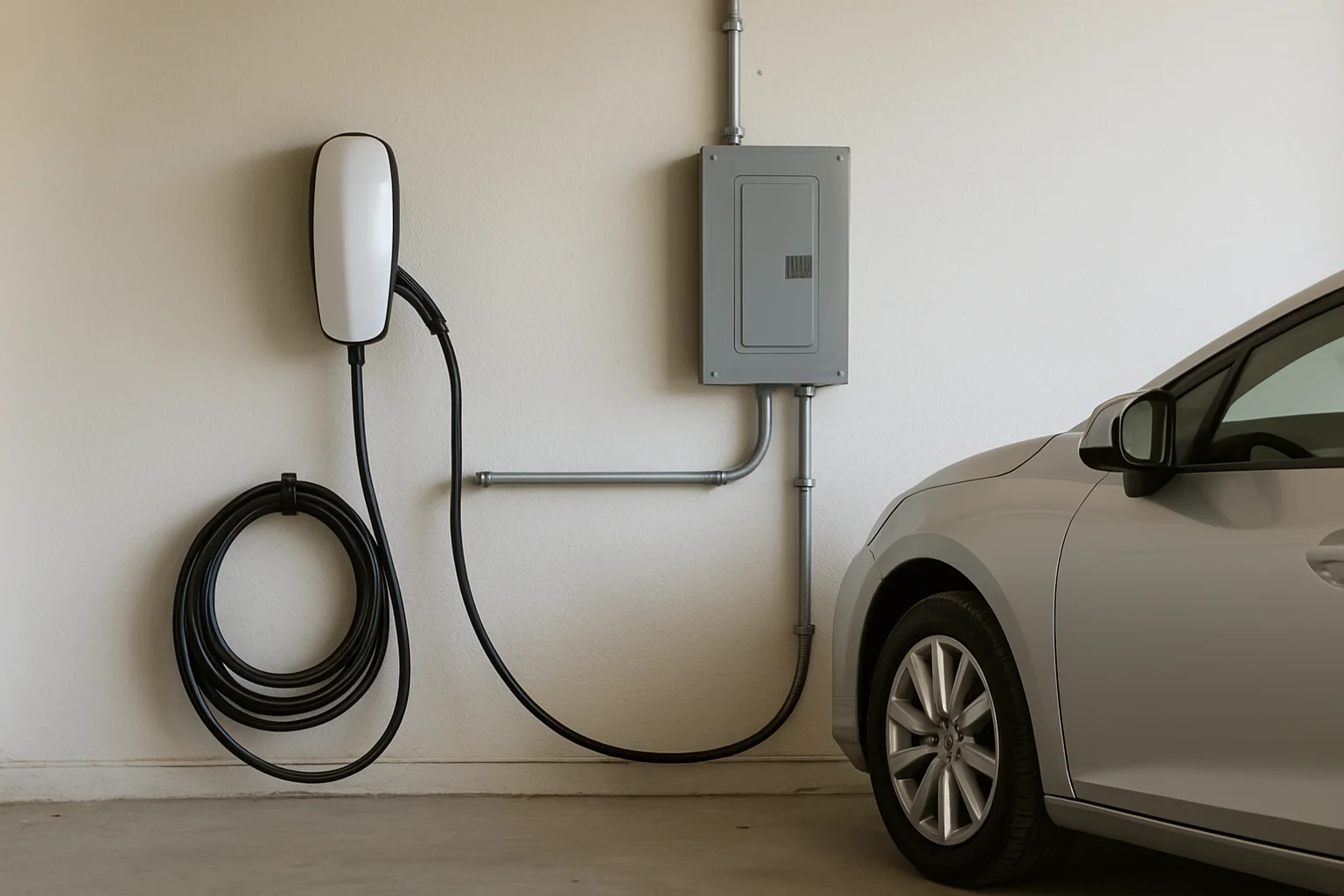
Why EV charger warning signs matter in Northwest Florida
Electric vehicle charging is becoming a practical part of home life for many Northwest Florida homeowners, but the electrical system behind it has to do more than simply “turn on.” EV chargers can place a long, steady load on a home’s wiring, panel, grounding, and available capacity. When those parts are not matched well to the charger and the home’s daily demand, small issues can turn into repeated nuisance tripping, overheated components, or charging that never feels reliable. Because charging usually happens for hours at a time, problems are not always obvious in the first few minutes. They may show up slowly as heat, wear, or unexplained interruptions.
In Bay, Walton, and Okaloosa counties, homeowners also have to think about local weather and environment. Humidity, salt air in some areas, heavy summer demand from air conditioning, and lightning-prone storm seasons can all influence how an installation performs over time. That is one reason warning signs should not be treated as minor inconveniences. A professional assessment can help determine whether the charger itself is the issue, whether the panel needs to be upgraded or reconfigured, or whether the home simply needs a different installation approach. 850 Electrical, part of veteran-owned A Superior Mechanical, serves homeowners in this region and can evaluate an EV charging setup with the broader home electrical system in mind. For scheduling or questions, homeowners can call 850-258-3225.
Warning sign 1: The breaker trips during charging
A breaker that trips when the EV charger starts or while it is running is one of the clearest warning signs that something deserves attention. Sometimes the cause is straightforward: the charger may be drawing more power than the circuit was designed to handle, or the circuit may already be serving other loads. In other situations, the breaker may be revealing a deeper issue, such as poor connections, aging components, or a panel that is already operating near its practical limit. Repeated tripping should not be dismissed as “normal” because breakers are designed to protect the system, not to serve as a routine reset button.
A professional diagnosis starts by identifying whether the tripping is due to circuit overload, a compatibility issue between the charger and the electrical setup, or a breaker that has been stressed over time. An electrician can review the charger’s electrical requirements, the wire size, the breaker rating, and the rest of the home’s demand pattern. This is especially important if the home also has major appliances running at the same time as charging. The goal is not just to stop the breaker from tripping. The goal is to make sure the circuit is safe, appropriately sized, and dependable for long-term use.
Warning sign 2: Charging is unusually slow or inconsistent
Some homeowners first notice a problem because the vehicle does not charge as quickly as expected, or the charging rate changes without an obvious reason. Slow charging is not always a fault in the charger itself. It can reflect the charger setting, the vehicle’s onboard charging limits, the available circuit size, voltage drop in the wiring, or other electrical conditions in the home. Inconsistent charging is especially frustrating because it may look fine one day and underperform the next. That variability often points to a system that is being affected by something outside the charger’s immediate control.
A professional assessment helps distinguish between a user-setting issue and an electrical issue. An electrician can verify the circuit’s actual capacity, check for signs of voltage loss, and confirm whether the installation matches the charger’s intended use. Sometimes the solution is to improve the circuit path or relocate the charger for a shorter, more efficient run. In other cases, the home may need a dedicated circuit or other electrical work to support the charging load more predictably. Homeowners should avoid assuming that a slow charger is simply “bad” until the electrical system around it has been reviewed.
Warning sign 3: Heat at the outlet, plug, or wall area
Heat is one of the most important warning signs in any electrical installation. If a plug, receptacle, faceplate, or wall area near the charger feels warm to the touch after normal charging, that is a sign the system needs inspection. Light warmth can sometimes occur under load, but noticeable heat, discoloration, or a smell near the connection should be taken seriously. EV charging is a prolonged load, which means any loose connection or weak component can generate heat over time rather than only at startup. That makes heat-related warning signs particularly important for home charging equipment.
A professional diagnosis typically includes checking all terminations, looking for signs of arcing or wear, and confirming whether the outlet or hardwired connection is rated and installed for the charger’s demand. An electrician can also determine whether the issue is caused by poor contact, an undersized component, or a location that is exposed to moisture, corrosion, or temperature stress. In coastal and humid parts of Northwest Florida, those factors can matter more than homeowners expect. Because heat can indicate an unsafe condition, it is best to stop using the charger and have the system evaluated before continuing regular charging.
Warning sign 4: Flickering lights or other electrical oddities in the home
When an EV charger is running, homeowners may notice lights dimming, flickering, or briefly changing brightness elsewhere in the house. Some minor fluctuation can occur when large appliances cycle, but recurring flicker tied to charging suggests the electrical system may be struggling to support the load. The issue might not be the charger alone. It could reflect a panel with limited remaining capacity, loose connections, or wiring that is not delivering power as efficiently as it should. Homeowners should not assume this kind of symptom is harmless simply because the house still “works.”
A professional diagnosis looks at the entire electrical picture, not just the charging location. An electrician can determine whether the house is experiencing a voltage drop issue, a neutral or connection problem, or a load balance concern. This kind of review matters because the charger may be revealing a weakness that affects other equipment too. In many cases, the home can continue to function, but the system may not be operating with enough margin for comfort or safety. A proper assessment helps decide whether the issue can be corrected by changing the circuit design, relocating the charger, or upgrading components in the electrical panel area.
Warning sign 5: Burning odors, buzzing, or repeated clicking
Unusual sounds or smells are never a sign to ignore when charging an EV at home. A faint electrical buzz can sometimes indicate a loose connection or equipment under stress, while a burning odor can point to insulation, plastic, or other materials overheating. Repeated clicking from a breaker or device during charging may also indicate that protection devices are reacting to a fault or overload. These symptoms are not specific to one single problem, which is exactly why a homeowner should not guess at the cause. The important point is that the charging setup is communicating distress.
A professional assessment focuses on tracing the symptom to its source. An electrician can inspect the charger, the receptacle or hardwired connection, the breaker, and the panel to determine where the abnormal condition is developing. This may involve checking for loose terminations, overheating marks, worn components, or signs of moisture intrusion. In the coastal climate of Northwest Florida, corrosion and humidity can contribute to these problems, so the inspection should be thorough rather than quick. If a homeowner notices odor, buzzing, or repeated clicking, it is prudent to stop charging and request an evaluation before the issue becomes more serious.
Warning sign 6: The home panel already feels crowded
Sometimes the warning sign is not visible at the charger at all. Instead, the home electrical panel may already be at or near its practical limit, even if the homeowner is not yet aware of it. If the panel has little spare space, frequently used breakers, or a history of add-ons over time, it may not be a simple matter of installing a charger and moving on. EV charging adds a substantial and sustained load, so a panel that seems adequate for current daily use may still be a poor fit for charging. This is why a panel that “looks full” deserves more than a quick glance.
A professional diagnosis includes evaluating load capacity, breaker availability, and the condition of the service equipment. The electrician can determine whether there is room for a dedicated EV circuit, whether load management is appropriate, or whether the installation would benefit from panel-related improvements. Homeowners should be especially cautious if they already rely on heat pumps, pools, well systems, or other large electrical loads. In those cases, the real question is not whether the charger can be installed somewhere, but whether it can be integrated safely and effectively into the whole home system. That broader perspective is a key part of professional planning.
Warning sign 7: Outdoor equipment showing weather wear
Many Northwest Florida homes use outdoor charging equipment, garages with coastal air exposure, or exterior electrical paths that face humidity and storms. Over time, weather can leave visible marks such as corrosion, rust, faded housings, cracked seals, or water-related staining near the charger or conduit. Even if the charger still operates, visible wear may indicate that the equipment is being exposed to conditions it was not meant to handle without proper protection. Outdoor installations need attention because moisture and airborne salt can affect performance long before a homeowner notices an outright failure.
A professional diagnosis can determine whether the installation location is still appropriate and whether the charger, enclosure, fittings, or conduit are adequately protected for the environment. An electrician can also check for compromised seals, entry points for water, or deterioration in the surrounding electrical components. In some cases, relocating the equipment, improving the enclosure, or updating the installation method can help extend reliability. The main point is that weather wear should be treated as a maintenance signal, not just a cosmetic issue. A charger exposed to Northwest Florida weather may need more careful evaluation than one installed in a fully controlled indoor space.
What a professional EV charger assessment includes
A professional assessment is more than a quick check of whether the charger turns on. It starts with understanding the homeowner’s charging habits, the vehicle’s requirements, and the home’s electrical condition. An electrician will typically review the panel, the proposed circuit path, the location of the charger, and the expected electrical load during charging. This helps determine whether the installation is suitable as-is or whether changes are needed before regular use begins. A thoughtful assessment also considers the age and condition of the existing electrical system, because a charger can only perform well if the supporting infrastructure is sound.
The diagnosis may include testing the circuit, inspecting connections, verifying grounding and bonding, and checking for signs of wear or overheating. It can also include looking at how the charger interacts with other home loads, such as air conditioning or major appliances. This kind of review is especially useful when homeowners are comparing a standard outlet setup with a dedicated charging circuit or when they are unsure whether the current arrangement is enough. The purpose is to identify risk before it becomes inconvenience or damage. Professional assessment gives homeowners a clearer picture of reliability, safety, and the best path forward.
Why local climate and home conditions matter
Northwest Florida homes face a mix of conditions that can affect electrical equipment over time. High humidity, heavy rain, salt air in some locations, and storm seasons can all place stress on external wiring, outdoor chargers, and panel components. Even if the charger itself is a quality product, the environment around it can influence how long connections stay stable and how well protective features hold up. That is why installations in this region benefit from close attention to materials, mounting location, and exposure to moisture. What works fine in a dry climate may need a different approach here.
Home conditions matter too. Some homes have older panels, additions made over time, detached garages, long wire runs, or a mix of new and existing equipment. Others may already be using most of the available electrical capacity before EV charging is added. A professional diagnosis takes all of that into account, instead of assuming every home is the same. This broader view helps the electrician recommend an installation that fits the house, the vehicle, and the homeowner’s daily routine. For families planning long-term use, that customized approach is often more valuable than a one-size-fits-all solution.
Common mistakes homeowners make when evaluating charger problems
One common mistake is assuming that a charger problem must be solved by the charger itself. In reality, the issue may be in the circuit, panel, wiring, or installation location. Another mistake is resetting a tripped breaker repeatedly and hoping the problem disappears on its own. That can delay a needed diagnosis and may allow an underlying issue to continue. Homeowners also sometimes compare their setup with someone else’s and assume the same charger or outlet method should work equally well in every house. Electrical systems are not interchangeable in that way, especially when charging loads vary.
Another frequent mistake is ignoring small changes until they become obvious failures. A new hum, a faint smell, slower charging, or a warm outlet can all be early warning signs. Waiting too long can make the repair or correction more complicated. It is also easy to underestimate the value of a professional load evaluation. Even when an installation appears straightforward, EV charging can affect the whole home in ways that are not visible from the outside. Professional diagnosis helps prevent guesswork and gives the homeowner a realistic plan instead of a temporary workaround. That is especially important when the goal is dependable daily charging, not just a one-time power-up.
When to stop using the charger and call for help
Homeowners should stop using the charger and seek professional evaluation if they notice heat, burning odor, repeated breaker trips, visible damage, sparking, buzzing that is new or persistent, or any sign that moisture has entered the equipment. These symptoms can point to a condition that is worsening each time the charger is used. It is better to pause charging and have the setup reviewed than to keep trying to see whether the issue goes away. EV charging depends on stable, sustained electrical performance, so warning signs deserve prompt attention.
If the issue is less dramatic but still persistent, such as slow charging, occasional flicker, or an equipment location that seems exposed to weather, a scheduled assessment is still a good idea. The goal is not only to solve a current problem, but to protect the home’s electrical system for the long term. 850 Electrical, part of veteran-owned A Superior Mechanical, serves Bay, Walton, and Okaloosa counties and can help homeowners evaluate whether a charger setup is appropriate, repairable, or in need of improvement. Homeowners can call 850-258-3225 to discuss an EV charger concern and arrange a professional look at the system.
Building a safer plan for home EV charging
A safer EV charging plan starts with the home, not just the vehicle. That means checking the panel, identifying the best circuit approach, considering the charger’s electrical demand, and accounting for the realities of daily life in Northwest Florida. A good installation is one that can be used consistently without nuisance tripping, unnecessary heat, or strain on the rest of the home. When homeowners think ahead about the electrical load rather than reacting after a problem appears, they are more likely to end up with a charger that fits their routine well.
Professional diagnosis is valuable because it turns uncertainty into a clear plan. Instead of guessing whether a breaker issue is normal, or whether slow charging means the equipment is failing, an electrician can evaluate the system as a whole and recommend the next step. That may mean a new dedicated circuit, a different installation location, panel-related work, or simply confirming that the current setup is appropriate. For homeowners in Bay, Walton, and Okaloosa counties, that practical guidance can make EV ownership easier and more dependable. If you are noticing warning signs or planning ahead for a charger installation, calling 850-258-3225 is a sensible place to start.
Explore related electrical care
- EV Charger Installation
- Electrical Installation
- Indoor Lighting Installation, Repair & Upgrades
- Kohler Generator Installation
- Lighting & Fixture Installation
- Outdoor Landscape Lighting Installation
Continue reading
- Whole Home Rewiring Warning Signs Northwest Florida Homeowners Should Know
- Smoke Detector and Carbon Monoxide Installation: Warning Signs Northwest Florida Homeowners Should Not Ignore
- Power Generator Installation Warning Signs Northwest Florida Homeowners Should Not Ignore
Talk with the 850 Electrical team for help with your home or business.