
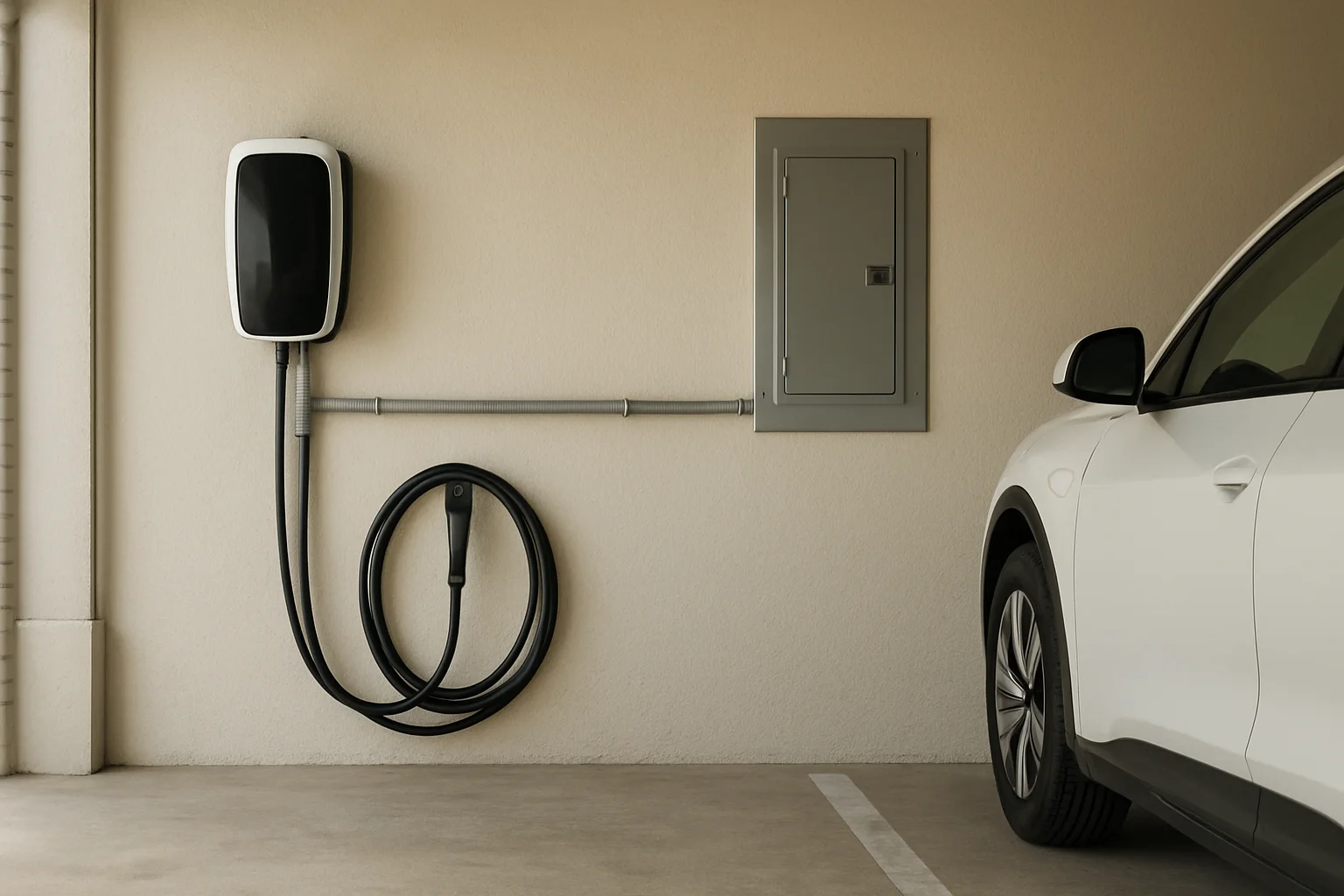
Why EV Charger Planning Matters in Northwest Florida
An EV charger installation also deserves attention because every home is different. A charger that works well in one home may not be the right fit in another, even on the same street. Panel size, existing electrical load, charger amperage, outlet or hardwired setup, and the path the wiring must take all influence the final plan. A careful approach helps the homeowner avoid unnecessary upgrades while still protecting the home’s electrical system and the vehicle’s charging performance.
In a coastal and humid region, preventive care is especially valuable. Salt air, moisture, and summer storms can affect outdoor equipment over time, so choosing the right location and maintaining the system matters after installation as well. Homeowners who plan ahead are better positioned to keep charging reliable, protect their investment, and reduce the chances of inconvenient outages or service calls. For guidance tailored to local homes, 850 Electrical, part of veteran-owned A Superior Mechanical, serves Bay, Walton and Okaloosa counties, FL. Call 850-258-3225 for help arranging an assessment.
Start with the Home’s Electrical Capacity
Homeowners may notice signs that the electrical system needs review long before any charger is installed. These signs can include a panel that is already full, frequent breaker trips, lights that dim when large appliances start, or a history of electrical additions made over the years without a single coordinated plan. Even when there are no obvious problems, the age and configuration of the system still matter. Older homes may have service equipment that was never designed with high-demand electric vehicle charging in mind.
A professional assessment gives the homeowner a clearer picture of what is practical, safe, and efficient. It is also the right time to discuss whether the charger should be installed as a hardwired unit or through a receptacle arrangement, depending on the equipment selected and the site conditions. Because this is a seasonal resource prepared now for homeowners, it is best used as a planning tool rather than a substitute for on-site evaluation. The goal is to make sure the home’s electrical infrastructure is ready before installation begins.
Choosing the Right Location for the Charger
For outdoor locations in Northwest Florida, weather exposure deserves special attention. Direct sun, humid air, blowing rain, and storm conditions can all affect electrical equipment over time. That does not mean outdoor installation should be avoided, only that it should be planned carefully. A properly selected charger, mounted at the right height and in the right location, can perform well outside when the environment is considered from the start. Protection from standing water, splash zones, and impact from lawn equipment or vehicles is part of the site planning process.
Homeowners should also think about future use, not only current use. A location that seems convenient today should still be practical if the household changes vehicles, adds another driver, or rearranges storage in the garage. An experienced electrician can help compare options and explain which location best balances convenience, weather exposure, and ease of service. That kind of planning is especially valuable when the charger is intended to be a long-term part of the home.
Understanding Hardwired Versus Plug-In Installations
It is also important to remember that an EV charger is a high-demand appliance. The connection method should not be chosen casually. Receptacle-based installations require a properly rated outlet, correct breaker protection, and a configuration that is suited to the charger’s electrical requirements. Hardwired installations require careful termination and secure mounting. In either case, local code requirements and manufacturer specifications matter. Those details are not just technicalities; they help protect the home and support reliable charging over time.
For homeowners, the main goal should be a safe, practical installation that fits how the vehicle is used day to day. A professional assessment can help determine which method better suits the house and the charger. That way, the homeowner can make a confident decision based on the electrical system, the charger, and the way the space is used, rather than on assumptions about what is easiest. A good installation is the one that is right for the home, not simply the one that seems quickest.
Why Coastal Weather Influences Installation Choices
Storms and severe weather add another layer of concern. Even if the charger itself is not directly damaged, power outages, surges, and water intrusion around the installation area can create problems. A professional may recommend protective measures depending on the site, such as thoughtful routing of exterior wiring, attention to sealing at wall penetrations, or coordination with other electrical protections in the home. The goal is not to make weather risks disappear, but to reduce the chances that normal local conditions shorten the life of the equipment.
Because the weather is part of the environment the charger will live in, it is smart to review the installation seasonally. Before the hottest months, homeowners can check whether the charger is exposed to direct sun or whether any new landscaping, storage, or exterior changes have altered the area around it. Before storm season, it helps to make sure there are no loose parts, visible wear, or water-related concerns. An electrician can help homeowners plan these checks and determine what should be professionally reviewed rather than handled informally.
Preventive Care After Installation
It is also smart to pay attention to performance changes. If charging becomes slower than expected, if the equipment displays an error, if the breaker trips, or if the charger behaves differently after a storm or major weather change, that is a reason to schedule a professional assessment rather than ignore the problem. Electrical symptoms are often more meaningful than they seem, and it is better to confirm the cause than to assume the issue will resolve on its own. A licensed electrician can distinguish between a charger issue, a vehicle issue, a circuit issue, and a panel issue.
In homes where the charger is used every day, preventive care is part of ordinary home ownership. It does not need to be complicated or time-consuming, but it should be consistent. A homeowner who treats the charger like any other key system in the home is more likely to catch early warning signs and avoid inconvenience later. That approach is especially useful in Northwest Florida, where environmental conditions can gradually affect outdoor and garage equipment over time.
Seasonal Planning for Summer Heat and Storms
Seasonal planning is not about reacting to every weather forecast. It is about using a predictable time of year to look over the system before conditions become more stressful. For many households, late spring or early summer is a practical time to request an assessment. That gives the homeowner time to address panel concerns, relocate equipment if needed, or correct installation details before peak heat and storm activity arrive. If the charger was installed some time ago, a seasonal check can also confirm that it still fits the way the home is used now.
In coastal and inland neighborhoods alike, the combination of heat and storms makes preventive attention worthwhile. Homeowners who plan in advance are less likely to discover an issue at the worst possible moment, such as when they need to charge before a trip or after a long day. Seasonal planning supports reliability, and reliability is one of the main reasons people invest in home charging in the first place.
Seasonal Planning for Cooler Months and Travel
This is also a good time to think about reliability before the year ends. If the charger has been showing any intermittent issues, the cooler months are a sensible period to have them evaluated before a heavier travel season creates more pressure on the system. Seasonal planning is especially helpful when the home has multiple electrical demands at once, such as holiday lighting, cooking equipment, and household heating or cooling changes. A professional can assess whether the existing circuit arrangement remains suitable for the home’s current patterns of use.
The key idea is that an EV charger should work with the household’s calendar, not against it. Seasonal changes influence when people charge, how they park, and what the electrical system is asked to do. By considering the cooler months as a planning window, homeowners can reduce the chances of last-minute surprises and keep their charging setup aligned with the rhythm of family life.
What a Professional Assessment Includes
The assessment is also a chance for the homeowner to ask practical questions. How will the charger be used day to day? Is the current parking arrangement ideal? Will the installation interfere with storage or future projects? What signs should the homeowner watch for after the charger is in service? These discussions can help the homeowner make a more informed decision and better understand the life of the system after installation. A clear explanation from a licensed electrician is often the difference between a good assumption and a solid plan.
Most importantly, a professional assessment supports safe decision-making. Electrical work should be evaluated and completed by a qualified professional, especially when the equipment is high-demand and expected to operate repeatedly over time. Homeowners should avoid trying to size or install the system themselves. Instead, they can rely on a licensed electrician to review the home’s conditions, explain the options, and recommend a setup that matches the home’s electrical realities.
Common Signs Your Charger Needs Attention
Another sign that the charger needs attention is environmental change around it. If a garage was remodeled, storage moved closer to the equipment, landscaping changed the outdoor area, or a vehicle with a different charge port was added to the household, the original installation may no longer be the most practical arrangement. Home systems should be re-evaluated when the way they are used changes. That keeps the installation aligned with current needs rather than past assumptions.
Because this resource is meant as an evergreen homeowner guide, the most useful habit is simple observation. Look for changes, note when they happen, and schedule an assessment if the pattern repeats. That approach helps homeowners stay ahead of problems and avoid inconvenience. When in doubt, it is always better to have a professional review the charger than to continue using equipment that may not be functioning as intended.
Coordinating EV Charging with Other Home Systems
An EV charger does not operate in isolation. It shares the home’s electrical supply with air conditioning, kitchen appliances, laundry equipment, lighting, and any future additions the homeowner may make. That is why a broader home-system perspective is useful during planning. If the panel is already supporting several major loads, the electrician may recommend a configuration that better balances demand or leaves room for future expansion. The homeowner benefits when the installation is considered as part of the whole house rather than as a single stand-alone project.
This is especially important in homes where other equipment may also be aging or nearing replacement. A homeowner who plans ahead for an EV charger may also be thinking about HVAC updates, appliance replacements, or other electrical improvements. Coordinating these projects can help avoid unnecessary duplication of labor and reduce the chance that one upgrade limits another. A professional assessment can identify whether a panel change, load adjustment, or circuit reconfiguration would make sense as part of a broader home plan.
There is also value in practical scheduling. Installing a charger at the same time as another electrical project may be efficient, but it should only be done when the home’s actual conditions support it. The best plan is the one that reflects the home’s current and future needs, not just the desire to complete several tasks at once. An electrician can help the homeowner think through timing, priorities, and the likely impact of each improvement on the electrical system as a whole.
For families who are new to home charging, this perspective can be reassuring. The charger becomes one part of a well-managed system instead of an isolated piece of hardware. That makes it easier to plan maintenance, understand performance changes, and make decisions that support both convenience and safety. In a region where weather and usage patterns shift through the year, that kind of coordination is especially helpful.
When to Schedule Service and Who to Call
Homeowners should schedule service when they are planning a new installation, when they want to confirm the system is ready for an upgrade, or when the existing charger shows signs of trouble. It is also smart to arrange service before a busy season rather than waiting until the equipment is under pressure. Early scheduling allows time for assessment, planning, and any needed electrical work without the stress of a last-minute problem. That approach is particularly practical in Northwest Florida, where hot weather and storm patterns can increase demand on home systems.
A qualified electrician should be the one to evaluate, install, or service an EV charger. This is not the kind of project where a homeowner should attempt hazardous DIY work. A professional can interpret the electrical requirements, inspect the panel, review the installation path, and ensure the system is set up in a way that fits the home. That professional review is the best way to protect the house, the vehicle, and the people using the equipment every day.
If you are a homeowner in Bay, Walton, or Okaloosa counties and you want help planning EV charger installation or preventive care, 850 Electrical, part of veteran-owned A Superior Mechanical, serves the area and can help you arrange an assessment. Call 850-258-3225 to discuss your home’s electrical setup, timing, and location options. The right service call can turn a complicated decision into a clear, practical plan that supports dependable charging throughout the year.
As a seasonal archive resource prepared now, this guide is meant to help homeowners think ahead. Whether the charger is brand new or already in place, routine professional attention can make a meaningful difference. With the right installation and sensible preventive care, an EV charger can remain a reliable part of the home’s everyday comfort, convenience, and long-term planning.
Explore related electrical care
- EV Charger Installation
- Electrical Installation
- Indoor Lighting Installation, Repair & Upgrades
- Kohler Generator Installation
- Lighting & Fixture Installation
- Outdoor Landscape Lighting Installation
Continue reading
- Smart Electrical Panel Installation for Northwest Florida Homes: Preventive Care and Seasonal Planning
- Outlet and Switch Installation in Northwest Florida: Preventive Care and Seasonal Planning for Safer, More Reliable Homes
- Pool, Spa & Hot Tub Wiring Care for Northwest Florida Homes: Seasonal Planning and Preventive Maintenance
Talk with the 850 Electrical team for help with your home or business.