
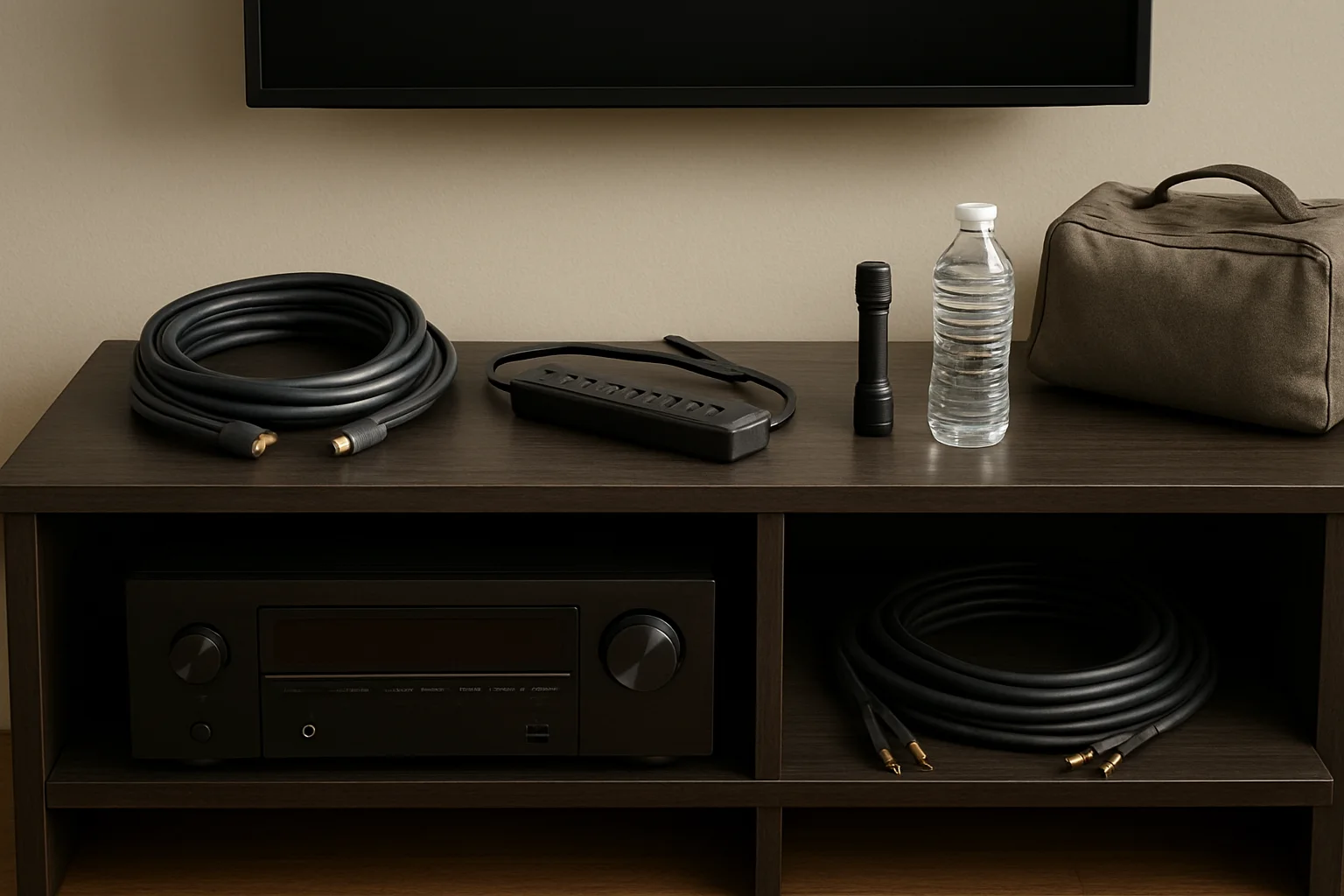
Why Home Theater and AV Wiring Need Seasonal Attention
Home theater and AV wiring often looks finished once the TV is mounted, the speakers are placed, and the streaming devices are connected, but the work behind the walls and inside cabinets still needs periodic attention. In Northwest Florida, the combination of humidity, salt air in some areas, thunderstorms, power fluctuations, and long cooling seasons can affect low-voltage cabling, equipment connections, surge protection, and the spaces where audio and video components live. Even when everything seems to be working well, small issues can build slowly over time. Loose terminations, heat buildup in enclosed cabinets, worn power strips, and cable routes that were adequate years ago may no longer be the best fit for the system you use today.
Seasonal planning is useful because home entertainment systems are not just technology purchases; they are part of the home’s electrical environment. A room that was once used for a television and a soundbar may now include multiple sources, network equipment, game consoles, a projector, in-ceiling speakers, and smart controls. That means more cabling, more connections, and more opportunities for interference or wear. A professional assessment can help identify whether the system is still properly supported, whether the wiring layout matches the equipment load, and whether the installation is ready for the demands of storm season, holiday use, or extended summer indoor activity. For homeowners in Bay, Walton, and Okaloosa counties, preventive care can reduce frustration and help keep AV equipment performing as intended.
How Northwest Florida Climate Affects AV Systems
Northwest Florida weather creates conditions that can be hard on electronics and the wiring that supports them. High humidity can contribute to corrosion at connection points, especially in areas with inadequate ventilation or in homes near coastal environments. While low-voltage cabling itself may not fail immediately, connectors, wall plates, and termination points can gradually degrade if exposed to moisture or poor air circulation. Dust and humidity together can also make cabinet interiors less forgiving, particularly where receivers, amplifiers, and streaming devices are stacked tightly. The result may be intermittent signal issues, audio dropouts, or equipment that runs warmer than it should.
Storm activity is another reason to think ahead. Lightning and utility disturbances can create voltage events that affect televisions, receivers, projectors, and network gear. Even if a home has surge protection, the arrangement and condition of the entire AV setup matter. The path from the electrical service to the outlet, then to the power conditioning or surge device, and finally to the equipment should be part of a careful review. Seasonal planning allows a homeowner to inspect the system before periods of frequent storms or heavy indoor entertainment use. A professional can evaluate whether the outlet locations, circuit capacity, and cable management support reliable operation, and whether any parts of the setup are more vulnerable than the homeowner realizes.
Signs Your Home Theater Wiring May Need Attention
Homeowners often notice AV wiring problems first as annoyances rather than obvious failures. A speaker that cuts in and out, a television that loses signal on certain inputs, an amplifier that seems to shut down unexpectedly, or a remote system that becomes inconsistent can all point to wiring or connection concerns. Sometimes the issue is not with the equipment itself but with aging cables, strained connectors, poor cable routing, or interference from nearby electrical components. If the system works only when a cord is moved a certain way, that is a strong sign the installation needs a closer look. Repeatedly resetting devices is not a long-term solution.
Physical clues can matter too. Bent wall plates, loose keystone jacks, warm outlets, buzzing from equipment racks, or visible cable damage should not be ignored. So should signs that the original install no longer fits the room, such as cords that now stretch across traffic paths, furniture that blocks ventilation, or a media cabinet that is packed too tightly for the amount of heat it produces. These conditions do not always mean an emergency, but they do suggest the system would benefit from a professional assessment. An electrician or qualified AV wiring professional can help determine whether the concern is simple wear, an installation issue, or a broader electrical problem that deserves prompt correction.
The Value of Professional Assessment Before Problems Spread
A professional assessment is more than a visual glance at a television wall mount or a quick check of a receiver cabinet. It is a systematic review of how the AV system is powered, routed, connected, and protected. That can include checking outlet condition, confirming that the wiring path is suitable, assessing cable labeling and separation from electrical conductors where applicable, reviewing the condition of surge protection, and looking for signs that heat or moisture may be affecting the installation. The goal is not just to fix one symptom, but to understand why the system is performing the way it is and what could fail next if nothing changes.
For homeowners, this matters because AV systems often grow gradually. A setup might begin with a simple TV and later expand to soundbars, subwoofers, gaming systems, a home network hub, or a whole-room speaker layout. Each addition adds load, complexity, and potential points of failure. A professional assessment can identify whether the current wiring arrangement still supports the system safely and neatly, and whether it is prepared for future upgrades. In many homes, that review also uncovers practical improvements in cable organization, outlet placement, and equipment ventilation that make the system easier to use and maintain. That kind of preventive care is especially valuable in homes that rely heavily on entertainment systems during storms, hot summers, and holiday gatherings.
Planning Cable Routes for Today’s Equipment and Tomorrow’s Upgrades
Good AV wiring starts with planning, not with plugging in devices. Cable routes should support the current arrangement while allowing for future changes without forcing a full rework later. That means thinking about where the screen will be, where the sources will live, whether the sound system is centered in the room or distributed, and how the equipment cabinet will be accessed for service. It also means considering the building structure and the room’s everyday use. A clean route is not only more attractive; it is often easier to maintain and less likely to be damaged by moving furniture or foot traffic.
In homes throughout Bay, Walton, and Okaloosa counties, room layouts vary widely, from open-concept living spaces to dedicated media rooms and multipurpose dens. The right cable plan depends on the room, but one principle stays the same: avoid improvised routing that creates strain, pinch points, or clutter. A professional can help plan wall penetrations, pathway organization, and terminations in a way that supports both performance and appearance. That can be especially useful if the homeowner expects to upgrade to additional speakers, a projector, a larger display, or integrated smart-home controls later. Planning ahead now can prevent the need for disruptive patchwork changes later, especially once trim, furniture, and equipment are already in place.
Humidity, Heat, and Ventilation Around AV Equipment
Many AV problems begin not with the wiring in the wall, but with the conditions around the equipment. Receivers, amplifiers, streaming devices, network switches, and game consoles generate heat, and they need enough airflow to operate consistently. If they are stacked too closely together or placed in an enclosed cabinet without adequate ventilation, performance can suffer. Heat can shorten component life, make fans run more often, and contribute to shutdowns or intermittent behavior. In humid climates, warm enclosed spaces may also worsen condensation concerns when rooms are cooled quickly after being closed up for part of the day.
A seasonal home check should include the equipment environment, not just the signal path. Is there enough breathing room around the electronics? Are cords and power supplies packed so tightly that they trap heat? Is the cabinet near a source of moisture, such as an exterior wall, a poorly vented closet, or a room that tends to stay damp? These questions matter because the system’s reliability depends on more than signal quality. A professional can recommend whether the equipment location should be adjusted, whether ventilation improvements are warranted, or whether the power and cable arrangement should be reorganized to reduce stress on the system. For homeowners who want a system that keeps performing through long warm seasons, ventilation deserves as much attention as the speaker layout itself.
Surge Protection and Power Quality for Electronics
Televisions and AV components are sensitive to power disturbances, even when the disturbances are not dramatic enough to cause an obvious outage. In storm-prone areas, homeowners often think first of lightning, but everyday power quality matters too. Brief voltage changes, utility interruptions, and the repeated stress of plugging and unplugging equipment can all affect sensitive electronics. A proper review of home theater power includes not just surge protection devices, but also outlet condition, circuit usage, and the way components are distributed across the room. A single power strip may not be enough, and not every strip provides meaningful protection for the kind of equipment it serves.
The best approach is to evaluate the system as a whole. A professional can help determine whether existing surge protection is appropriate for the equipment, whether the outlets are in good condition, and whether the circuit serving the media area is being used in a sensible way. That review is especially relevant before storm season, after a power event, or when adding larger equipment such as a projector or a full-size audio receiver. Homeowners should also be aware that damaged cords, loose plugs, or overloaded adapters can complicate a setup and make troubleshooting harder. Preventive attention to power quality does not eliminate every risk, but it can improve reliability and reduce the chance of avoidable damage to expensive electronics.
Low-Voltage Wiring, HDMI Runs, and Signal Reliability
Low-voltage wiring is often treated as simple because it does not involve the same hazards as the home’s branch circuits, but it still requires careful installation. HDMI, speaker wire, network cable, and control wiring each have their own limits and best practices. Signal problems can appear when cables are too long for the application, when connectors are poorly terminated, when cables are bent too sharply, or when they are routed in ways that expose them to unnecessary interference. What looks like a random glitch may actually be the result of a wire run or termination that never matched the system design in the first place.
Homeowners sometimes try to solve these issues by swapping devices or replacing cables one at a time, but that approach can become expensive and time-consuming without revealing the real cause. A professional assessment helps separate a hardware problem from an installation problem. For example, if the issue is signal integrity, the solution may involve correcting the routing, simplifying the chain, improving the termination points, or selecting a different connection strategy for the room. Because low-voltage wiring often disappears into walls, ceilings, and cabinets, it is especially useful to have a trained eye evaluate the setup before symptoms become chronic. A clean, properly supported signal path is a major part of a dependable theater or entertainment room.
Wall Mounts, In-Wall Paths, and Safety Considerations
When displays are mounted on walls or wires are routed through finished spaces, the installation becomes part of the home’s structure and safety profile. The display must be supported correctly, and the associated wiring should be routed in a way that respects the wall assembly, electrical clearances, and service access. It is important not to assume that every wall cavity is suitable for every cable path. Hidden obstructions, insulation, framing members, and electrical components can all affect where and how wiring should be installed. A proper review helps reduce the chance of damage to the home or to the system later on.
This is one area where professional assessment is especially helpful because visual appearance alone does not tell the whole story. A neat finished result could still conceal tension on a cable, a difficult-to-service connection, or an arrangement that makes future upgrades harder. A trained professional can assess whether the mount location, wire exit point, and equipment access are sensible for long-term use. They can also advise on how to keep cords protected and orderly without creating unsafe or hard-to-maintain conditions. Homeowners should avoid drilling or fishing wires through walls without understanding what may be inside them. Having the installation reviewed before a problem occurs is often easier and less disruptive than fixing a hidden mistake after the wall is closed up.
Seasonal Checklist for Before Storms, Holidays, and Summer Heat
A seasonal check is one of the simplest ways to keep a home theater or AV setup in good condition. Before storm season, review surge protection, confirm that power cords and signal cables are secure, and make sure equipment is not overheating in a tight cabinet. Before the holiday season, when systems may be used more heavily for movies, music, and gaming, check that all sources are responding correctly and that remotes, network components, and speakers are functioning as expected. Before the peak of summer heat, make sure ventilation is adequate and that any room or closet housing electronics is not unusually warm or damp. These are practical steps that can reveal developing problems early.
The checklist should also include housekeeping around the system. Dust buildup, loose labeling, and tangles behind the cabinet may not look serious, but they can make maintenance harder and conceal wear. If the room has been rearranged, if a new TV or speaker was added, or if the system has recently been moved, a professional review can confirm that the wiring still makes sense. For homeowners in Northwest Florida, this kind of seasonal attention is especially useful because the home environment changes with the weather. A quick assessment now can help prevent interruptions later, when demand on the system is highest and service delays are more frustrating.
When an Upgrade Makes More Sense Than a Patchwork Fix
There comes a point when repeated troubleshooting stops being efficient. If the same speaker cuts out every few weeks, if the media cabinet is always overloaded, if the room needs more sources than the original wiring can support, or if the current setup has been altered several times over the years, a more comprehensive improvement may be the better choice. Patchwork fixes can solve the immediate symptom, but they do not always address outdated cable paths, insufficient ventilation, awkward power distribution, or poor access to key components. A professional assessment can help determine whether a targeted repair is enough or whether a more complete update would offer better long-term value.
This does not mean every issue requires a major project. Sometimes the right solution is a few well-placed adjustments, a cleaner power arrangement, or better labeling and separation of components. But when a system has outgrown its original design, continuing to add temporary fixes can make the setup harder to manage. A thoughtful upgrade can improve reliability, simplify operation, and create room for future devices without creating clutter. For homeowners who enjoy movies, sports, gaming, or whole-home audio, that can make a big difference in daily satisfaction. The key is to evaluate the system honestly and choose the level of work that matches the condition of the wiring and the needs of the room.
How a Local Electrical Professional Supports AV Projects
Homeowners often think of AV work as purely an electronics task, but the electrical side is just as important. A local electrical professional can evaluate the power source, outlet placement, circuit conditions, and overall readiness of the room for a theater or entertainment system. That support is especially valuable when the project involves new outlets, concealed wiring, equipment relocation, or concerns about power quality. In a region like Northwest Florida, where homes experience humidity, storm activity, and varied construction styles, local experience helps shape practical recommendations that fit the space and the climate.
For residents of Bay, Walton, and Okaloosa counties, working with a team familiar with residential electrical systems can make planning easier and more efficient. 850 Electrical, part of veteran-owned A Superior Mechanical, serves homeowners who want professional attention to their AV wiring and related electrical needs. Whether the goal is to improve reliability, clean up a cluttered media area, prepare for seasonal use, or assess whether the current setup is still appropriate, a professional review can provide clarity. The value of that visit is in identifying hidden issues before they become interruptions, and in helping the homeowner make informed decisions about maintenance or improvements.
Building a Reliable Entertainment Space for the Long Term
A dependable home theater or AV setup is built on more than the visible equipment. It depends on the condition of the wiring, the quality of the connections, the safety of the power supply, and the environment around the electronics. In Northwest Florida, where weather and humidity can challenge home systems throughout the year, preventive care is a smart investment of attention rather than a reaction to failure. The most reliable setups are usually the ones that were planned carefully, reviewed periodically, and adjusted before small issues became major inconveniences.
If your entertainment system has changed over time, if the room has become warmer or more crowded, or if you have noticed intermittent sound, video, or power issues, a professional assessment is the right next step. It can clarify what is working, what is wearing down, and what should be improved before the next season of heavy use. For homeowners in Bay, Walton, and Okaloosa counties, 850 Electrical can help evaluate the wiring and electrical conditions that support your home theater or AV system. A simple review today may help keep your setup cleaner, safer, and more reliable when the weather changes and your family is ready to use it most.
Explore related electrical care
- Home Theater & AV Wiring
- Pool, Spa & Hot Tub Wiring
- Security System Wiring
- Smart Home Integration
- Whole Home Backup Solutions
- Whole Home Rewiring
Continue reading
- Whole-Home Surge Protection for Northwest Florida Homes: Seasonal Planning, Practical Protection, and When to Call a Professional
- Security System Wiring Care for Northwest Florida Homes: Seasonal Planning, Prevention, and Professional Inspection
- Whole-Home Backup Power Planning for Northwest Florida Homes: Seasonal Maintenance and Preventive Care
Talk with the 850 Electrical team for help with your home or business.