
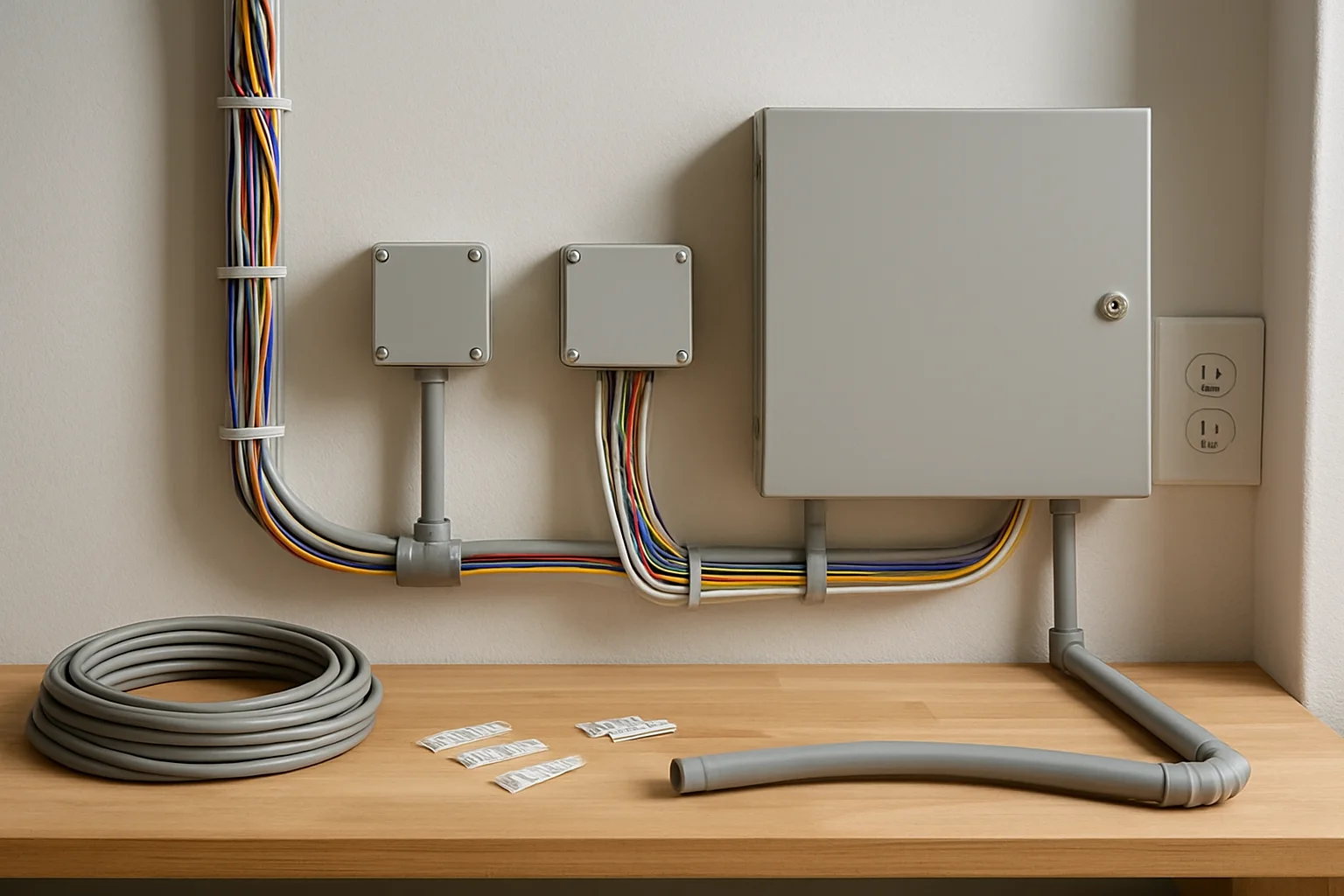
Why Security System Wiring Deserves Preventive Care
Security systems are only as dependable as the wiring that supports them. For Northwest Florida homeowners, that wiring often has to perform in a hot, humid, storm-prone environment while remaining ready for daily use. Cameras, control panels, motion detectors, door contacts, keypads, and backup components all depend on consistent power and clean signal paths. When wiring is neglected, even a capable security system can become unreliable, leading to false alarms, missed alerts, weak camera feeds, or devices that stop responding when you need them most.
Preventive care is about reducing avoidable problems before they turn into outages or costly repairs. A professional assessment can identify aging cable jackets, loose terminations, moisture exposure, signs of pest intrusion, corrosion, or wiring routes that no longer suit the home’s current layout. It also helps determine whether the system is still appropriately supported after renovations, roof work, HVAC changes, or added technology. For homeowners in Bay, Walton, and Okaloosa counties, seasonal planning matters because weather and humidity can affect wiring over time even when the system appears to be working normally. Careful inspection and maintenance protect both performance and peace of mind.
How Northwest Florida Weather Affects Wiring Over Time
The Gulf Coast climate creates conditions that can stress electrical and low-voltage wiring in subtle ways. High humidity can infiltrate connection points and junction areas, especially if enclosures are not well sealed. Over time, moisture can contribute to corrosion at terminals, degrade protective jackets, or create intermittent signal issues that are difficult for homeowners to trace. Salt air in coastal areas may also accelerate wear on exposed metal components, especially when outdoor devices or attic runs are not adequately protected. These conditions do not usually cause immediate failure, but they can gradually reduce system reliability.
Seasonal storms add another layer of risk. Strong winds, heavy rain, lightning activity, and power fluctuations can affect control equipment and any wiring that feeds it. Even if surge protection is in place, wiring can still experience stress from repeated events or nearby electrical disturbances. Heat is another factor. Attics and exterior spaces can reach temperatures that strain insulation and shorten the service life of some materials. A professional who evaluates security system wiring in this region will consider how climate, building construction, and device placement interact, then recommend practical maintenance steps that fit the home rather than a one-size-fits-all fix.
Common Wiring Problems Homeowners May Notice
Some wiring issues announce themselves clearly, while others show up as frustratingly inconsistent behavior. Homeowners may notice a camera that cuts in and out, a keypad that lags, sensors that register only part of the time, or a control panel that reports trouble without an obvious reason. In some cases, the problem is not the device itself but the wiring path, connector condition, or a power supply that is no longer delivering stable performance. Repeated nuisance alarms can also point to wiring problems, especially if a door contact or motion detector is communicating intermittently.
Visual clues can be just as important. Loose cable runs, cracked insulation, chewed wire jackets, water staining near device locations, rusted fasteners, or splices that were added during earlier work may all signal a system that needs attention. Homeowners should avoid assuming the issue is minor simply because the system still functions. Many wiring problems begin as small imperfections and gradually worsen. A professional assessment can separate device failure from wiring degradation, which matters because replacing hardware alone will not solve an underlying connection issue. The goal is to restore dependable operation, not just silence a trouble indicator for a short time.
What a Professional Assessment Includes
A professional assessment of security system wiring starts with understanding the full layout of the system and how it has been expanded or modified over time. An electrician or qualified technician can review visible runs, terminations, power supplies, device mounting points, and any areas where wiring transitions between indoor and outdoor spaces. They can also inspect whether cable routing is appropriate for heat, moisture, and physical exposure. The process is not just about checking for damage; it is about evaluating whether the system is still supported by sound infrastructure.
During the assessment, a professional may test continuity, inspect voltage delivery, look for loose or degraded connectors, confirm proper labeling, and identify circuits or components that are overworked or poorly organized. They can also note whether the system has been affected by renovations, attic storage, new insulation, pest activity, or building settlement. If there are signs of past water intrusion or storm impact, a professional can determine whether replacement sections, re-termination, or rerouting are warranted. For homeowners, this kind of assessment offers a clearer picture of risk than guesswork does. It helps prioritize maintenance before a small weakness becomes a complete loss of function during a weather event or security incident.
Seasonal Planning Before Storm Season Arrives
Preparing security system wiring before storm season is one of the most practical ways to reduce stress later in the year. Northwest Florida homeowners know that weather can change quickly, and a system that is already marginal may struggle under power interruptions or moisture exposure. Preventive planning may include checking for secure mounting, confirming that exterior enclosures are intact, and reviewing the condition of visible wiring at entry points, soffits, garages, and utility spaces. If the system depends on backup batteries or integrated power supplies, those components should also be evaluated as part of the overall wiring picture.
Storm-season planning is also a good time to ask whether the system has adequate surge protection and whether the wiring path leaves critical components vulnerable to water or debris. A professional can identify areas where a small adjustment would improve resilience, such as relocating vulnerable connections, improving fastening, or replacing aging cable sections before the weather becomes more stressful. Homeowners should think of this as preventive readiness rather than emergency repair. The best time to address aging wiring is before a storm exposes the weakness, not after the system has already failed to communicate or power down unexpectedly.
Heat and Humidity Care During the Summer Months
Summer in Northwest Florida can be especially demanding on wiring hidden in attics, garages, closets, and exterior walls. Heat can dry out some materials, weaken insulation over time, and make existing weaknesses more noticeable. Humidity can work in the opposite direction by encouraging corrosion and moisture-related degradation. The result is often gradual decline rather than a dramatic failure, which is why homeowners may overlook it until the system begins to show repeated issues. Summer is an ideal season to evaluate whether wiring is adequately protected from the environment in which it lives.
Professional care during the hot season often focuses on exposure management. A technician can look for cable runs that are too close to hot surfaces, routing that creates unnecessary tension, or components positioned where condensation or trapped heat may accumulate. They may also identify whether outdoor devices need better sealing or whether indoor transition points have become vulnerable to moisture entry. For homeowners, the message is simple: security wiring should be reviewed as part of the home’s seasonal maintenance routine, just like HVAC filters or roof checks. A stable wiring system helps the alarm and camera network remain dependable when summer storms and high temperatures place additional stress on the home.
Preparing for Fall and Winter Weather Changes
Although Northwest Florida winters are milder than in many parts of the country, the seasonal shift still matters for electrical and security systems. Cooler evenings, changing humidity levels, and occasional cold snaps can affect materials that have spent months expanding and contracting in heat. Joints, connectors, and outdoor terminations may respond differently as conditions change, which can reveal weaknesses that were not obvious in summer. This is especially true for systems that include exterior cameras, porch sensors, gate hardware, or detached structures connected by buried or exposed cable.
Fall is a practical time for a professional reassessment because it allows homeowners to get ahead of cooler, wetter conditions before the holiday season and winter travel periods. A technician can verify that wiring remains secure after summer wear and that any exposed components are ready for shifting weather. If the home has experienced recent roof repairs, landscaping changes, or exterior remodeling, fall is a smart time to confirm that the security system’s wiring still has clear pathways and proper protection. The objective is to maintain continuity and dependable communication throughout the season, not to wait until a trouble alert appears during a family gathering or time away from home.
Signs That Outdoor Wiring Needs Attention
Outdoor wiring faces more hazards than indoor wiring because it is exposed to sunlight, moisture, debris, pests, and physical impact. Homeowners should watch for visible fraying, discolored jackets, sagging runs, damaged conduit, or cable that appears to have shifted from its original position. Around cameras, doorbells, gate systems, and detached buildings, even minor exposure can matter. If a cable is pinched under hardware, pulled tight at a corner, or resting where water collects, the system may become unreliable over time. Because many outdoor issues are hidden from everyday view, periodic professional inspection is especially valuable.
A professional can assess whether outdoor wiring is appropriately protected for the location and whether the current routing still matches the home’s needs. They may recommend more durable enclosure methods, better fastening, or rerouting to reduce exposure. Homeowners should not try to open sealed devices or make improvised repairs to weather-exposed wiring. That can create safety risks and may worsen the original problem. Instead, the most effective approach is to document symptoms, note when they occur, and arrange for an evaluation. Outdoor wiring problems often progress slowly, but addressing them early helps preserve camera performance, sensor reliability, and system communication when weather is at its worst.
Pests, Rodents, and Hidden Damage
In warm climates, pest-related damage is a real concern for low-voltage and security wiring. Rodents, insects, and other pests can enter attics, crawl spaces, wall voids, and utility areas where wiring is routed. Chewing, nesting, and contamination can all affect the integrity of cable jackets and connectors. Because security wiring is often hidden behind walls or above ceilings, homeowners may not realize there is an issue until the system starts acting erratically. A single damaged run can affect a device, while larger infestations can compromise multiple locations or create repeated failures.
A professional assessment can identify signs of hidden damage that are not obvious from the home’s living space. Evidence may include scattered insulation, droppings near access points, chewed jackets, or wiring that has been moved from its original path. In some cases, the assessment may reveal that the cable itself is fine but surrounding conditions are making it vulnerable. That distinction matters because proper corrective action depends on the cause. Homeowners should avoid assuming that every wiring issue is purely electrical. Preventive care in Northwest Florida often includes looking at the whole environment, including attic entry points, crawl-space access, and areas around garages or storage rooms where pests commonly travel.
Power Quality, Backup Systems, and Surge Protection
Security systems depend on more than just the signal wiring visible to the homeowner. They also depend on stable power and properly supported backup components. In areas prone to storms and utility interruptions, power quality can affect control panels, cameras, communication equipment, and any devices that rely on a consistent supply. Even if the system does not completely shut down, power irregularities can create false alerts or shorten the lifespan of connected components. Preventive care should therefore include the wiring and power infrastructure that support the security system as a whole.
A professional can review whether the system has appropriate surge protection, whether backup components are functioning as intended, and whether wiring connections are suitable for the load and environment. They can also identify signs that power-related problems may be affecting more than one device. Homeowners may think of a battery alert as a simple maintenance reminder, but it can also point to a broader support issue if wiring or power supply conditions are inconsistent. Seasonal planning is useful here because storm season and holiday travel often increase the importance of reliable backup performance. A well-supported system is less likely to fail when utility conditions become unstable.
Renovations, Additions, and System Changes
Security system wiring often needs attention after a home improvement project, even if the project was not directly related to the alarm system. New windows, doors, siding, insulation, attic storage, cabinetry, or room additions can change access to cable runs and device placement. A camera or sensor that once worked well may no longer be in the best position if the home layout has changed. Likewise, wiring that was once safely concealed may now be under strain or exposed because of construction updates. Homeowners sometimes discover this only after odd behavior starts, but a proactive review is much easier than chasing intermittent problems later.
When a professional assesses a system after renovations, they can determine whether existing wiring is still appropriate or whether portions should be adjusted to match the updated structure. They may find that a route is no longer protected, that a device has been painted over or partially blocked, or that a new wall assembly has changed the signal path. This is especially important in homes that have been remodeled in phases over many years. A layered system can work well, but only if each addition is examined for compatibility with the original wiring. Preventive planning after renovations helps keep the security system organized, reliable, and easier to service in the future.
What Homeowners Can Safely Observe and Document
Homeowners do not need to handle wiring themselves to be helpful. In fact, one of the best things a homeowner can do is observe and document symptoms clearly before calling for service. Note which device is affected, when the issue happens, whether weather seems to influence it, and whether the problem is constant or intermittent. If a camera drops offline only during storms, or a sensor issues trouble alerts after a power outage, that information helps a professional narrow the cause more efficiently. Photos of visible damage, water stains, or shifted components can also be useful.
It is equally important to stay within safe boundaries. Homeowners should not open enclosures, pull on cables, test connections with improvised tools, or attempt to repair hidden wiring themselves. Security system wiring can involve low-voltage components, but that does not make it harmless or simple. Incorrect handling can create new faults or damage equipment. The safest role for the homeowner is observation, documentation, and scheduling professional service when needed. This approach is especially valuable in a region where seasonal weather and humidity can create symptoms that come and go. Good notes help a professional separate temporary disturbance from a real wiring issue that needs correction.
How 850 Electrical Supports Security Wiring Needs
When security system wiring needs preventive care or troubleshooting, homeowners benefit from working with a professional who understands both electrical infrastructure and the realities of Florida homes. 850 Electrical, part of veteran-owned A Superior Mechanical, serves Bay, Walton, and Okaloosa counties, FL, and can provide a professional assessment that focuses on safety, reliability, and long-term performance. The goal is to identify wiring concerns clearly, explain what is happening, and recommend practical next steps based on the condition of the system and the home. That may include inspection of visible routes, evaluation of power support, and attention to weather-related wear or age-related deterioration.
For homeowners, a service call should bring clarity rather than confusion. A professional can help distinguish between a device problem, a power issue, and a wiring issue, which is often the key to solving recurring security system troubles. Seasonal planning is especially useful in Northwest Florida because the same wiring may face heat, humidity, storms, and renovation changes across the year. If your home’s security system has begun to show trouble signs, or if you simply want preventive care before the next season brings more stress, a professional evaluation is the smart step. To discuss security system wiring concerns, contact 850 Electrical at 850-258-3225.
Explore related electrical care
- Security System Wiring
- Home Theater & AV Wiring
- Pool, Spa & Hot Tub Wiring
- 24 Hour Emergency Electrical Service
- Battery Backup Systems
- Ceiling Fan Services
Continue reading
- Home Theater and AV Wiring Care for Northwest Florida Homes: Seasonal Planning, Prevention, and When to Call a Pro
- Pool, Spa & Hot Tub Wiring Care for Northwest Florida Homes: Seasonal Planning and Preventive Maintenance
- Whole-Home Surge Protection for Northwest Florida Homes: Seasonal Planning, Practical Protection, and When to Call a Professional
Talk with the 850 Electrical team for help with your home or business.