
1. Why Surge Protection Matters in Northwest Florida
Whole-home surge protection is one of those home electrical upgrades that often goes unnoticed until a problem happens. In Northwest Florida, homeowners deal with a mix of weather patterns, utility disturbances, and seasonal storm activity that can place stress on electrical systems. A surge does not have to be a dramatic, visible event to cause trouble. It can arrive from lightning activity, utility switching, downed equipment, or the momentary changes that happen when power is restored after an outage. Even brief voltage spikes can affect appliances, electronics, HVAC equipment, garage door openers, smart home devices, and other sensitive systems throughout the home.
Because surge damage is not always immediate or obvious, many homeowners only connect the dots after repeated issues. A television may fail unexpectedly, a refrigerator board may act erratically, or a thermostat may begin to behave strangely. A whole-home surge protector is designed to reduce the amount of excess voltage that reaches the panel and the circuits feeding your home. It is not a magic shield against every electrical problem, but it is a practical layer of preventive care. For homeowners in Bay, Walton, and Okaloosa counties, that preventive approach can be especially valuable during storm season and the months when electrical activity is more common.
2. What a Whole-Home Surge Protector Actually Does
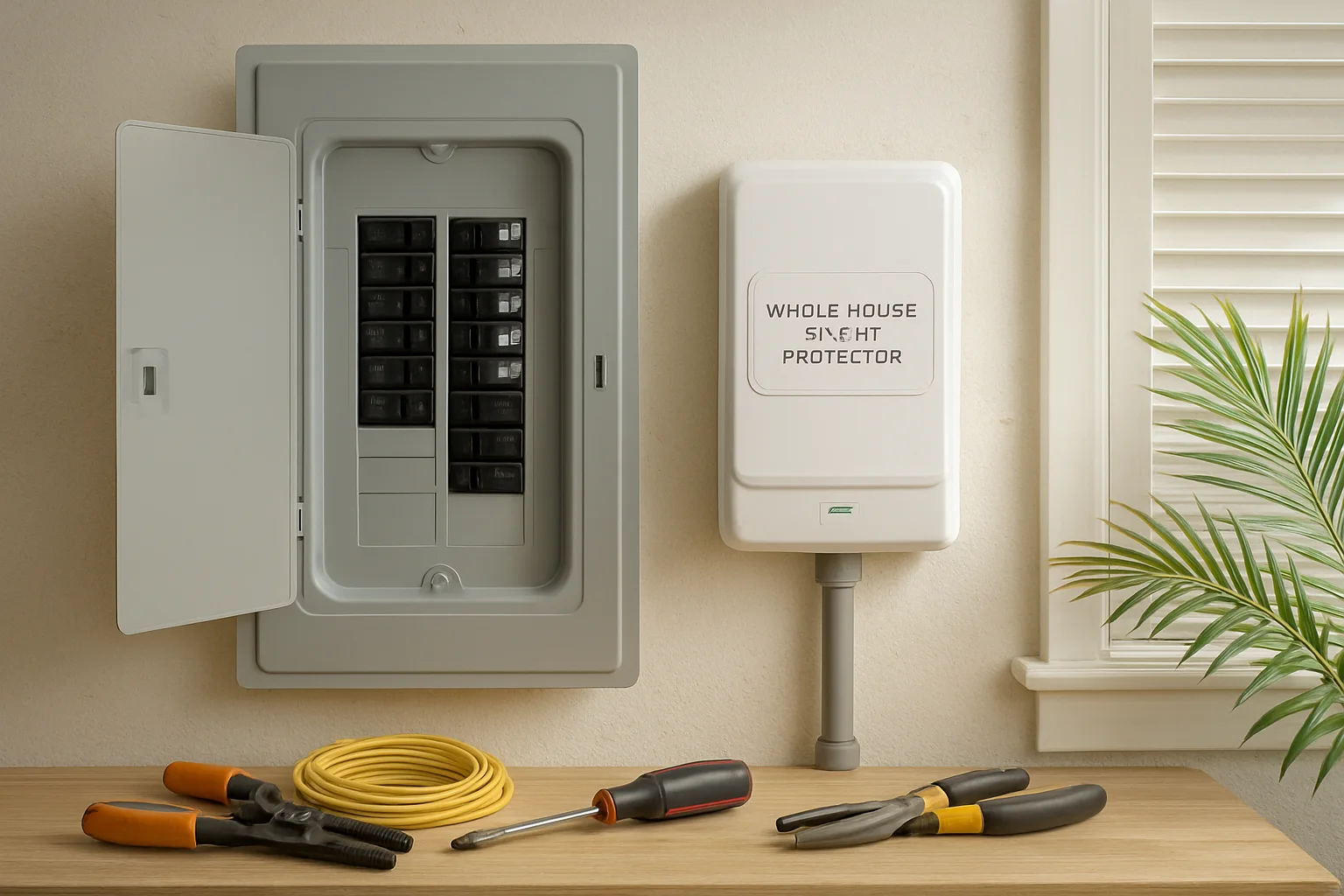
A whole-home surge protector is installed at or near the main electrical panel, where it can respond to voltage spikes before they travel deeper into the home’s wiring. Its purpose is to divert excess electrical energy away from the circuits that power your appliances and devices. This helps reduce exposure to surges that may originate outside the house, such as lightning-related events or utility-side disturbances, and in some cases to smaller internal surges created when large equipment cycles on and off. The device works continuously in the background, without requiring daily attention from the homeowner.
It is important to understand what whole-home surge protection can and cannot do. It does not replace grounding, bonding, or other essential safety components of the electrical system. It also does not guarantee that every connected device will survive every possible surge. Instead, it is best viewed as one part of a layered protection strategy. Homeowners often benefit most when whole-home protection is paired with point-of-use surge strips for especially sensitive electronics. A professional electrician can evaluate whether the existing panel, grounding system, and branch circuits support the right kind of surge protection for the home’s specific layout and electrical load.
3. Seasonal Risk in Coastal and Inland Northwest Florida
Seasonal planning matters because surge risk is not the same throughout the year. In Northwest Florida, storm seasons and periods of unstable weather can increase the odds of electrical disturbances. Heavy rain, wind events, lightning activity, and utility interruptions may occur at different times depending on the season, but the overall pattern is familiar to local homeowners: weather can change quickly, and electrical systems need to be ready. Homes near the coast are not the only ones affected. Inland communities also experience the same grid interruptions and storm-related voltage fluctuations that can stress household equipment.
Seasonal awareness also helps homeowners think beyond major storms. Power can go out and come back on in ways that create repeated strain on electronics and appliances. During peak cooling months, air conditioning systems work harder, and heavy electrical loads can combine with grid activity to increase the need for protection. In cooler months, different equipment may be cycling more often. The key point is that surge protection is not just a storm-day concern; it is part of year-round electrical care. Planning ahead before the busiest weather periods allows a homeowner to assess the system calmly rather than reacting after damage has already occurred.
4. Common Household Equipment That Benefits from Protection
A whole-home surge protector helps protect the electrical system feeding a wide range of equipment. HVAC components are among the most important because modern heating and cooling systems often contain sensitive control boards, motors, and connected electronics. Kitchen appliances such as refrigerators, ranges, dishwashers, and microwaves can also be affected by electrical spikes. Home entertainment devices, computers, networking equipment, smart speakers, gaming systems, and battery chargers may all be vulnerable to surge-related issues as well. Even smaller systems like garage door openers, irrigation controllers, and security equipment can be disrupted.
Some homeowners assume surge protection is only necessary for expensive electronics, but the reality is broader. The cumulative cost of replacing multiple damaged devices can add up quickly, not to mention the inconvenience of being without essential systems. A whole-home protector does not single out one room or one appliance; it provides coverage at the entry point where electrical power enters the home. That makes it especially useful for households with a mix of older appliances and newer technology. A professional assessment can help identify which parts of the home have the most to gain from whole-home protection and whether additional plug-in protection should be used in certain rooms or at specific equipment locations.
5. Signs Your Home May Need a Surge Protection Review
Many homeowners do not know whether they already have surge protection or whether the existing setup is appropriate. A good time for a review is after repeated outages, after a lightning-heavy season, or when upgrading appliances and electronics. Another sign is unexplained equipment issues that seem to appear after weather events or power flickers. If devices are failing sooner than expected, outlets or breakers are acting oddly, or a home has been updated with more electronics than it had when the electrical system was originally installed, it may be time to have the protection strategy evaluated.
Visible clues can also matter. If the electrical panel has been replaced, expanded, or modified, the surge protection arrangement may need to be reconsidered. If the home has undergone remodeling, added a generator transfer setup, or received major new loads such as an EV charger or high-efficiency HVAC equipment, the overall electrical system has changed. That does not automatically mean protection is inadequate, but it does mean assumptions from years earlier may no longer fit. A professional electrician can inspect the panel, review the system’s age and configuration, and discuss whether a whole-home surge protector is the right addition or whether other service upgrades should happen first. Homeowners benefit from this kind of planning because it focuses on the actual condition of the system rather than guesswork.
6. What a Professional Assessment Includes
A professional assessment should begin with a look at the main service equipment, panel condition, grounding and bonding, and the overall layout of the home’s electrical system. The electrician may ask about recent outages, recurring equipment issues, storm exposure, and any major upgrades made to the home. This conversation matters because surge protection is not selected in isolation. It needs to fit the existing service size, panel type, available space, and the way power is distributed through the home. The goal is to identify where the home is most exposed and what type of surge protection is appropriate for that particular situation.
A proper assessment also helps distinguish between a surge protection need and a different electrical problem. For example, if a circuit is tripping because of an overload, loose connection, or failing component, a surge protector will not solve the underlying issue. Likewise, if there are signs of panel damage, corrosion, or grounding deficiencies, those concerns must be addressed directly. Professional evaluation is valuable because it avoids one-size-fits-all assumptions. It helps homeowners understand what is truly needed, what can be improved now, and what might need future planning. For veteran-owned A Superior Mechanical, serving Bay, Walton, and Okaloosa counties through 850 Electrical, that kind of practical assessment is part of responsible preventive care for the home.
7. How Whole-Home Surge Protection Fits with the Electrical Panel
Whole-home surge protection is usually installed in relation to the electrical panel, but the exact method depends on the home’s equipment and electrical design. The device needs to be compatible with the panel and properly integrated so it can respond effectively when a spike occurs. Not every panel configuration is the same, which is why professional selection and installation matter. A protector that is not matched to the home’s system may not perform as intended, and improper installation can create safety and reliability concerns.
The panel itself should also be part of the review. If a panel is crowded, outdated, damaged, or otherwise in need of attention, those issues may affect the best approach to surge protection. A professional electrician can determine whether there is suitable space, whether the panel should be serviced first, and whether a related update would improve the home’s overall electrical resilience. Homeowners sometimes think of surge protection as an accessory, but it is more accurate to see it as part of the electrical infrastructure. When planned correctly, it works together with the panel, grounding, and branch circuits to help reduce the impact of unexpected voltage spikes throughout the house.
8. The Role of Grounding and Bonding in Surge Protection
Surge protection is only as effective as the system that supports it. Grounding and bonding are essential parts of the electrical setup because they provide a path for excess electrical energy to be directed safely under the right conditions. If those components are not in good shape, whole-home surge protection may not be able to perform as intended. That is why a professional electrician does more than simply install a device and move on. The installer should evaluate whether the home’s grounding and bonding are in proper condition and whether any updates are needed to support the surge protection strategy.
This is an area where homeowners should avoid assumptions. A home may look fine from the outside, yet still have grounding or bonding issues that need attention. Older homes, remodeled homes, and homes with past electrical modifications can all have unique conditions. A professional assessment helps identify whether the system is ready for a surge protector or whether additional electrical service work should come first. This broader approach is important because surge protection is preventive care, not a cure-all. When the foundation of the electrical system is sound, whole-home protection can do a better job of limiting the reach of spikes and helping preserve appliances, controls, and sensitive devices.
9. Seasonal Planning Before Storms and Outages
Seasonal planning gives homeowners a chance to prepare before the first major weather event arrives. In Northwest Florida, this means thinking ahead to the times of year when thunderstorms, tropical weather, or utility interruptions are more likely. A homeowner who has a surge protection review done early has more time to address any needed electrical work without the pressure of an approaching storm. That can include checking the panel, confirming the condition of grounding, evaluating appliance loads, and deciding whether a whole-home protector should be added or replaced.
Planning also includes simple household habits that reduce risk during seasonal events. Homeowners may want to know which systems are most sensitive and how to prepare the home when severe weather is forecast. While no device can prevent every problem during a large electrical event, a layered approach can help limit exposure. Surge protection, combined with sensible electrical awareness and prompt service when problems appear, is the best path for long-term reliability. Seasonal planning is especially useful for families who travel, own rental property, or manage second homes, because a surge event may go unnoticed until an appliance fails later. Preparing early helps reduce that uncertainty and supports a more stable home electrical system throughout the year.
10. Whole-Home Protection and Point-of-Use Devices
Whole-home surge protection and plug-in surge strips are not competing ideas; they work best together. The whole-home device is installed at the service level to intercept larger spikes entering the house. Point-of-use protectors, such as quality surge strips, provide another layer for especially sensitive electronics or equipment located far from the panel. This layered approach helps address the reality that electrical disturbances can vary in size and origin. Some events are broad enough to affect the entire home, while others may be smaller and more localized.
Homeowners should not assume that one device makes the other unnecessary. A whole-home protector can reduce the burden on plug-in devices, while plug-in devices can offer extra protection for specific electronics and appliances with sensitive controls. A professional electrician can help homeowners understand where layered protection makes the most sense and where it may be most practical. For example, home offices, entertainment centers, and networking equipment often benefit from extra attention. The goal is to create a practical protective plan that matches the home’s actual usage. This approach is especially sensible for families with a growing number of connected devices that rely on stable power to operate reliably.
11. Maintenance, Replacement, and Long-Term Care
Like other electrical components, surge protection devices may not last forever. Their condition can be affected by age, the frequency of electrical events, and the demands placed on the electrical system. Some units include indicator lights or other status features that help show whether the protection is still functioning, but those indicators do not replace a professional inspection. If a surge protector has absorbed multiple events, or if it has been in service for many years, it may be time to evaluate whether replacement is appropriate.
Long-term care is most effective when it becomes part of the home’s regular electrical maintenance mindset. If you are already scheduling inspections for the panel, HVAC system, or other major home components, surge protection should be part of that conversation. A professional electrician can determine whether the existing device is still suitable and whether changes to the home have altered the protection needs. This may be especially important after renovations, service upgrades, or major equipment additions. Preventive care is not about waiting for failure; it is about noticing how the home has changed and adapting the electrical protection plan accordingly. That approach helps homeowners maintain reliability and reduce the likelihood of avoidable equipment damage.
12. When to Call 850 Electrical for Help
If you live in Bay, Walton, or Okaloosa counties and want a practical, professional look at whole-home surge protection, 850 Electrical, part of veteran-owned A Superior Mechanical, can help assess your home’s needs. A technician can review your panel, discuss your storm-related concerns, and explain how whole-home protection fits into the overall electrical system. This is especially useful if you have experienced repeated power disturbances, added new appliances or electronics, or simply want a preventive plan before the next seasonal weather shift. The phone number is 850-258-3225.
Homeowners do not need to wait for a failure to take surge protection seriously. A professional assessment can provide clarity about whether your home is ready for a whole-home surge protector, whether grounding or panel issues should be addressed first, and how to think about layered protection for the future. Because this article is an evergreen seasonal resource, it is meant to help homeowners plan ahead whenever they are reading it, not to claim a specific publication date or event. The practical takeaway is simple: if your home’s electrical system has not been reviewed recently, or if you are unsure how well it is protected against voltage spikes, now is a good time to schedule an evaluation and make a plan that fits your home and your season.
Explore related electrical care
- Whole Home Surge Protection
- Whole Home Backup Solutions
- Whole Home Rewiring
- Home Theater & AV Wiring
- Smart Home Integration
- 24 Hour Emergency Electrical Service
Continue reading
- Home Theater and AV Wiring Care for Northwest Florida Homes: Seasonal Planning, Prevention, and When to Call a Pro
- Whole Home Surge Protection in Northwest Florida: Warning Signs, Risks, and Professional Diagnosis
- Whole-Home Backup Power Planning for Northwest Florida Homes: Seasonal Maintenance and Preventive Care
Talk with the 850 Electrical team for help with your home or business.