
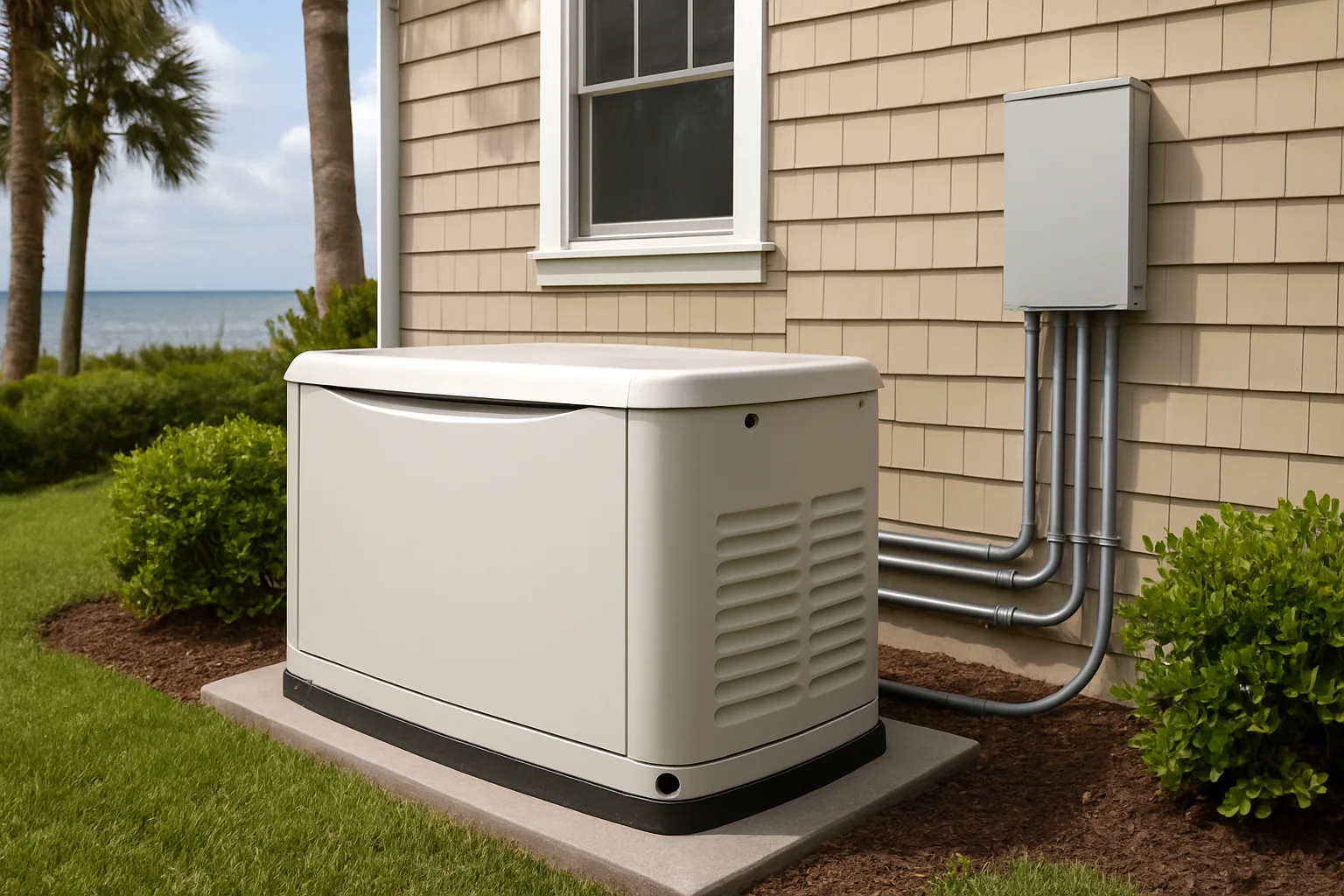
Why standby power matters in Northwest Florida
Northwest Florida homeowners know that electrical outages are not just an inconvenience. Strong winds, lightning, saturated ground, and tropical systems can all interrupt utility power at times of year when cooling, refrigeration, and communication matter most. A standby generator can help keep essential circuits running when the grid goes down, reducing disruption to daily routines and helping protect food, electronics, medical equipment, and comfort systems. For many households in Bay, Walton, and Okaloosa counties, the question is not whether outages will happen, but how prepared the home will be when they do.
A Kohler generator installation is often considered by homeowners who want a more automatic solution than a portable unit can provide. Standby systems are designed to sense an outage, start on their own, and supply selected loads through a transfer switch or other approved switching equipment. That automatic behavior is what makes them attractive for families who may not be home when a storm arrives or who want a system that does not require manual setup in difficult weather. Choosing the right solution begins with understanding the home’s electrical demands, the property layout, and how the family uses power during outages.
Why Kohler generator installation requires a planned approach
A standby generator is not a one-size-fits-all appliance. Proper installation depends on the home’s electrical service size, the desired circuits or whole-home coverage, fuel availability, local code requirements, and the physical space available for the equipment. Kohler systems are commonly selected because homeowners want a durable, integrated backup power solution, but the equipment only performs as intended when it is matched to the property and installed correctly. That is why a professional assessment is the starting point rather than an optional extra.
A careful installation plan considers where the generator can sit safely outdoors, how service conductors and transfer equipment will be routed, and how the system will be maintained over time. It also looks at Florida-specific concerns such as corrosion, drainage, wind exposure, and the need to keep equipment elevated and accessible. Professional electricians can evaluate whether the home’s current panel, grounding, and service equipment are suitable for a generator connection, and they can explain any upgrades needed before installation. This planning stage helps avoid surprises later and supports dependable performance when the weather turns severe.
How a professional assessment protects the home
Before any equipment is selected, a licensed professional should evaluate the home’s actual load profile. That means reviewing what the household wants to run during an outage, such as air conditioning, refrigeration, lighting, garage doors, internet equipment, well pumps, or a selected set of receptacles. This assessment is not guesswork. It is based on the home’s electrical service, appliance startup demands, and the way the generator will share power with the house through proper switching equipment. Without this step, a homeowner may end up with a system that is too small, too large, or poorly matched to the property.
A professional assessment also checks site conditions that affect reliability. In Northwest Florida, outdoor equipment must be positioned to account for flooding concerns, salt-laden air near the coast, vegetation growth, debris carried by storms, and safe clearances around openings and combustible materials. The assessment can identify whether gas service, propane storage, or another approved fuel arrangement is available and appropriate. It can also determine whether any panel replacement, surge protection, or grounding improvements should be included in the project. A thorough review saves time, supports code compliance, and helps the homeowner make an informed decision rather than a rushed one.
Choosing the right generator size and coverage strategy
Homeowners sometimes assume that a larger generator is always better, but the right size depends on how much of the home will be powered and what starting loads are involved. A whole-home approach can support greater comfort, but it may require a larger unit and more careful load management. A partial-home or essential-load strategy can be a practical alternative for homeowners who mainly want to keep refrigeration, lighting, communication, and a few comfort systems running during an outage. The most effective choice depends on the family’s priorities and the electrical characteristics of the home.
A professional electrician can help compare scenarios and explain what each one means in daily use. For example, some systems may support central cooling only when other large loads are managed, while others may power a broader set of circuits but still need load-shedding controls or sequencing. The goal is to avoid overcommitting the generator and to preserve dependable operation when it matters. During planning, homeowners should think beyond the first outage and consider the long view: how the family’s energy needs may change, whether a home addition is planned, and whether backup power should support a future EV charger, workshop, or medical device. Matching capacity to real household use creates a more resilient and cost-effective system over time.
Permits, code compliance, and why installation should not be improvised
Generator installation involves more than setting equipment outdoors and connecting wires. It typically requires permits, inspections, and compliance with electrical and fuel-related code requirements. These rules exist to protect people, property, and the utility system. The transfer equipment must prevent dangerous backfeed. Conductors must be sized and protected correctly. Clearances, grounding, and bonding must be handled properly. In many projects, local requirements also shape where the generator can be located and how it is mounted or anchored. A professional installer understands that these details are essential parts of the job, not paperwork to be filled out later.
Improvised installation can create serious hazards even if the generator appears to run. Backfeeding a utility line can endanger line workers and neighbors. Incorrect wiring can damage appliances or create unsafe voltage conditions. Poor fuel hookups can create leaks or operating problems. In coastal and storm-prone areas, a careless placement can also leave the system vulnerable to floodwater, corrosion, or blocked airflow. A licensed professional can coordinate the electrical, mechanical, and administrative steps so the system is installed in a way that is both safe and serviceable. That approach protects the homeowner today and reduces the likelihood of costly corrections later.
Site placement in coastal and storm-prone conditions
Where a generator sits on the property matters almost as much as which generator is chosen. The ideal location should allow safe airflow, routine maintenance access, and protection from water intrusion and wind-blown debris. It should also be far enough from windows, doors, and vents to meet applicable clearances and reduce nuisance issues from exhaust or vibration. In Northwest Florida, placement must consider heavy rain, runoff patterns, and the possibility of standing water after a storm. A professional installer can evaluate the yard, slab, and nearby structures to identify a location that balances safety, performance, and convenience.
Homeowners should also think about long-term site conditions. Landscaping that looks neat in one season can interfere with airflow or maintenance access later if it grows unchecked. Loose mulch, leaf buildup, or sand migration can affect the area around the generator base. Coastal air can accelerate wear on exposed metal components, making proper placement and maintenance especially important. If a property has a history of drainage issues, the assessment should account for that before any equipment is set. A thoughtful location helps the generator stay usable during the very times when a quick response is most needed.
Fuel supply planning and coordination
A standby generator is only as dependable as the fuel supply that supports it. Depending on the home and local service options, that may involve natural gas or propane. Each fuel arrangement has its own planning considerations, and homeowners should not assume the existing utility setup is automatically adequate. The installer needs to verify whether the fuel source can support the generator’s demand and whether any upgrades, regulators, piping changes, or tank placement issues must be addressed before the system can operate correctly. Fuel planning is part of the electrical project, not an afterthought.
Professional assessment helps clarify the practical details. For natural gas, the installer may need to evaluate service capacity and pressure. For propane, the homeowner may need to consider tank size, refill logistics, clearance requirements, and site access. The right setup depends on how long the homeowner wants backup power to last and whether the generator will be used for short outage events or extended storm-related outages. In either case, the installation should be coordinated so the generator can start reliably and continue to run under expected load without starving the engine or causing shutdowns. Good fuel planning supports both safety and confidence.
Electrical transfer equipment and load management
The transfer switch or switching equipment is what allows the generator to power the home without creating dangerous connections to the utility grid. This device isolates selected loads or the whole home from the utility source and routes generator power where it is needed. The right transfer solution depends on the generator size, the home’s panel configuration, and the homeowner’s priorities. Professional installation ensures the switching equipment is compatible with the generator and the electrical system as a whole. It is one of the key reasons standby generators should be installed by qualified technicians rather than treated like a plug-in appliance.
Load management is equally important. Even a strong generator has limits, and a home’s electrical demand can fluctuate quickly when multiple appliances start at once. Professional electricians can design the system so major loads are controlled intelligently, preserving comfort while avoiding overloads. In some homes, that means prioritizing cooling and refrigeration first, then balancing other circuits. In others, it may mean using load-shedding modules or selective circuits to keep the system within operating limits. A well-designed transfer setup helps the generator work efficiently, extends component life, and reduces the risk of nuisance shutdowns during an outage.
Seasonal readiness before hurricane and thunderstorm periods
Northwest Florida homeowners often think of generator planning as a pre-storm task, but seasonal readiness works best when it begins well before severe weather is forecast. Late winter and spring are good times to assess the system, schedule installation, or arrange maintenance so the equipment is not being rushed into service during peak demand. That gives homeowners time to address any needed electrical upgrades, site work, fuel coordination, or permitting without the pressure of an active storm system in the Gulf. Early planning also improves appointment availability and reduces the stress of waiting until the last minute.
For homeowners who already have a standby generator, seasonal readiness means confirming that the system is ready before heat and storms increase the chance of outages. That can include checking whether the enclosure is clear, confirming that the surrounding area is free of debris, and making sure the homeowner knows which circuits are intended to be supported during an outage. Professional service can identify issues that are easy to miss, such as battery concerns, corrosion, or control errors. A seasonal mindset turns generator ownership from a reactive experience into a planned part of home protection.
Preventive care that supports reliability
Preventive care helps a standby generator remain ready through months of humidity, heat, rain, and occasional extended operation. Although homeowners can visually monitor the area around the equipment, most meaningful upkeep should be handled by professionals who understand the generator’s electrical and mechanical systems. Routine service can include inspection of connections, review of controls, battery condition checks, enclosure condition, and general system performance. The value of preventive care is not just in avoiding breakdowns; it is in catching small changes before they become an outage problem.
It is also important to recognize that coastal and subtropical conditions can be hard on outdoor electrical equipment. Moisture, salt, insects, and vegetation all create maintenance challenges that inland homes may not face as often. A professional maintenance plan can account for those realities and keep the system ready through the year. Homeowners should avoid opening panels or attempting internal adjustments. Instead, they can help by keeping the surrounding area clear, watching for unusual noise or warning indicators, and arranging service when anything seems different. A reliable generator is built on both proper installation and consistent follow-up care.
What homeowners can safely monitor between service visits
There are a few simple, safe things homeowners can do to keep an eye on a standby generator without handling internal components. They can look for obvious obstructions around the outdoor unit, confirm that airflow is not blocked, and make sure shrubs, mulch, or stored items are not crowding the equipment. They can also notice whether the enclosure appears damaged after a storm or whether water, mud, or debris has accumulated nearby. These observations do not replace service, but they help the homeowner spot concerns early and share useful information with the electrician or service technician.
Homeowners can also pay attention to how the system behaves when utility power is present. If the generator indicates a fault, runs unexpectedly, or seems louder or different than normal, that is a reason to request professional attention. The same is true if the home’s backup circuits fail to support expected loads during an outage. The safest approach is to document what was observed and contact a qualified professional rather than trying to diagnose the equipment internally. Good monitoring is simple, calm, and limited to what a homeowner can observe from the outside. That kind of awareness supports timely service without creating unnecessary risk.
How to prepare the home around the generator
A standby generator works best when the house itself is prepared for outages. Homeowners should think about which appliances and systems matter most during a prolonged loss of utility power, and they should keep those items organized in advance. Refrigerators and freezers should be maintained in good condition, flashlights should be accessible, and critical phone chargers or internet backup needs should be identified before storm season arrives. If the home has a well pump, medical equipment, or specialized electronics, those needs should be discussed during the installation planning stage so the electrical design reflects real priorities.
Preparation also means understanding the system’s intended role. A generator is not a license to ignore power conservation during outages. Homeowners may still need to limit unnecessary loads, especially if the installation is configured for essential circuits rather than full-home coverage. Keeping doors closed, managing thermostat settings responsibly, and avoiding unnecessary appliance use can help the system operate smoothly. A professional can explain how the installed equipment is expected to behave so there are no surprises during an actual outage. That understanding makes the home more resilient and helps the family use the generator wisely when conditions are difficult.
Working with a local electrician who understands the region
A generator project in Northwest Florida benefits from a contractor who understands the region’s weather, home construction styles, and code environment. Older homes, newer developments, coastal properties, and inland neighborhoods can all present different challenges. The best outcome comes from a contractor who can assess the site carefully, explain the options clearly, and coordinate the electrical work without cutting corners. For homeowners in Bay, Walton, and Okaloosa counties, local familiarity can make it easier to navigate practical concerns such as placement, service access, and weather-related protection.
850 Electrical, part of veteran-owned A Superior Mechanical, serves homeowners in this part of Florida with electrical solutions that are designed around safety and reliability. If you are considering Kohler generator installation or want to plan preventive care before storm season, a professional assessment can help you understand what your home needs and what it does not. A well-planned generator system is an investment in comfort, continuity, and peace of mind. For service in Bay, Walton, and Okaloosa counties, call 850-258-3225 to discuss your home’s backup power options and seasonal readiness needs.
Seasonal planning checklist for year-round confidence
The easiest generator project to manage is the one planned before an emergency. Homeowners who want dependable backup power should think about the system in stages: assess the home, choose the right coverage strategy, confirm fuel and electrical compatibility, complete installation with permits and inspections, and then schedule preventive care as part of the routine. Breaking the process into stages makes the project more understandable and helps ensure no essential detail is missed. It also gives the homeowner time to make informed decisions instead of reacting under pressure when a storm is already approaching.
Looking ahead by season is especially helpful in Northwest Florida. Before hurricane season, make sure the system has been checked and the yard around it is clear. During peak summer heat, pay attention to how the home uses power and whether the backup plan still matches the family’s needs. After storms or prolonged rainfall, inspect the area visually and request service if anything looks changed. Generator readiness is not a single event; it is a cycle of planning, professional installation, and maintenance. When those parts work together, a Kohler standby system can become a dependable part of the home’s overall resilience.
Explore related electrical care
- Kohler Generator Installation
- Power Generator Installation
- Electrical Installation
- EV Charger Installation
- Indoor Lighting Installation, Repair & Upgrades
- Lighting & Fixture Installation
Continue reading
- Smoke Detector and Carbon Monoxide Installation for Northwest Florida Homes: Seasonal Planning and Preventive Care
- Smart Electrical Panel Installation for Northwest Florida Homes: Preventive Care and Seasonal Planning
- Homeowner Guide to Power Generator Installation and Seasonal Planning in Northwest Florida
Talk with the 850 Electrical team for help with your home or business.