
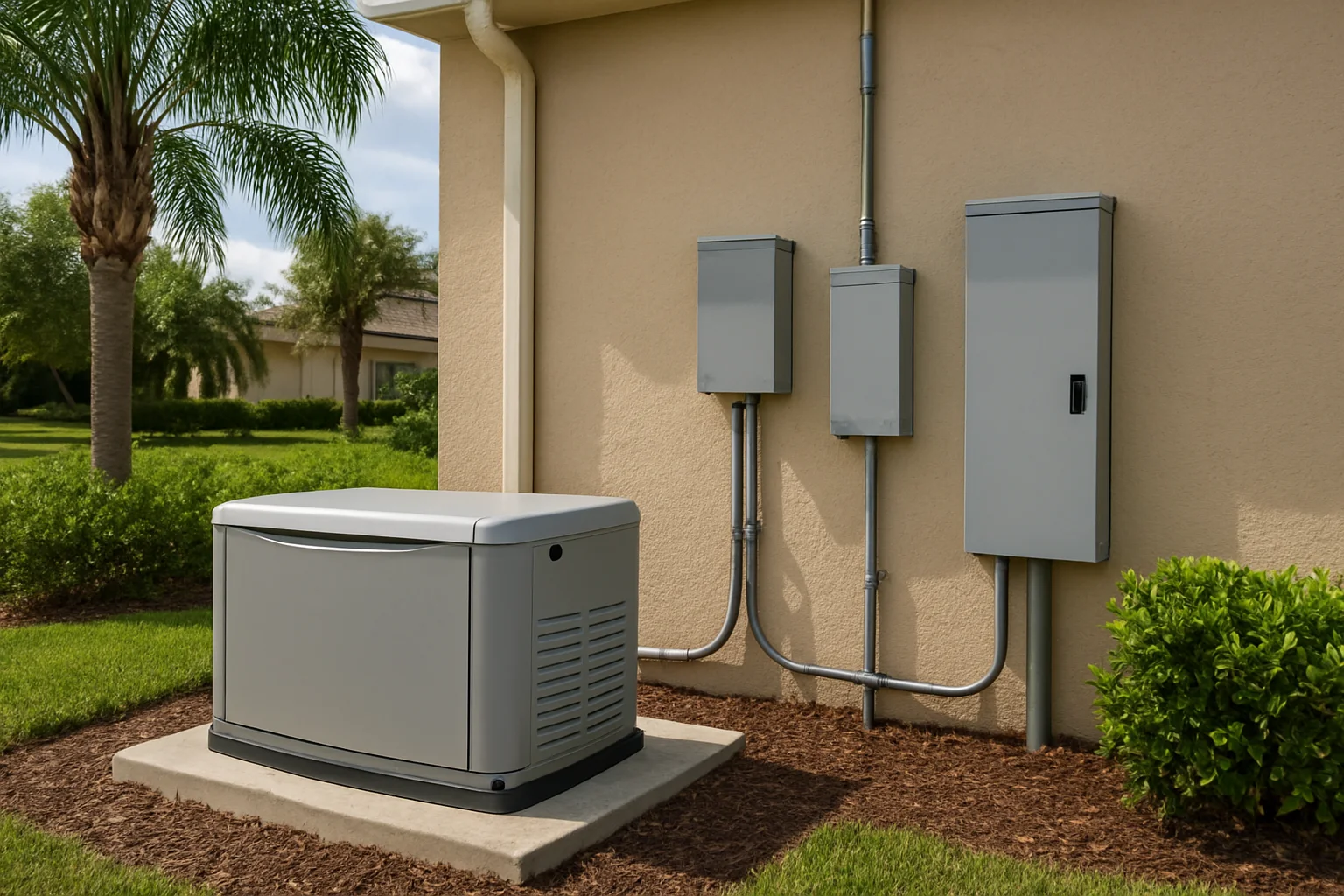
Why standby power matters in Northwest Florida
Northwest Florida homeowners know that weather can change quickly, and that outages are not always brief or predictable. Strong storms, lightning, high winds, falling trees, and utility equipment problems can interrupt service at any time of year. For families who rely on refrigeration, medical devices, internet access, well pumps, home offices, or comfort cooling, even a short outage can be disruptive. A standby generator helps reduce that disruption by restoring power automatically when the utility supply fails, which is one reason many homeowners begin researching Kohler generator installation before they actually experience a long outage.
A generator should be treated as part of the home’s electrical and comfort systems, not just as an emergency appliance. The right solution depends on the home’s electrical load, fuel availability, existing panel condition, and how much of the house the owner wants to support during an outage. In Bay, Walton, and Okaloosa counties, homes vary widely in age and electrical design, so a one-size-fits-all approach is rarely appropriate. Professional assessment helps determine whether standby power is practical, what size system is appropriate, and what upgrades may be needed for safe operation.
Warning signs that your home may need standby power
One of the clearest warning signs is a pattern of recurring outages or voltage interruptions. If lights dim often, electronics reset, HVAC systems struggle to start, or breakers trip during storms or peak demand, the home may be vulnerable to more than inconvenience. These symptoms can indicate utility-side instability, a home electrical system nearing its limits, or a combination of both. Homeowners sometimes assume these events are just part of living in Florida, but repeated interruptions are a practical reason to consider a standby generator and have the electrical system evaluated.
Another warning sign is a household that cannot safely tolerate downtime. Homes with sump pumps, well pumps, freezers full of food, critical medical equipment, or family members who depend on reliable cooling during extreme heat may need more than portable backup options. A standby generator can be configured to support essential circuits or more of the home, but the correct design requires an understanding of real electrical loads. A professional diagnosis helps identify whether the issue is simply outage frequency or whether the home also has load management, service capacity, or panel concerns that should be addressed first.
What a Kohler standby generator can do for a home
Kohler standby generators are designed to start automatically when utility power is lost and stop when power returns, which offers a level of convenience that portable generators do not provide. This automatic transfer can be valuable during overnight outages, storm events, or times when homeowners are away from the property. The objective is not only to keep lights on, but also to preserve safety, food, communications, and climate control without requiring someone to manually start equipment in poor weather or darkness.
The value of a standby system is also tied to how it integrates with the home. A properly planned installation considers the transfer switch, load priorities, fuel source, outdoor placement, service access, and noise management. That integration is why professional installation matters. A generator that is too small may leave key systems unsupported, while an oversized or poorly matched unit can create unnecessary expense or complexity. The best results come from matching the equipment to the home’s actual needs after a careful electrical review rather than making assumptions based on square footage alone.
Signs the electrical system should be evaluated before installation
A generator installation should not begin with equipment selection alone. The home’s electrical system needs to be examined for compatibility, condition, and available capacity. Warning signs include an older panel with limited breaker space, frequent breaker trips, signs of overheating, outdated or damaged components, or prior electrical modifications that were added over time without a clear plan. If the home has undergone additions, HVAC replacements, EV charger installation, or major appliance upgrades, the existing service may no longer reflect the actual load profile of the house.
A professional assessment can determine whether the panel and service equipment can safely accommodate a standby system and transfer equipment. This is especially important in homes where the main service is already heavily utilized. A generator installation may require load balancing, circuit prioritization, or panel-related improvements before the standby system can be added correctly. Rather than guessing, a licensed electrician can evaluate the home’s electrical layout, identify potential obstacles, and explain whether a Kohler generator installation is straightforward or whether the project should include supporting electrical work for safe long-term use.
How professional load assessment works
Load assessment is one of the most important parts of planning standby power. It involves identifying which appliances, systems, and circuits matter most during an outage and then estimating how much power those items require when they start and when they run. Heating and cooling equipment, refrigerators, freezers, pumps, lighting, internet equipment, and certain medical devices can all contribute to the total demand. Because some equipment has higher startup demands than steady operating demands, a generator must be sized with those surge needs in mind.
A professional diagnosis looks beyond a simple list of appliances. It also considers usage patterns, simultaneous demand, and the homeowner’s priorities during an outage. For example, one family may want to keep the HVAC, refrigeration, water heater, and kitchen circuits available, while another may focus on a few critical circuits and a smaller footprint. This planning stage helps avoid undersizing or oversizing the system. It also helps determine whether the home is better suited to whole-home backup or selected circuit coverage, both of which can be appropriate depending on the property and the owner’s goals.
Fuel source considerations in Northwest Florida
A standby generator must have a dependable fuel source, and the right choice depends on the property. Some homes are better suited to natural gas, while others rely on propane or another approved fuel arrangement. Fuel availability, tank size, line routing, code requirements, and weather resilience all play a role in the decision. In coastal and inland parts of Northwest Florida alike, installation planning should account for storm conditions, access to equipment, and practical site layout.
Fuel considerations are not just about convenience. They affect runtime, maintenance planning, and how long the home can remain supported during extended outages. A professional installer will evaluate how the fuel system connects to the generator and whether the source can meet the expected load over time. Homeowners should not assume that the nearest fuel option is automatically the best one. The safest and most reliable arrangement is the one that is properly matched to the generator, the home’s electrical demand, and the site conditions. That is another reason diagnosis should happen before installation rather than after equipment is purchased.
Outdoor placement, clearances, and neighborhood fit
Standby generators must be placed outdoors in a location that meets manufacturer guidance and electrical and fuel safety requirements. That means the unit cannot simply be set wherever there is open space. The placement must account for airflow, service access, local code requirements, distance from openings, and the practical realities of the property. In Northwest Florida, where lots, setbacks, landscaping, and drainage conditions vary, placement should be tailored to the home rather than forced into a generic location.
Homeowners sometimes focus on the machine itself and overlook how it will affect the property around it. A well-planned installation considers noise exposure, maintenance access, and how the generator fits with the home’s existing utility layout. The goal is a system that performs reliably and remains practical to service over time. A professional can evaluate possible locations and explain tradeoffs before installation begins. This step reduces the chance of conflicts with the home’s structure, neighboring property, or future landscaping plans, and it helps ensure the generator can operate as intended during an emergency.
Common warning signs that point to a poor-fit generator choice
Choosing the wrong generator size or type often leads to disappointment after installation. Warning signs include a proposal that does not mention load calculation, a plan that seems based only on a rough estimate, or a system design that ignores important appliances and startup loads. If a homeowner is told that any standby generator will do without a detailed review of the home, that is a signal to slow down and ask for a more complete evaluation. Generator systems should be tailored to the house, not chosen casually.
Another sign of a poor-fit approach is the failure to address transfer equipment, service compatibility, or the home’s existing electrical condition. A generator should not be treated as a stand-alone product. It must work with the panel, wiring, fuel source, and outage priorities. Professional diagnosis helps identify whether the best solution is whole-home backup, critical-load backup, or a phased approach that anticipates future electrical needs. A thoughtful assessment can save homeowners from buying equipment that is larger than needed, too small for the actual load, or incompatible with the property’s electrical infrastructure.
What a professional diagnostic visit should include
A proper diagnostic visit starts with a review of the home’s electrical service and the homeowner’s outage priorities. The electrician should ask what systems must stay on, how long outages typically last, whether there are medical or comfort-related concerns, and whether the home has had recent electrical upgrades. The assessment should also include inspection of the panel, service equipment, likely transfer switch location, and potential generator placement. This is the point where a homeowner gets a realistic understanding of what installation would involve.
The visit should also clarify what work may be needed beyond the generator itself. That could include load management, service corrections, circuit rearrangement, or other electrical updates depending on the condition of the home. A professional diagnosis is valuable because it turns a complex purchase into a planned project. Rather than relying on assumptions, the homeowner gets information that supports safe decision-making. For a standby power project, that clarity is especially important because the generator only works as well as the electrical and fuel systems that support it.
Why homeowners should avoid guessing at sizing or installation
Standby power seems straightforward from the outside, but the details matter. Guessing at generator size can lead to nuisance shutdowns, insufficient coverage, or a system that is unnecessarily large and expensive for the property. Guessing at installation requirements can create safety risks or delays if the panel, transfer switch, or fuel setup is not suitable. Because generator systems interact with the home’s core electrical infrastructure, they should be planned using accurate information rather than rough estimates.
Professional installation is also important because the work affects more than convenience. It influences how the home operates during emergencies and how safely it transitions between utility and backup power. An electrician can identify code-related issues, assess load priorities, and determine whether any pre-installation electrical corrections are needed. That kind of review is especially useful in older homes or homes that have been renovated over time. A homeowner who wants reliable standby power benefits from a diagnosis that considers the whole system instead of focusing only on the generator cabinet.
Maintenance planning after installation
A generator should be viewed as a maintained system, not a one-time purchase. After installation, the equipment needs periodic attention so it remains ready when it is needed most. That typically includes inspection of the unit, battery condition, fuel-related components, transfer equipment, and the general condition of the surrounding area. Because standby generators sit outdoors and remain exposed to weather, debris, humidity, and seasonal changes, maintenance planning matters in Northwest Florida just as much as the initial installation.
Homeowners should also think about how they will know if the system is ready for an outage. Professional service can help confirm that the generator is operating as expected and that no new electrical issues have developed in the home. Maintenance is not merely about preserving the equipment; it is about preserving confidence that the system will perform when utility power is lost. A well-installed generator backed by routine professional care is more dependable than equipment that is rarely checked and only noticed after a storm. That long-term perspective is an important part of owning standby power.
When to call for help and what to expect from 850 Electrical
If your home has repeated outages, load concerns, an aging panel, or a growing need for reliable backup power, it is a good time to schedule a professional evaluation. A homeowner does not need to wait for a major storm to begin planning. In fact, proactive assessment is often the best way to avoid rushed decisions when weather becomes severe. A diagnostic visit can help determine whether a Kohler generator installation is appropriate, what electrical work may be needed, and how the system should be configured for the home’s priorities.
850 Electrical, part of veteran-owned A Superior Mechanical, serves Bay, Walton, and Okaloosa counties, FL, and can help homeowners understand their standby power options. The goal of a professional assessment is to provide clear guidance, not guesswork. If you are considering a generator for your home, call 850-258-3225 to discuss your situation and schedule an evaluation. The right installation begins with the right diagnosis, and a careful review of your electrical system is the best way to choose a standby solution that fits your home and your outage needs.
Explore related electrical care
- Kohler Generator Installation
- Power Generator Installation
- Electrical Installation
- EV Charger Installation
- Indoor Lighting Installation, Repair & Upgrades
- Lighting & Fixture Installation
Continue reading
- Smart Electrical Panel Installation: Warning Signs and Professional Diagnosis for Northwest Florida Homeowners
- Whole Home Surge Protection in Northwest Florida: Warning Signs, Risks, and Professional Diagnosis
- Warning Signs and Professional Diagnosis for Specialty and Smart Electrical Services in Northwest Florida Homes
Talk with the 850 Electrical team for help with your home or business.