
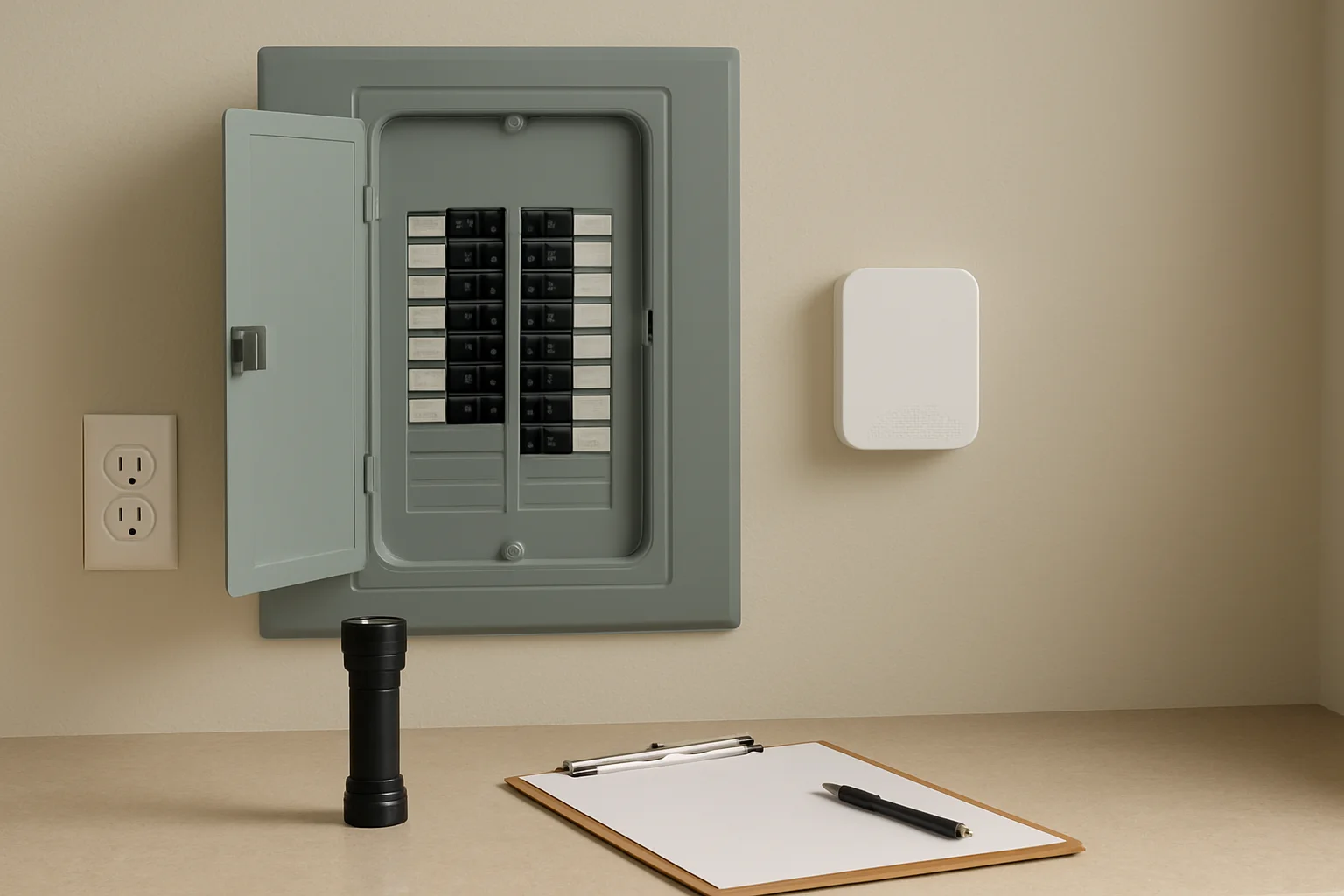
Why electrical panels matter in a modern Northwest Florida home
Your electrical panel is the central distribution point for power in your home. Every light, outlet, appliance, and comfort system depends on it working correctly. In Northwest Florida, that responsibility is especially important because homes often need to handle strong cooling demand, seasonal storms, humidity, and a mix of older and newer electrical loads. When a panel is undersized, worn, or poorly organized, the signs may show up as nuisance tripping, dimming lights, warm breakers, or limited room for new circuits.
A smart electrical panel is not just a high-tech version of the old breaker box. It can help homeowners understand how energy is being used, manage specific circuits more intelligently, and provide better visibility into electrical loads. That does not mean every home needs one right away, but it does mean an aging or crowded panel deserves a professional look. For Bay, Walton, and Okaloosa County homeowners, the right diagnosis starts with the panel you already have, the demands your home now places on it, and whether a smart upgrade would actually solve a real problem.
What a smart electrical panel does and does not do
A smart electrical panel typically adds monitoring, circuit-level insight, and, in some models, remote control or scheduling features. It can help you see which circuits use the most power, identify unusual patterns, and make more informed decisions about energy use. For some households, that visibility is useful during heavy cooling months, vacation absences, or when adding electric vehicles, heat pump equipment, or major appliances. It may also help electricians diagnose load issues more efficiently because the panel provides data rather than guesswork.
At the same time, a smart panel is not a cure-all. It does not automatically fix overloaded wiring, damaged breakers, corrosion, or improper installation. It is also not a substitute for a properly sized service, grounded system, or code-compliant branch circuits. If a home has underlying electrical defects, those must be corrected first. A professional assessment helps determine whether the right solution is a panel replacement, targeted circuit repair, load management equipment, or a smart panel installation as part of a broader upgrade plan.
Warning sign: frequent breaker trips or repeated resets
One of the most common signs that an electrical panel needs attention is frequent breaker tripping. A breaker is designed to protect wiring by shutting off when it detects a problem or too much current on a circuit. An occasional trip can happen for a normal reason, but repeated trips on the same breaker, or multiple circuits tripping during ordinary household use, suggest the panel or the circuit arrangement may no longer match the home’s electrical demands.
Homeowners sometimes respond by resetting breakers and continuing as usual, but repeated trips should not be ignored. An electrician can determine whether the issue is caused by a circuit overload, a failing breaker, a motor or appliance problem, loose connections, or panel deterioration. In a smart panel conversation, this matters because a panel with monitoring may help identify patterns, but the underlying fault still needs diagnosis. The goal is not to silence the symptom; it is to understand why the panel is protecting the system and whether the home needs redistribution of loads, replacement parts, or a larger service capacity.
Warning sign: dimming, flickering, or inconsistent power
Lights that dim when a major appliance starts are not always an emergency, but they can indicate an electrical system under strain. In Northwest Florida homes, air conditioners, pool equipment, laundry machines, and kitchen appliances can create noticeable load changes. If the effect is mild and occasional, it may simply reflect an older system. If it is frequent, severe, or happening across multiple rooms, the panel and service equipment deserve professional inspection.
Inconsistent power can show up in ways homeowners do not always connect to the panel. Outlets may seem weaker, ceiling lights may pulse, or electronics may restart unexpectedly. These symptoms can point to loose connections, voltage issues, or branch circuit problems. A smart panel can sometimes highlight when certain circuits draw unusual power, but it cannot safely confirm whether a connection is tight or whether a breaker has internal wear. That is where a licensed electrician’s diagnostic process matters: testing, inspecting, and tracing the source of the fluctuation rather than simply replacing the most visible part.
Warning sign: warm panel surfaces, buzzing, or a burning odor
A panel should not feel unusually warm to the touch, and it should not emit a buzzing sound that is loud enough to notice from normal living areas. Likewise, any burning smell, metallic odor, or faint hot-plastic scent near the panel is a serious warning sign. These symptoms can indicate loose connections, failing breakers, overloaded conductors, or overheating within the enclosure. Because heat is a major risk factor for electrical damage, this is not an issue to watch casually over time.
Homeowners should avoid opening the panel or trying to inspect internal parts themselves. The safer response is to contact a professional promptly and describe exactly what was noticed, when it occurs, and whether it changes with appliance use. An electrician can use diagnostic tools and visual inspection to assess heat, breaker condition, conductor terminations, and evidence of arcing or corrosion. In a smart panel evaluation, unusual heat or odor often points to a repair need before any technology upgrade is considered. The smartest panel is still unsafe if the foundational wiring is compromised.
Warning sign: an older or crowded panel with limited space
Many homes in the region were built before modern electrical demand became the norm. If a panel is older, has obsolete components, or has very little spare capacity for additional circuits, it may no longer be the best fit for the home’s current and future needs. Homeowners adding a hot tub, EV charger, workshop equipment, remodel lighting, or better HVAC controls may find the existing panel simply has no room or flexibility left.
Crowding inside a panel can mean too many circuits, confusing labeling, or outdated breaker types that no longer support the home well. It can also make troubleshooting harder because a professional has less margin to work with. A smart electrical panel often enters the conversation here because it can offer better load visibility and, in some setups, more efficient management of available capacity. But the first step is an accurate panel evaluation. An electrician will look at service size, breaker condition, conductor capacity, grounding, bonding, and overall organization before recommending whether a smart upgrade makes sense or whether a conventional replacement is the safer and more practical answer.
Warning sign: corrosion, moisture exposure, or storm-related damage
Northwest Florida humidity, coastal air, and storm events can all affect electrical equipment over time. Even when a panel is indoors, moisture intrusion from roof leaks, plumbing leaks, flood exposure, or condensation can cause corrosion and reliability problems. Corrosion may show up as discoloration, rust, pitting, or white residue around metal components. These signs can indicate that the panel is no longer operating in ideal condition and may require closer evaluation.
After a severe storm, homeowners may notice subtle changes rather than a dramatic failure. A breaker may start tripping more often, the home may experience odd power behavior, or the panel cover may show signs of water intrusion. In those cases, a professional diagnosis is especially important because hidden damage can develop over time. A smart panel does not replace storm hardening or moisture control, but it can be part of a broader strategy when the existing electrical system is upgraded. First, though, an electrician needs to determine whether the panel enclosure, internal components, and connected circuits are still suitable for safe service in the home’s environment.
How a professional diagnosis begins
A proper panel assessment is more than a quick glance at the breaker box. The electrician begins by listening to the homeowner’s observations: which rooms are affected, what appliances are running, when the issue started, and whether the problem happens during specific weather or usage patterns. That information matters because electrical problems often follow a pattern that helps narrow the cause. A clear history can save time and lead to a more accurate recommendation.
The physical inspection usually follows a structured process. The electrician checks panel labeling, overall condition, signs of overheating or corrosion, breaker compatibility, conductor sizing, and the relationship between the panel and the home’s service needs. Depending on the symptoms, testing may also include checking voltage, load balance, and circuit performance. If a smart panel is being considered, the professional will determine whether the home would benefit from monitoring, load management, or a full service upgrade. The goal is to match the solution to the actual problem rather than overselling a feature the home does not need.
What smart panel monitoring can help reveal
One of the most practical advantages of a smart electrical panel is visibility. Many homeowners do not know which circuits are driving their highest usage, especially when multiple large appliances are operating at different times. A monitored panel can help reveal patterns that are otherwise hidden. That can be useful for understanding how much demand the HVAC system creates, whether a garage or workshop circuit is drawing more power than expected, or how family routines affect electricity use.
This information can support better decisions, but it should be interpreted carefully. High usage on a circuit does not always mean there is a problem, and low usage does not guarantee a circuit is healthy. A smart panel is best used as part of a professional diagnosis, not as a do-it-yourself replacement for one. Electricians can use the data to identify load issues, prioritize upgrades, and determine whether certain circuits should be separated, redistributed, or placed under more intelligent control. For homeowners planning future additions, that insight can help create a roadmap rather than forcing reactive repairs later.
When a smart panel may be a good fit
A smart panel may be a good fit for a home that is otherwise in good electrical condition but needs better visibility, load control, or planning for future expansion. It may be especially helpful when a homeowner wants to understand energy use more clearly, manage specific loads during peak times, or prepare for equipment that places new demands on the system. In a region where cooling needs can be substantial for much of the year, the ability to monitor major circuits can be genuinely useful.
Even so, not every panel upgrade needs smart features. If the main issue is worn breakers, improper labeling, or an undersized service, the better first step may be a conventional replacement or repair. The right choice depends on the home’s condition and goals. A professional can explain whether the existing panel is worth modernizing, whether a smart panel offers a meaningful benefit, and whether the electrical service itself needs improvement before any advanced controls are added. That assessment helps homeowners avoid paying for features they will not use or depending on technology that cannot compensate for basic system problems.
How Northwest Florida homeowners can prepare for an assessment
Homeowners can make a professional evaluation more productive by noting what they have experienced and what they hope to achieve. It helps to write down which breakers trip, when lights dim, whether any appliances behave strangely, and whether the issue is new or longstanding. If there has been storm exposure, recent remodeling, HVAC replacement, or new equipment installation, those details matter too. The more complete the picture, the easier it is for an electrician to identify the likely cause.
It is also useful to think about the future of the home. Are you planning a kitchen update, adding a workspace, installing an EV charger, or replacing older equipment with more efficient options? Those plans can affect whether a smart panel is appropriate now or whether a different upgrade should happen first. The professional diagnosis should consider not just what is happening today, but what the home will need over the next several years. That is especially important in growing households where electrical demand can change quickly as technology and lifestyle needs evolve.
Why professional installation matters more than the technology label
A smart panel is only as reliable as the workmanship behind it. Proper sizing, secure terminations, code compliance, grounding, breaker compatibility, and careful commissioning all matter. If any of those steps are rushed or done incorrectly, the panel may not perform as intended. The technology can provide excellent information, but it cannot make up for a poor installation or an electrical system with unresolved defects.
Professional installation also matters because panel work affects the whole home. The electrician needs to confirm that the service can support the new equipment, that circuits are correctly identified, and that the home’s electrical layout makes sense under the new system. If needed, the professional can recommend related improvements such as rewiring a problematic branch circuit, correcting labeling, or addressing signs of wear elsewhere in the system. For homeowners, that means the smartest choice is often not just the panel itself, but the contractor who can evaluate the whole electrical picture and recommend the safest path forward.
Getting help from a local team that understands the region
For homeowners in Bay, Walton, and Okaloosa counties, local conditions matter. Coastal humidity, storm seasons, older neighborhoods, and changing household energy needs all affect how an electrical panel should be evaluated. A local electrician who understands the region can factor in those realities and recommend solutions that fit both the home and the environment. That makes the diagnostic process more practical and less generic.
850 Electrical, part of veteran-owned A Superior Mechanical, serves homeowners who need clear answers about panel condition, electrical safety, and upgrade options. If you are noticing breaker trips, dimming lights, warm equipment, corrosion, or other warning signs, a professional assessment can help determine whether your home needs repairs, a conventional panel replacement, or a smart electrical panel installation. For help serving Bay, Walton, and Okaloosa counties, call 850-258-3225. The right diagnosis begins with a careful inspection and a solution matched to your home’s actual needs, not just the latest technology.
Explore related electrical care
- Smart Electrical Panel Installation
- Electrical Installation
- EV Charger Installation
- Indoor Lighting Installation, Repair & Upgrades
- Kohler Generator Installation
- Lighting & Fixture Installation
Continue reading
- Warning Signs and Professional Diagnosis for Specialty and Smart Electrical Services in Northwest Florida Homes
- Kohler Generator Installation: Warning Signs and Professional Diagnosis for Northwest Florida Homeowners
- Whole Home Surge Protection in Northwest Florida: Warning Signs, Risks, and Professional Diagnosis
Talk with the 850 Electrical team for help with your home or business.