
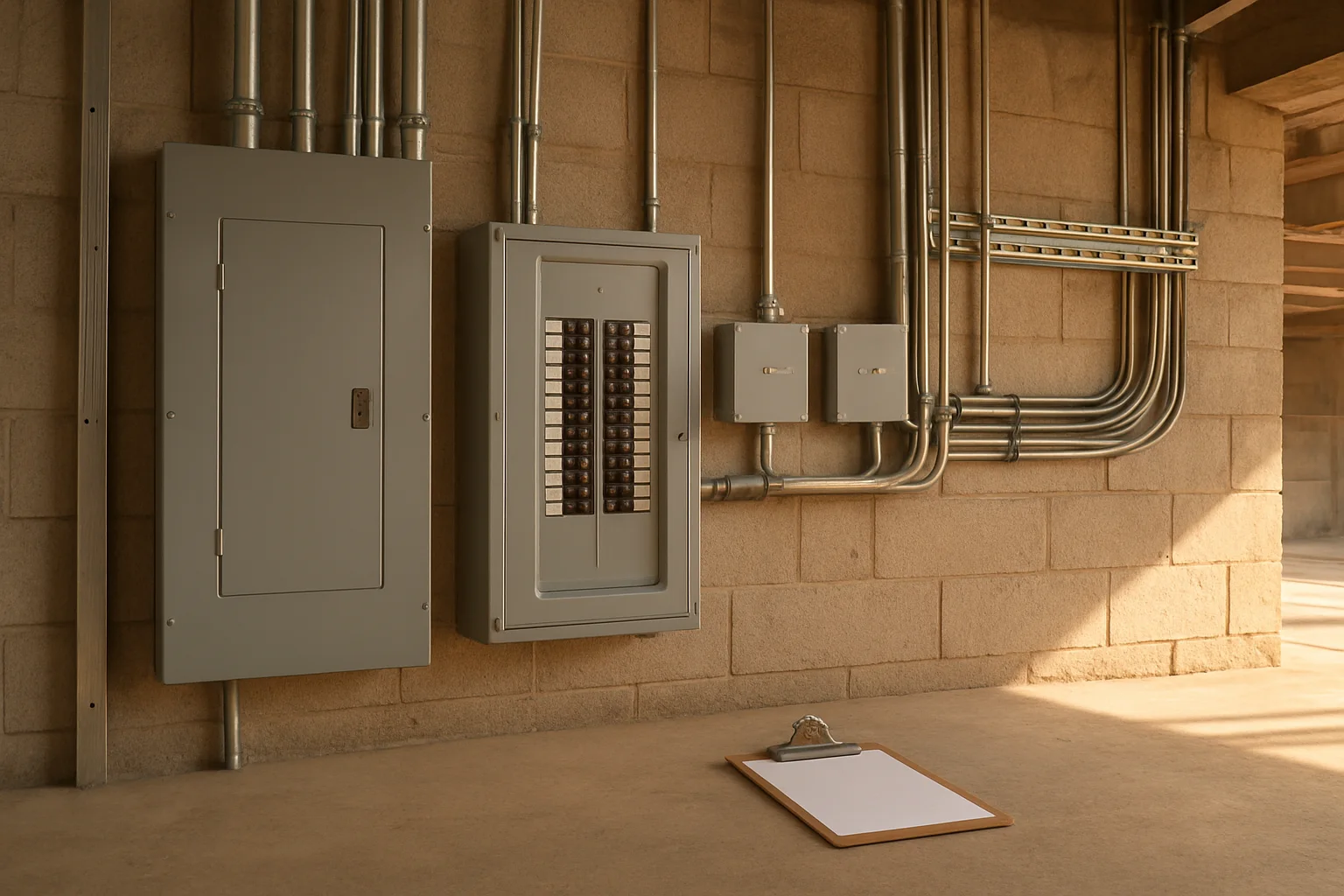
Why electrical warning signs in new construction matter
New commercial construction should look clean, organized, and ready for long-term use, but the electrical system hidden behind the walls is where many future problems either begin or get prevented. For Northwest Florida homeowners who own, manage, or invest in commercial property, early warning signs in new construction are especially important because electrical issues are often harder and more expensive to correct after walls are closed, equipment is installed, and tenants have moved in. A finished building can still hide undersized circuits, poor coordination, loose connections, moisture intrusion, or equipment choices that do not match how the space will actually be used. That is why an early professional assessment is so valuable.
In a coastal and storm-prone region like Bay, Walton, and Okaloosa counties, new construction must also stand up to heat, humidity, salt exposure, heavy rain, and seasonal weather events. Electrical components that might seem acceptable in a milder climate can develop problems sooner here if the planning or installation is not suited to local conditions. Homeowners should not assume that “new” automatically means “correct.” Instead, it is wise to look for signs that the system is being installed with care, tested properly, and matched to the intended commercial load. When something seems off, a licensed electrical professional can identify whether it is a minor correction or a larger design issue before it becomes a safety or operational concern.
What makes commercial electrical construction different from residential work
Commercial electrical systems are usually more complex than the wiring found in a typical home. They may include higher load demands, dedicated circuits for equipment, lighting controls, emergency systems, fire alarm interfaces, data and communications pathways, and service gear that must coordinate with the building’s daily operations. Even if the property is owned by a homeowner, a commercial building still has to meet the needs of the business or mixed-use space it serves. That means the electrical design needs to account for present use and likely future changes, such as new tenants, additional equipment, or expanded hours of operation.
Because of that complexity, warning signs in new construction can be subtle. A panel may look properly installed while still being poorly planned for the actual load. Outlets may appear evenly spaced, but the circuits feeding them might not be arranged in a way that supports real-world use. Lighting may function during the final walkthrough, yet controls, emergency circuits, or exterior fixtures may not be fully integrated for long-term reliability. Professional diagnosis focuses on the relationship between design, installation, and use. It is not just about whether something turns on today. It is about whether the system is built to operate safely and consistently once the building is occupied and stressed by normal business activity.
Signs of poor planning before the walls are closed
Some of the best clues appear before the construction is fully finished. If electrical rough-in work seems rushed, disorganized, or inconsistent from one area to another, that may indicate planning issues rather than simple cosmetic imperfections. Examples can include circuit paths that appear overly complicated, incomplete labeling, boxes placed awkwardly for future fixtures, or visible modifications that suggest the original plan changed without a clear update. In commercial construction, frequent improvisation during rough-in can lead to mismatched loads, inconvenient outlet placement, or service equipment that is not sized or located effectively.
Homeowners should also pay attention when there are repeated schedule changes because of electrical delays, confusion about permits or inspections, or uncertainty about where major equipment will be located. A professional electrician can evaluate whether those signs point to normal coordination challenges or to deeper design problems. One of the most useful parts of a professional assessment is reviewing the electrical plan against the building’s intended use. That includes checking whether dedicated circuits have been provided for equipment that needs them, whether lighting and receptacle circuits are separated appropriately, and whether the system has room for future expansion. Catching planning issues early is far easier than reopening finished walls later to fix avoidable mistakes.
Visible installation warning signs during construction
As the project progresses, there are still visible warning signs that should not be ignored. Exposed wiring that looks strained, unsupported, or crowded; boxes that do not sit properly with framing or finished surfaces; and conduit runs that seem overly tight or poorly aligned can all point to workmanship concerns. While some details may be corrected later in the process, repeated irregularities can indicate a broader lack of attention. In commercial settings, consistency matters because a building’s electrical system is only as strong as its weakest connection point. If the visible installation seems careless, it is reasonable to ask for a professional review before the work is concealed.
Another sign is when the crew seems to make frequent field changes without clear documentation. Construction often requires adjustments, but those changes should be recorded and coordinated with the overall design. If you notice confusion about fixture locations, breaker assignments, or equipment feed routes, the project may need a more careful electrical inspection. Professional electricians evaluate more than appearance. They look for proper box fill, secure support, acceptable routing, and whether the installation follows the intended layout and code requirements. For homeowners overseeing a commercial project, that diagnosis can prevent costly rework and reduce the risk that the finished building will later suffer from nuisance outages, equipment incompatibility, or hidden stress on the system.
Panel and service equipment concerns homeowners should notice
The service equipment is the heart of the electrical system, and problems there can affect the entire building. In a new commercial project, warning signs may include panel locations that seem exposed to moisture, cramped working clearances, unclear labeling, or equipment that appears too small for the scale of the property. Even if the panel is technically installed, a poor choice of location or layout can create long-term maintenance issues. In Northwest Florida, where humidity and storm conditions are part of daily life, service equipment should be positioned and protected with reliability in mind.
Homeowners should also be cautious if there is visible improvisation around the service gear, such as repeated add-ons, temporary-looking connections, or a lack of clean coordination between the meter, disconnects, and panelboards. These are not just visual issues. They can reflect underlying design or installation problems that affect safety, troubleshooting, and future servicing. A professional diagnosis involves checking service sizing, available capacity, breaker organization, labeling, and whether the equipment is installed in a way that supports safe access and maintenance. If the project appears to be outgrowing the original electrical plan before completion, that is a strong reason to have it reviewed professionally. It is much easier to correct service issues during construction than after the building is occupied and dependent on steady power.
Why frequent breaker trips or test failures are meaningful
During new construction, it is not unusual for an electrical system to undergo testing and initial troubleshooting. What should concern homeowners is repeated tripping, unexplained shutdowns, or test results that do not match expectations. While a one-time issue may have a simple cause, recurring problems often point to load imbalance, incorrect circuit sizing, faulty equipment, loose connections, or an installation that has not been properly coordinated. In a commercial building, these problems can affect lighting, refrigeration, office equipment, HVAC controls, or specialty systems that are essential to daily operation.
It is important not to treat a breaker trip as an isolated annoyance when it happens repeatedly during construction. Professional electricians use diagnostic methods to determine whether the issue is caused by the connected load, the breaker itself, wiring integrity, or a larger design mismatch. They can also confirm whether circuits are divided in a sensible way for the building’s use. For homeowners, the value of professional diagnosis is in separating normal commissioning adjustments from warning signs that the system will remain unreliable after completion. A building that cannot pass stable testing before occupancy may continue to show problems later, often at the worst possible times. Identifying the cause now helps protect both the property and the people who will depend on it.
The role of moisture, corrosion, and coastal exposure
Northwest Florida’s environment makes moisture a serious concern in any electrical project, especially in commercial new construction near the coast or in areas with heavy seasonal rain. Even when the installation looks neat, moisture can create long-term issues if enclosures, fittings, seals, or locations are not chosen carefully. Early warning signs may include condensation near electrical equipment, rust or discoloration on metal parts, water intrusion around exterior boxes, or materials that appear ill-suited for the building’s exposure conditions. These issues should be taken seriously because they can compromise reliability and increase the risk of future failure.
A professional electrician can assess whether the installation matches the building’s environmental exposure and usage. That may involve examining how outdoor equipment is protected, whether fittings are suitable for damp or corrosive areas, and whether the layout minimizes vulnerability to water intrusion. In commercial construction, this is especially important for service entrances, exterior lighting, mechanical equipment feeds, and any area where salt air or wind-driven rain could reach electrical components. Homeowners should not rely on appearance alone. Some moisture-related problems are hidden until corrosion has already begun inside a box or connection point. Professional diagnosis can help identify early evidence of exposure so corrective action can happen before the system’s lifespan is shortened or the building experiences avoidable outages.
How lighting issues can reveal deeper electrical problems
Lighting is often one of the first systems people notice during new construction, which makes it a useful indicator of broader electrical quality. Flickering, uneven brightness, delayed startup, color inconsistency, or control problems may seem minor, but they can reveal issues with load, wiring, dimming compatibility, fixture selection, or circuit coordination. In commercial buildings, lighting systems are often more complex than they look because they may include occupancy sensors, daylight controls, emergency lighting, and exterior circuits that all need to work together.
When lighting behaves unpredictably during construction, homeowners should view it as a diagnostic clue rather than a cosmetic issue. A professional electrician can determine whether the problem lies in the fixture itself, the control device, the circuit arrangement, or the way the system was designed for the space. This matters because lighting defects can sometimes point to more serious installation weaknesses elsewhere in the project. For example, repeated control failures may signal that the original layout did not account for how the building would actually be used. A professional assessment helps distinguish a product defect from a wiring problem and gives the owner a clearer path to correction. In a new commercial property, reliable lighting is not just about appearance; it affects safety, productivity, and the overall usability of the space.
Signs of inadequate coordination with HVAC, security, and other systems
Commercial new construction often involves multiple trades working at the same time, and electrical coordination is essential for the final result to function properly. Warning signs can show up when electrical components do not seem to align with HVAC equipment, security systems, access control, fire protection interfaces, or data infrastructure. If one system appears to be installed without clear coordination with the others, it may lead to congestion in mechanical spaces, unclear power requirements, or serviceability problems later. These conflicts are not always obvious to a homeowner at first glance, but they can create real operational headaches once the building is in use.
A professional electrician can evaluate whether the electrical system is integrated properly with the building’s other systems. That includes confirming that dedicated power requirements are met, load demands are understood, and equipment placement allows reasonable access for maintenance. In new commercial construction, poor coordination can show up as shared spaces that are too crowded, mislabeled equipment, or the need for last-minute changes that were never fully documented. Homeowners benefit from professional diagnosis because it can identify whether the electrical system was planned as part of a complete building strategy or whether it was treated as a separate afterthought. The more integrated the systems are, the more important it becomes to verify that each one is supported safely and correctly from the start.
Permitting, inspections, and why paperwork matters
Permits and inspections may feel administrative, but they are an important part of new commercial electrical construction. When the paperwork is incomplete, inconsistent, or delayed, that can be a warning sign that the project is not being managed carefully. Proper documentation helps show that the electrical work was planned, reviewed, and inspected in a way that supports code compliance and long-term safety. If there are gaps in approvals or unclear records of what was installed, homeowners should ask questions before the project moves further along.
Professional diagnosis often includes reviewing the electrical work against the approved plans and inspection expectations. This is important because commercial projects can change as they develop, and those changes should still be reflected accurately. When the record does not match the field conditions, it can become difficult to know whether the system is compliant, properly sized, or ready for final occupancy. In a region where storms, humidity, and heavy seasonal use can all affect performance, the paperwork is part of the protection. It helps confirm that the installation was not only completed, but completed with accountability. For homeowners, paying attention to documentation can prevent surprises later and give more confidence that the electrical system was built to support the property responsibly.
What a professional electrical assessment should include
A professional electrical assessment is more than a quick visual check. It should include a careful review of the project’s design intent, installation quality, equipment sizing, circuit organization, and likely operating demands. The electrician should look for visible signs of wear, strain, corrosion, mislabeling, overcrowding, or workmanship problems, but also consider how the building will actually be used once occupied. In a commercial new construction setting, the right diagnosis often depends on understanding the relationship between the electrical system and the business functions it supports.
Homeowners should expect the assessment to help answer specific questions: Is the service sized appropriately? Are circuits organized logically? Are there signs of overloaded planning or poor coordination? Are the materials and locations suitable for Northwest Florida conditions? Does the installation appear ready for final inspection and long-term use? A good professional review should also distinguish urgent hazards from issues that are worth monitoring or correcting during the next phase of work. That kind of clarity is valuable because it helps the owner make informed decisions without guessing. The goal is not simply to find flaws. It is to understand whether the system can safely perform the way the building requires and what adjustments, if any, should be made before completion.
When homeowners should ask for a second look
It is reasonable to request a second look whenever something about the project seems off, even if the building is technically progressing. Common reasons include repeated delays tied to electrical work, visible inconsistencies in installation quality, equipment locations that seem impractical, or concerns about how the system will handle future demand. If your commercial new construction has changed direction since the original design, or if different trades appear to be working around electrical features in awkward ways, a professional review can help determine whether the project still aligns with safe and functional standards.
A second look is especially appropriate when you notice recurring issues rather than a single isolated concern. One mislabeled circuit can be corrected. Multiple signs of disorganization may suggest a more significant planning or execution problem. In Northwest Florida, where building conditions can be affected by humidity, weather exposure, and seasonal operational demands, it is wise not to wait until small signs become major failures. A professional electrician can help assess whether the issue is cosmetic, functional, or safety-related and recommend the next steps based on what is actually found. For homeowners, that peace of mind is important because it keeps the project moving with better information and reduces the chance of expensive surprises after occupancy.
How 850 Electrical helps homeowners in Bay, Walton, and Okaloosa counties
For homeowners in Bay, Walton, and Okaloosa counties who are involved with commercial electrical new construction, the most useful service is often a careful, practical assessment by a professional who understands both code expectations and real-world building use. 850 Electrical, part of veteran-owned A Superior Mechanical, serves this Northwest Florida region and can help identify warning signs before they become bigger problems. The focus should always be on safe, reliable electrical performance and on making sure the installation supports the building’s intended use. That means looking beyond whether the lights come on and asking whether the system is truly ready for long-term operation.
If you notice questionable workmanship, repeated testing issues, moisture concerns, or coordination problems during new construction, it is a smart time to bring in a professional evaluation. An experienced electrician can help separate normal construction adjustments from issues that require correction. For homeowners, that guidance can protect the investment in the property and help avoid unnecessary disruption later. If you need to discuss a commercial electrical new construction concern in Northwest Florida, 850 Electrical can be reached at 850-258-3225. The best time to address electrical warning signs is while the project is still open and solutions are still straightforward, not after the building depends on every circuit working exactly as intended.
Explore related electrical care
- Commercial Electrical New Construction
- 24 Hour Emergency Electrical Service
- Battery Backup Systems
- Ceiling Fan Services
- Circuit Breaker Panels & Rewiring
- Data Network Cabling
Continue reading
- Whole Home Rewiring Warning Signs Northwest Florida Homeowners Should Know
- Pool, Spa & Hot Tub Wiring Warning Signs Northwest Florida Homeowners Should Know
- EV Charger Installation Warning Signs Northwest Florida Homeowners Should Know
Talk with the 850 Electrical team for help with your home or business.